

IMPORTANT DISCLAIMERS
Medical Disclaimer: The information in this article is provided for educational purposes only and is not intended as medical advice or a substitute for individualized medical care. Every person's health needs are unique. Always consult a qualified healthcare professional before starting, stopping, or changing any medication, supplement, or treatment plan. -------
Article Disclaimer: Articles are reviewed and published by Summit Health to provide evidence-based educational information. While Summit Health strives to provide reliable and current health information, medical knowledge is always evolving over time. Depending on when you are reading this content, it may not reflect the latest research or apply to your individual circumstances.
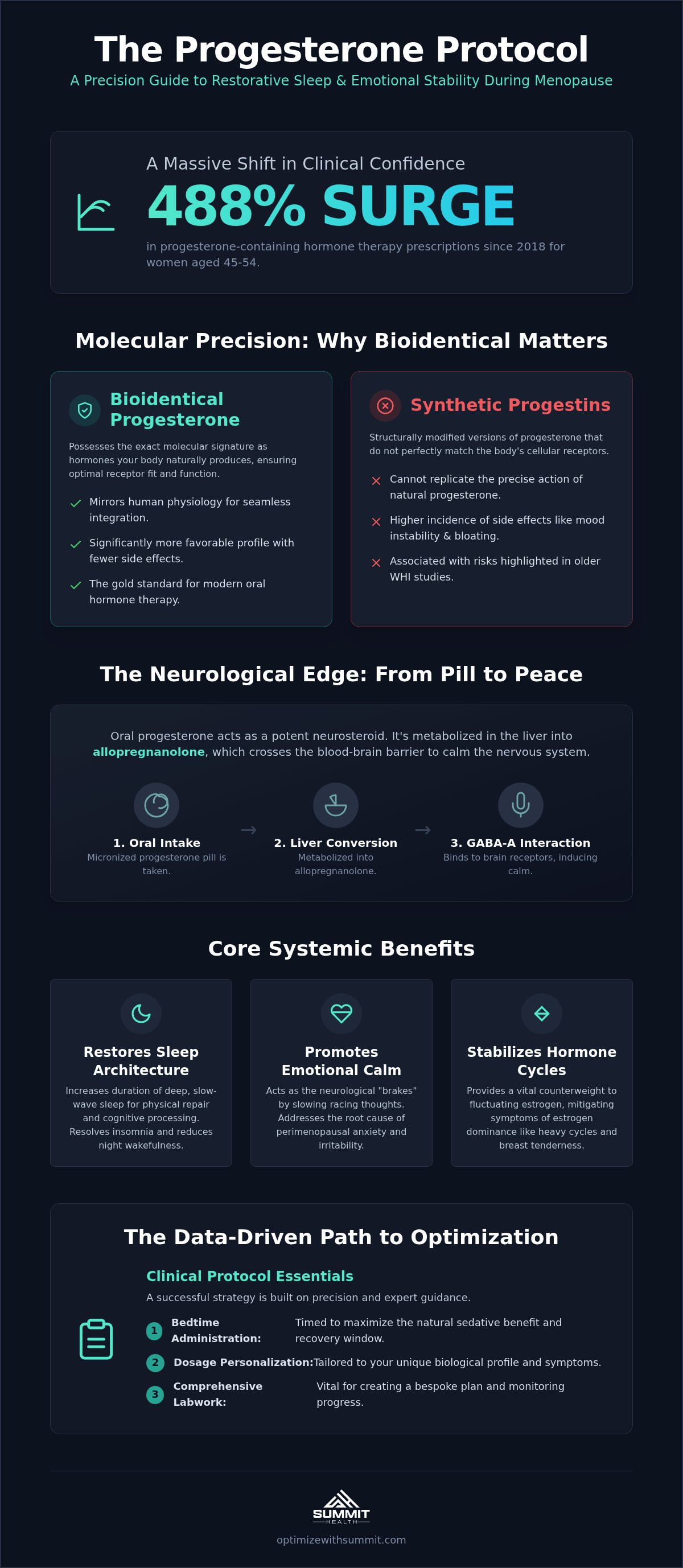
Since 2018, prescriptions for progesterone-containing hormone therapy have surged by 488% among women aged 45 to 54. This massive shift follows a landmark 2026 FDA decision to remove boxed warnings from several progesterone products, signaling a new era of clinical confidence. You likely recognize the internal friction. Fragmented sleep. Unexplained anxiety. A persistent sense of irritability that disrupts your peak performance. It's frustrating to feel your baseline shifting without your consent.
This guide explores how progesterone pills serve as a precision tool for restorative sleep and emotional stability during the menopause transition. We will clarify the vital distinction between synthetic progestins and bioidentical options to help you navigate your choices with certainty. You'll discover a data-driven path to hormonal optimization through comprehensive labwork and expert telehealth monitoring. It's time to move beyond survival and toward a refined, optimized version of your life.
Key Takeaways
- Molecular Precision. Differentiate bioidentical progesterone pills from synthetic progestins to ensure your hormone strategy mirrors human physiology.
- Neurological Support. Explore how oral progesterone converts into neurosteroids that optimize sleep quality and emotional calm through GABA receptor interaction.
- Strategic Synergy. Understand how progesterone works in tandem with other therapies to stabilize cycles and enhance resilience during perimenopause.
- Clinical Protocol. Learn the specific timing and dosage expectations for bedtime administration to maximize your recovery window.
- Data-Driven Path. See why comprehensive diagnostic labwork is vital for tailoring a hormone plan to your unique biological profile.
Understanding Progesterone Pills: Precision Bioidentical Support
Hormonal balance is not a static destination; it's a dynamic state of biological precision. For many women in the menopause transition, the decline of progesterone triggers a cascade of systemic disruption. Oral micronized progesterone pills offer a solution that aligns perfectly with human physiology. Unlike older pharmaceutical interventions, these formulations are bioidentical. They possess the exact molecular signature as the hormones your body naturally produces. This distinction is critical for those pursuing hormone therapy focused on long-term optimization rather than mere symptom management. We focus on refinement. We focus on peak vitality.
Bioidentical vs. Synthetic: Why Molecular Structure Matters
Precision matters. Endocrine health demands it. Bioidentical progesterone fits into cellular receptors with a degree of accuracy that synthetic progestins cannot replicate. Synthetics, often found in traditional birth control or older HRT protocols, are modified versions of the hormone designed for shelf stability and mass production. These structural changes often lead to a higher incidence of side effects like mood instability, bloating, or metabolic resistance. The historical context of the Women’s Health Initiative (WHI) study highlighted significant risks, yet it primarily focused on these synthetic progestins. Modern research on Progesterone (medication) clarifies that micronized bioidentical versions offer a significantly more favorable profile. They provide necessary biological support without the neurological or physical friction associated with synthetic analogs.
The Clinical Role of Progesterone in 2026
Progesterone acts as a vital counterweight. During perimenopause, estrogen levels often fluctuate while progesterone levels plummet, creating a state of estrogen dominance. This imbalance contributes to heavy cycles, breast tenderness, and heightened anxiety. While a primary clinical role is protecting the uterine lining during estrogen therapy, the systemic benefits are vast. Progesterone supports bone density and cardiovascular health by modulating inflammatory responses across the body. The 2026 clinical landscape reflects a major shift in consensus, acknowledging that bioidentical support is a cornerstone of modern female wellness. Oral micronized progesterone is the gold standard for oral administration. Integrating progesterone pills into a bespoke health plan allows for a more nuanced approach to recovery, shifting the focus from simple treatment to a refined, high-performance lifestyle.
The Neurological Edge: Progesterone Pills for Sleep and Mood
Progesterone is more than a reproductive regulator. It is a potent neurosteroid. When you take progesterone pills orally, the liver converts a portion of the hormone into allopregnanolone. This specific metabolite crosses the blood-brain barrier and interacts directly with GABA-A receptors. These receptors act as the neurological "brakes," slowing down racing thoughts and inducing a state of physiological calm. Unlike traditional sedative sleep aids that often disrupt natural sleep cycles, bioidentical progesterone works with your brain’s chemistry. It addresses the root cause of perimenopausal anxiety and irritability by stabilizing the nervous system from the inside out. This makes it a primary tool for those experiencing "perimenopausal rage," a state of heightened reactivity caused by plunging hormone levels. You are not just managing a symptom; you are restoring a biological anchor.
Restoring the Architecture of Sleep
Quality sleep requires more than just hours spent in bed. It requires structural integrity. Progesterone increases the duration of slow-wave sleep, the deep stage where physical repair and cognitive processing occur. Taking progesterone pills at bedtime leverages this natural sedative benefit to resolve sleep-onset insomnia and reduce middle-of-the-night wakefulness. For those seeking a comprehensive recovery protocol, pairing progesterone with magnesium glycinate can create a powerful synergy for restorative rest. You can find detailed Progesterone drug information regarding its use in menopausal therapy to understand how it supports systemic health while you rest. This approach ensures you wake up feeling refreshed rather than groggy, allowing for peak performance throughout the day.
Cognitive Calm and Emotional Resilience
The fluctuations of the menopause transition often trigger a heightened HPA axis response. This leads to elevated cortisol and a feeling of being constantly "on edge" or overstimulated. Progesterone acts as a vital buffer. It regulates the stress response, which is why clinicians frequently refer to it as the "chilled out" hormone. By providing this emotional anchor, it helps clear the brain fog that often accompanies hormonal shifts. You gain the resilience to handle high-performance demands without the tax of unexplained irritability or sudden mood drops. This restoration of cognitive clarity is essential for maintaining your professional and personal baseline. If you are ready to reclaim your cognitive edge, you can explore hormone therapy options to see if this precision tool fits your optimization goals. Reliable data leads to better outcomes, and stabilizing your neurochemistry is the first step toward long-term emotional resilience.
Progesterone in the Menopause Transition: A Strategic Resource
Perimenopause is often defined by what you lose. Progesterone is the first to go. While estrogen levels may spike or stay steady, progesterone production becomes erratic and then vanishes. This creates a biological vacuum. Using progesterone pills during this phase provides the stability necessary to maintain your rhythm. It is a strategic resource for navigating the 2026 menopause timeline with precision. You aren't just replacing a hormone; you're reclaiming your baseline.
A common clinical misconception suggests progesterone is only necessary for those with an intact uterus. This view is outdated. While it does protect the lining from estrogenic overgrowth, its systemic benefits for the brain and bones remain vital for everyone. Optimization requires looking beyond the reproductive system. Progesterone receptors are found throughout the body, from the cardiovascular system to the central nervous system. Ignoring these receptors simply because a specific organ is absent is a missed opportunity for peak health. True wellness is comprehensive.
Balancing the Estrogen-Progesterone Ratio
Estrogen dominance is a state of relative excess. When progesterone drops, estrogen’s effects go unchecked. You might notice persistent bloating, breast tenderness, or increasingly heavy cycles. These aren't just inconveniences. They are signals of a system out of alignment. Progesterone pills act as a physiological buffer. They temper estrogen’s proliferative signals, restoring balance to your internal environment. To achieve this, you must first understand your current levels. Reviewing the female hormone test list is the first step toward determining your precise biological needs. Data-driven decisions outperform guesswork every time.
Managing Hot Flashes and Vasomotor Symptoms
Night sweats disrupt more than just your comfort. They fragment your recovery. Research indicates that progesterone is effective in reducing the frequency and intensity of vasomotor symptoms. This is particularly useful when combined with other Menopause treatment options to stabilize the body’s internal thermostat. Better sleep leads to improved thermoregulation the following day. When you are well-rested, your nervous system is more resilient to the triggers that cause sudden temperature spikes. For a deeper look at managing these spikes, see our guide on hot flashes and hormonal optimization. The synergy between oral support and targeted topical treatments like estradiol vaginal cream ensures a comprehensive approach to both pelvic health and systemic wellness.
Clinical Administration: Dosage, Timing, and Expectations
Timing is everything. For progesterone pills to function as a precision tool, administration must align with your body’s natural circadian rhythms. Clinical protocols almost universally dictate a bedtime dose. This isn't an arbitrary suggestion. Oral micronized progesterone relies on first-pass metabolism in the liver to generate the neurosteroid metabolites that induce calm. By taking your dose 30 to 60 minutes before sleep, you ensure that peak concentrations of allopregnanolone coincide with your primary recovery window. This metabolic pathway turns a hormonal supplement into a powerful sleep architect.
Dosage is never one-size-fits-all. Most optimization plans begin with either 100mg or 200mg of micronized progesterone. A 100mg dose is frequently the baseline for daily, continuous support. The 200mg dose is often utilized for those requiring more robust uterine protection or deeper neurological intervention for severe insomnia. Your specific requirements depend on your current estrogen levels and individual sensitivity. We use data to eliminate the guesswork. To begin your journey toward a bespoke protocol, you can schedule a clinical consultation to review your biological markers.
Cyclical vs. Continuous Dosing
Data dictates protocol. For women still in perimenopause, cyclical dosing is often preferred. This involves taking progesterone pills for 12 to 14 days of the month to mimic the natural luteal phase and encourage regular cycles. Conversely, postmenopausal women or those primarily focused on sleep optimization often move to a continuous daily schedule. This provides a steady state of neurological support and prevents the "withdrawal" symptoms that can occur during the off-days of a cycle. Your labwork will determine which path offers the most fluid transition for your physiology.
Potential Side Effects and Safety Profiles
Refined health requires an adjustment period. During the first 30 days, you might experience vivid dreams or mild morning grogginess. These are usually signs that your body is recalibrating to the new neurosteroid levels. Most users find that grogginess dissipates within the first week as the HPA axis stabilizes. Safety is paramount. Bioidentical progesterone does not carry the same increased risk of blood clots or cardiovascular events associated with synthetic progestins. However, certain contraindications exist. You should not start treatment if you have undiagnosed vaginal bleeding or active liver disease. A clear safety profile includes:
- Initial 72 Hours: Improved sleep onset and duration are often the first noticeable changes.
- Weeks 2-4: Emotional resilience increases and "perimenopausal rage" begins to subside.
- Long-term: Bone density support and cardiovascular protection become the primary focus.
Expect a steady progression. You aren't just treating a deficiency; you're engineering a higher state of performance. By the end of the first month, the synergy between your dosage and timing should yield a noticeable shift in both your nightly recovery and daily cognitive clarity.
The Summit Health Approach: Precision Hormone Optimization
Data drives refinement. At Summit Health, we view hormone optimization as a continuous journey toward peak performance rather than a one-time correction. Our telehealth-led model removes the friction of traditional medical care, providing a streamlined path to biological balance for the high-performing individual. We don't guess. We measure. By integrating advanced diagnostics with personalized protocols, we ensure that your use of progesterone pills is tailored specifically to your unique metabolic and neurological needs. This is about more than just managing symptoms. It is about engineering a life of sustained vitality and clarity.
The transition to a more optimized state requires an expert guide. Our clinicians act as partners in your health, utilizing data-driven insights to move you toward your peak baseline. We prioritize results and efficiency, respecting your time while providing the highest level of clinical scrutiny. This bespoke approach ensures that every intervention is intentional and aligned with your long-term wellness goals.
From Diagnostics to Peak Vitality
Precision begins with a baseline. Before starting any protocol, comprehensive hormone blood work is mandatory. This diagnostic rigor allows our clinicians to interpret specific biomarkers and craft a plan that respects your individual biology. You can choose the convenience of receiving labwork kits at home or visiting a local clinic for a professional draw. Once the data is in, our specialists translate these numbers into a bespoke roadmap for recovery. If you're ready to begin, taking the Hormone Quiz is the first step toward identifying your specific needs. We focus on the details so you can focus on your life.
Ongoing Virtual Monitoring for Long-Term Success
Hormonal needs evolve. A protocol that works today may require adjustment as your body reaches a new state of equilibrium. Ongoing virtual monitoring is a cornerstone of our approach, ensuring that your hormone therapy remains optimized over time. Follow-up labs allow us to fine-tune your dosage of progesterone pills, maintaining the perfect balance between restorative sleep and daytime cognitive sharpness. You have direct access to health coaching and clinical expertise through our secure telehealth platform. This level of oversight provides the calm confidence that your health is being managed with the highest level of professional scrutiny. We invite you to contact us for a consultation to discuss how we can support your long-term wellness goals. Your peak experience is our priority.
Reclaim Your Performance Baseline
Hormonal optimization is a strategic investment in your long-term vitality. By choosing bioidentical progesterone pills, you align your health strategy with your body’s natural molecular structure. This precision approach restores the architecture of your sleep and provides a neurological anchor for emotional resilience. You don't have to navigate the menopause transition with fragmented rest or unexplained irritability. Modern clinical protocols offer a refined path forward that prioritizes your peak experience over mere symptom management.
Summit Health provides the expertise necessary to engineer this balance. Our model integrates telehealth-led precision diagnostics with bioidentical hormone replacement protocols to ensure every decision is data-driven and bespoke. Through comprehensive labwork and ongoing expert health coaching, we monitor your progress to maintain your biological edge. It's time to move toward a version of yourself that is rested, focused, and resilient. Begin your optimization journey with the Summit Health Hormone Quiz and take the first step toward a more refined, high-performance life. You deserve a health plan as intentional as your goals.
Frequently Asked Questions
Do progesterone pills cause weight gain?
Weight gain is not a typical side effect of bioidentical progesterone. In fact, it often acts as a natural diuretic to reduce the bloating associated with estrogen dominance. Synthetic progestins are more likely to cause metabolic resistance; however, bioidentical options remain weight-neutral for most individuals. This allows you to focus on your body composition goals without hormonal interference. Precision diagnostics help ensure your dosage remains optimal for your metabolic health.
Can I take progesterone pills if I have already had a hysterectomy?
You can absolutely take progesterone after a hysterectomy. While a primary reproductive role is uterine protection, the systemic benefits are vast. Progesterone receptors exist in the brain, bones, and heart. Taking it after surgery supports deep sleep and emotional resilience. It is a vital component of a comprehensive recovery plan. We focus on the whole person rather than just the presence of specific organs. Optimization requires a total-body perspective.
How long does it take for progesterone pills to help with sleep?
Benefits for sleep onset typically occur within the first three nights of treatment. The liver quickly converts the hormone into metabolites that interact with GABA receptors in the brain. You will likely notice a faster transition into rest and fewer middle-of-the-night wakeups. While the immediate effects are rapid, the full restoration of your sleep architecture usually stabilizes over the first 30 days. Consistency in timing ensures your recovery window remains predictable and deep.
What is the difference between progesterone pills and progestin?
The difference lies in molecular precision. Bioidentical progesterone pills are identical to the hormones produced by the human body. Progestins are synthetic analogs designed to mimic some effects but possess a different chemical structure. These structural variations often lead to unwanted side effects like mood instability or metabolic friction. Choosing bioidentical support ensures your treatment mirrors your natural physiology. This distinction is the foundation of modern hormone optimization and long-term wellness.
Are progesterone pills safer than estrogen therapy?
Safety is not a competition between hormones; it's about biological balance. Progesterone and estrogen serve different, complementary functions in the body. Progesterone is frequently used to balance the effects of estrogen and protect systemic health. It has a high safety profile, particularly in its micronized form. Using both hormones in the correct, data-driven ratio is the most effective way to achieve long-term vitality. We use comprehensive labwork to ensure your specific levels are clinically stable.
Can I take progesterone pills during the day?
Daytime administration is almost never recommended due to the hormone’s sedative properties. The conversion into allopregnanolone induces a state of calm that is ideal for sleep but can impair daytime performance. Taking your dose 30 to 60 minutes before bed leverages this effect to maximize recovery. Daytime use may result in unwanted grogginess or reduced cognitive sharpness. We prioritize timing to ensure your protocol supports your high-performance lifestyle during your waking hours.
Do I need a prescription for bioidentical progesterone pills?
A clinical prescription is required for all bioidentical hormone replacement therapies. Potent hormones like progesterone pills must be managed through comprehensive diagnostics and virtual monitoring to ensure your safety. Over-the-counter options often lack the concentration and purity needed for systemic optimization. Our telehealth model provides the necessary clinical oversight while maintaining your convenience. Data-driven results require a partnership with an authoritative expert who understands your unique biological profile and peak goals.
What happens if I miss a dose of my progesterone pill?
If you miss a dose, take it as soon as you remember. If it's nearly time for your next scheduled dose, skip the missed one and continue your regular cycle. Don't double your dose to catch up. A single missed night may result in slightly fragmented sleep or minor spotting, but your baseline will stabilize once you resume your protocol. Consistency is the key to maintaining the steady-state levels required for emotional resilience and peak recovery.

Article by
Dr. David Richardson
David Richardson, is the founder and CEO of Summit Health and the author of "Insights from the Summit", where he writes about hormone optimization, metabolic health, thyroid function, longevity, and preventive medicine.
After entering healthcare in 2009, David became increasingly interested in a question that traditional medicine often struggles to answer:
Why do so many people continue to feel terrible despite being told their labs are "normal"?
That question eventually led him into the field of health optimization in 2020, where he became passionate about understanding physiology at a deeper level and helping patients uncover the root causes of their symptoms rather than simply managing them.
Today, David's philosophy is simple: normal and optimal are not the same thing. Every patient is physiologically unique, and meaningful healthcare begins by listening to symptoms, understanding the science, and recognizing that laboratory values are only one piece of a much larger picture.
Through Summit Health and Insights from the Summit, David's mission is to help people better understand their bodies, ask better questions, and make informed decisions that improve both their health span and quality of life.


