

IMPORTANT DISCLAIMERS
Medical Disclaimer: The information in this article is provided for educational purposes only and is not intended as medical advice or a substitute for individualized medical care. Every person's health needs are unique. Always consult a qualified healthcare professional before starting, stopping, or changing any medication, supplement, or treatment plan. -------
Article Disclaimer: Articles are reviewed and published by Summit Health to provide evidence-based educational information. While Summit Health strives to provide reliable and current health information, medical knowledge is always evolving over time. Depending on when you are reading this content, it may not reflect the latest research or apply to your individual circumstances.
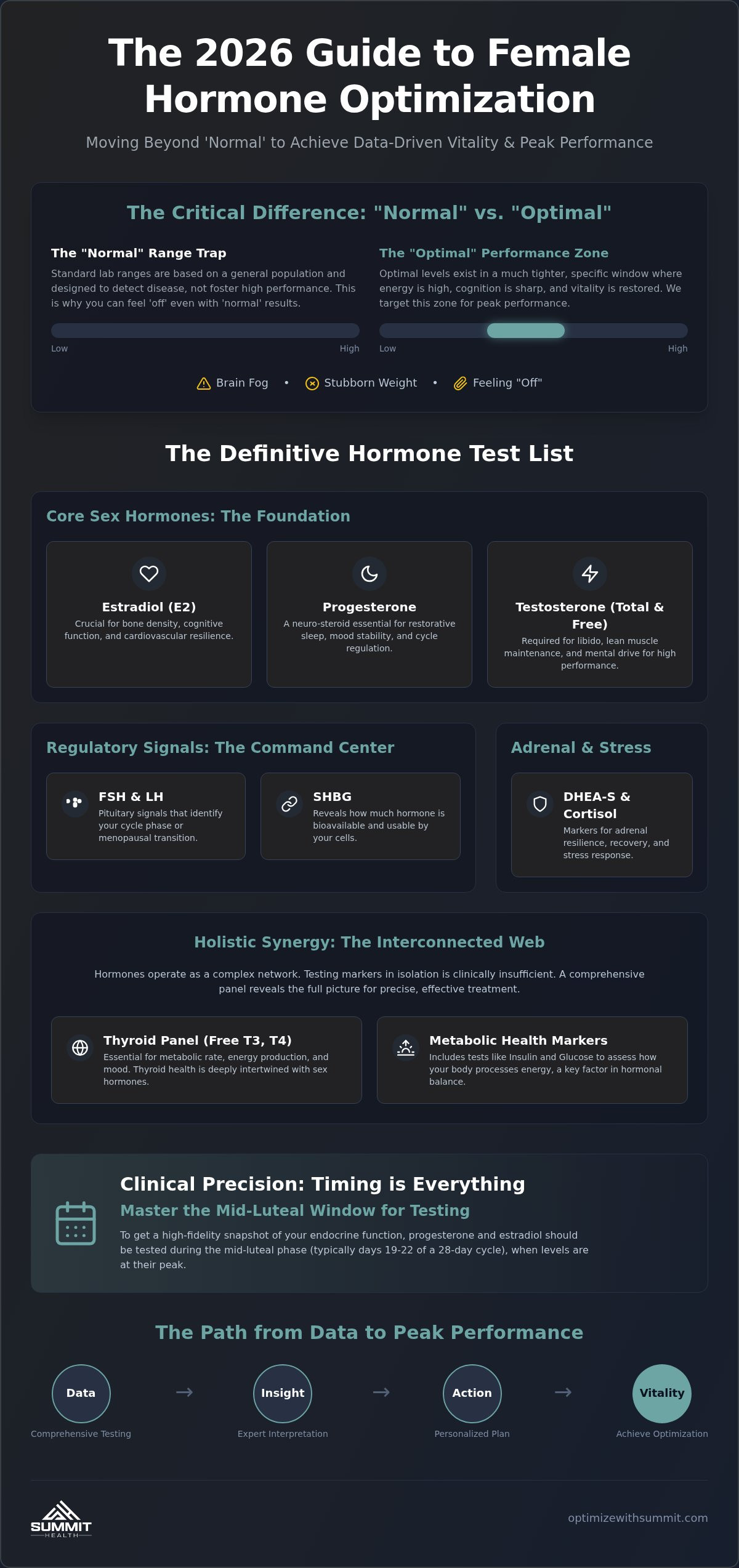
"Normal" is not optimal. Clinical reference ranges are frequently designed to identify the presence of disease rather than the pursuit of peak performance. You've likely felt the disconnect between your labs and your life. The brain fog persists and the weight remains stubborn, yet your practitioner insists your levels are fine. It's a common gap in traditional care that leaves many women searching for answers.
You deserve a more precise understanding of your biology. This guide provides the definitive 2026 female hormone test list, a checklist engineered to move you beyond standard metrics and toward true optimization. We'll explore the critical biomarkers required for a high-performance lifestyle, the latest advancements in diagnostic technology like the Mira Ultra 4, and the updated 2026 FDA guidelines for personalized hormone therapy. We are going to bridge the gap between feeling "off" and achieving a state of refined, data-driven vitality. By the end of this checklist, you'll have a clear path to personalized treatment and the data required to reclaim your health.
Key Takeaways
- Optimization over normalcy. Learn why standard reference ranges often fail to capture the requirements for peak biological performance.
- Data-driven insights. Utilize our definitive female hormone test list to evaluate core sex hormones, adrenal markers, and metabolic health.
- Holistic synergy. Recognize why thyroid markers like Free T3 and T4 are essential components of any comprehensive hormonal assessment.
- Precise timing. Master the mid-luteal window to ensure your lab results provide a high-fidelity snapshot of your endocrine function.
- Strategic action. Transition from raw data to a personalized optimization plan through expert telehealth interpretation and performance coaching.
The Paradigm Shift: Why Your Hormone Test List Matters
Health is not merely the absence of illness. It is the presence of peak biological function. Precision matters. Data wins. For most women, a female hormone test list is a reactive measure, something ordered only when symptoms become unbearable. This is a fundamental misunderstanding of endocrine potential. We view diagnostics as a proactive blueprint for performance. Optimization is the pursuit of a refined physical state where energy is consistent, sleep is restorative, and metabolic health is unwavering.
Standard medical models rely on broad reference ranges. These ranges are statistical bell curves derived from a general population that is often chronically stressed and metabolically compromised. Being "normal" by these standards simply means you aren't currently in a state of clinical disease. It doesn't mean you're thriving. A comprehensive list prevents the common mistake of missing the forest for the trees. By capturing a wide array of biomarkers, we can identify the subtle shifts that signal an impending decline in vitality. The ultimate goal is bioidentical balance, a state where your hormones are restored to their most effective levels through precise, data-driven intervention.
Normal vs. Optimal: The Clinical Divide
The "green zone" on your lab report is a trap. Most providers see a result within the reference range and stop investigating. This ignores the reality that "normal" for a 60-year-old is vastly different from what is required for a high-performing woman in her prime. Optimal health exists in a much tighter, more specific window. It's the range where brain fog lifts and stubborn weight begins to shift. We don't settle for the average. We target the specific markers that correlate with your best possible self. Looking beyond the standard report is the first step toward true refinement.
The Interconnected Web of Endocrine Health
Hormones operate as a complex, interactive network. Testing one marker in isolation is clinically insufficient. It's like listening to a single instrument and trying to judge the entire orchestra. We prioritize the relationship between hormones. For example, the ratio of Progesterone to Estrogen during the menstrual cycle is more telling than either number alone. This systemic approach is at the heart of Summit Health Hormone Therapy. By utilizing a comprehensive female hormone test list, we gain the clarity needed to create a bespoke treatment plan. We move from guesswork to precision, ensuring every biomarker is aligned for long-term health and peak performance.
The Essential Female Hormone Test List: Core Biomarkers
Precision is the bedrock of performance. A standard blood panel is a snapshot; a comprehensive female hormone test list is a high-resolution map. To move beyond the baseline, we must evaluate the primary drivers of your physiological experience. This starts with the core sex hormones, but it doesn't end there. We also require a clear view of the regulatory signals and transport proteins that dictate how these hormones actually function in your tissues.
We begin by assessing Follicle-Stimulating Hormone (FSH) and Luteinizing Hormone (LH). These pituitary signals are essential for identifying your current biological status. They help us pinpoint hormones and your cycle phases or confirm the transition into menopause. Without these markers, we are guessing at the "why" behind your results. We also prioritize Sex Hormone Binding Globulin (SHBG). This protein acts as a transport vehicle. If SHBG is too high, your bioavailable hormones are locked away, rendering them inaccessible to your cells. Total levels tell only half the story; SHBG reveals the truth of what your body can actually use.
The Sex Hormone Trio: Estrogen, Progesterone, and Testosterone
Estradiol is non-negotiable for long-term health. It is the primary estrogen responsible for maintaining bone density, cognitive function, and cardiovascular resilience. When estradiol levels falter, systemic vitality declines. Progesterone acts as your regulatory anchor. It is a neuro-steroid that modulates GABA receptors in the brain, making it essential for restorative sleep and emotional stability. Finally, we must address Testosterone. Women require this hormone for libido, lean muscle maintenance, and the mental drive necessary for high-level performance. Neglecting testosterone is one of the most common failures in traditional female health panels.
Adrenal and Stress Support Markers
Vitality requires resilience. DHEA-S is a critical adrenal precursor that fuels recovery and overall vigor. We pair this with a morning Cortisol test to assess your stress response. This diagnostic identifies the "tired but wired" state where your system remains stuck in sympathetic overdrive. Supporting these markers often requires specific recovery protocols, such as utilizing Magnesium Glycinate for Sleep to calm the nervous system and promote deep tissue repair. If you are ready to see where your levels currently stand, taking a hormone quiz is an effective first step in your optimization journey.
Metabolic Synergy: Testing Beyond the Ovaries
Biology is integrated. Systems do not operate in silos. While the sex hormones discussed previously are the architects of your vitality, your metabolic health is the foundation. A female hormone test list that ignores thyroid and blood sugar markers is fundamentally incomplete. These biomarkers dictate the "speed" of your endocrine system. If your metabolism is sluggish, even perfectly balanced estrogen and progesterone levels will fail to produce the energy and clarity you seek.
Precision diagnostics allow us to look under the hood of your cellular engine. We prioritize markers that reveal how your body processes fuel and generates power. While pituitary signals like the FSH blood test define your reproductive status, your metabolic markers define your daily performance capacity. Without this synergy, optimization remains out of reach.
The Thyroid: Your Metabolic Thermostat
The thyroid regulates every cell in your body. Unfortunately, standard care often relies solely on Thyroid-Stimulating Hormone (TSH), an outdated approach that misses millions of women struggling with sub-optimal function. We require the "Big 3" for a complete picture:
- TSH: The pituitary signal to the thyroid.
- Free T4: The storage form of thyroid hormone.
- Free T3: The active hormone that actually drives energy, mood, and fat burning.
We also screen for thyroid antibodies. Identifying underlying autoimmune issues like Hashimoto’s early is essential for long-term health management. If your Free T3 is low, you'll experience fatigue and weight gain regardless of how "normal" your TSH appears.
Insulin Resistance and Weight Management
Metabolism isn't just about calories. It's about signaling. Fasting Insulin and HbA1c are the early warning systems for metabolic dysfunction. High insulin levels act as a metabolic brake, effectively blocking your body’s ability to burn fat. This creates a cycle of stubborn weight gain and energy crashes that can't be solved by exercise alone. This intersection of hormones and metabolism is the foundation of modern Weight Loss Digital Healthcare Solutions. By including these in your female hormone test list, we can address the root cause of weight resistance and restore your body’s natural fat-burning potential. Data-driven metabolic health is the key to unlocking the results your hard work deserves.
Clinical Precision: Timing and Preparation for Your Labwork
Precision is paramount. Data is only as valuable as its integrity. When executing your female hormone test list, the "when" is just as critical as the "what." Hormonal fluctuations are rhythmic. Capturing a snapshot at the wrong moment leads to misinterpretation and missed opportunities for optimization. We demand clinical precision to ensure your treatment plan is built on an accurate biological foundation. This is not about checking boxes; it is about capturing a high-fidelity image of your endocrine health.
The Menstrual Cycle Timing Guide
Timing depends on your clinical goal. For a baseline assessment of ovarian reserve and pituitary function, Day 3 of your cycle is the preferred window. However, to assess the critical balance between estrogen and progesterone, we utilize the "Day 19-21" rule. This specific window captures the mid-luteal peak. It's the gold standard for confirming ovulation and ensuring your progesterone levels are sufficient to support mood and restorative sleep. If your cycles are irregular or non-existent due to menopause, the timing window becomes more flexible. For those on hormonal birth control, testing remains possible, but we must account for the fact that these medications suppress your natural endocrine output. We help you navigate these variables to ensure every data point is meaningful.
Pre-Test Protocol: Ensuring Data Integrity
Preparation starts 72 hours before your appointment. Many high-performance supplements can inadvertently skew your results. Biotin is a primary offender. Frequently found in "hair, skin, and nails" formulas, biotin causes significant interference in thyroid and hormone immunoassays. We recommend a complete pause on all non-essential supplements for 48 to 72 hours prior to testing to avoid these common pitfalls. Physical readiness is the final step in the protocol.
- Fasting: A 12-hour fast is required for accurate metabolic and insulin markers.
- Hydration: Drink plenty of water. Being well-hydrated increases blood volume and makes the clinical experience smoother.
- Substance holds: Avoid caffeine and intense exercise on the morning of your test to prevent temporary cortisol spikes.
Your biology deserves an expert eye. Once you have completed your female hormone test list, the next step is a professional interpretation that looks beyond the standard reference ranges. Schedule a consultation to review your results and begin your path to peak vitality.
Data is power. Precision is key. Without expert interpretation, even the most detailed female hormone test list is merely a collection of numbers. At Summit Health, we transform these metrics into a sophisticated roadmap for your biological future. We don't settle for the absence of disease. We pursue the presence of excellence. Our process is methodical, intentional, and designed for the woman who demands more from her health than a standard "normal" lab result.
Results matter. Performance wins. The transition from data to action begins with our telehealth-led consultations. We provide a premium, accessible environment where you can review your biomarkers with a specialist who understands the nuances of high-performance health. We analyze your results through the lens of optimization, identifying where your levels can be refined to resolve symptoms like brain fog, fatigue, and weight resistance. This is where clinical authority meets aspirational empowerment. Our experts don't just read labs; they interpret your unique biological story to find the path toward your peak physical state.
Bespoke Treatment: Beyond the Prescription
Precision is our standard. Your personalized lab results lead directly to bioidentical hormone replacement precision, ensuring your body receives exactly what it needs to restore balance. However, a prescription is only one piece of the puzzle. True optimization requires a multi-faceted strategy. We integrate nutrition, sleep, and recovery protocols to support your biological shift and enhance metabolic resilience. Our health coaching provides the necessary framework to maintain long-term hormonal harmony, guiding you through the lifestyle refinements that sustain your results. It is a comprehensive approach that values efficiency and data-driven results. You can learn more about our dedication to evidence based health solutions on our about page.
Next Steps: Your Optimization Journey
The path to peak vitality is clear. It starts with an immediate assessment of your current state. We encourage you to take our hormone quiz as the first step toward reclaiming your health. This tool provides initial insights that prepare you for a seamless virtual consultation. Our process is designed to respect your time while providing deep, clinical value. You will move from the frustration of feeling "off" to the confidence of a structured, data-backed plan. The virtual experience allows you to engage with your health journey from anywhere, removing the barriers of traditional medical visits.
The pursuit of excellence is a choice. You have the tools and the definitive female hormone test list required to begin. You deserve to feel as good as your data says you can. Move from curiosity to clinical optimization today and experience the power of a personalized, high-performance lifestyle.
Refine Your Biological Potential
Optimization is an intentional choice. You now possess the definitive female hormone test list required to move beyond the constraints of standard reference ranges and into a state of peak vitality. True health requires a sophisticated understanding of how your sex hormones, thyroid function, and metabolic markers interact to create your unique biological profile. By prioritizing the mid-luteal peak and adhering to a strict pre-test protocol, you ensure that every data point is a high-fidelity reflection of your current state.
Summit Health provides the telehealth-led clinical authority and personalized performance coaching necessary to translate these results into a bespoke treatment plan. Our model ensures that comprehensive labwork interpretation is accessible, professional, and focused on your upward progress. You don't have to settle for feeling "fine" when peak performance is within your reach. It's time to align your biology with your ambitions and secure your future health.
Begin Your Optimization Journey: Take the Hormone Quiz
Reclaiming your health is a data-driven process. Trust the science, follow the checklist, and step into the most optimized version of your life.
Frequently Asked Questions
What is the most important hormone to test for weight gain?
Fasting Insulin is the most critical marker to evaluate for hormonal weight gain. High levels of insulin act as a metabolic signal that prevents fat oxidation, regardless of caloric intake. While thyroid and cortisol markers contribute to metabolic rate, insulin resistance is the primary driver of stubborn adipose tissue accumulation in many women seeking optimization.
Can I test my hormones while on birth control?
You can test your hormones while on birth control, but the results won't reflect your natural endocrine function. Hormonal contraceptives work by suppressing the pituitary signals that drive your cycle. Consequently, markers like FSH and LH will appear artificially low, and your natural production of estradiol and progesterone will be minimal during the testing process.
How often should I get a full hormone panel done?
A comprehensive female hormone test list should be performed annually for most women seeking to maintain their health baseline. However, if you're actively undergoing hormone optimization or adjusting a treatment plan, testing every three to six months is necessary. This frequency allows for precise calibration and ensures your biomarkers remain within the optimal range for peak performance.
Why did my doctor say my hormone levels are normal when I feel terrible?
Standard reference ranges are based on a broad population average rather than a standard of peak health. Your levels may fall within the "normal" green zone while being insufficient for your specific physiological needs. We prioritize optimal ranges where symptoms resolve and vitality increases, moving beyond the sterile limits of traditional diagnostics to find your personal baseline for excellence.
Do I need to fast before a female hormone blood test?
Fasting is essential for a high-fidelity hormone panel. You should avoid all food and caloric beverages for 12 hours prior to your blood draw. This ensures that metabolic markers like insulin and glucose aren't skewed by recent intake. Proper hydration with plain water is encouraged to facilitate a smoother clinical experience and maintain blood volume during the draw.
What is the best day of my cycle to test for progesterone?
The gold standard for progesterone testing is day 21 of a standard 28-day cycle. This timing captures the mid-luteal peak when progesterone should be at its highest point relative to estrogen. If your cycle is shorter or longer, we recommend testing approximately seven days after suspected ovulation to ensure the most accurate assessment of your female hormone test list results.
Are at-home saliva tests as accurate as blood work?
Blood serum testing remains the gold standard for clinical precision and diagnostic accuracy. While saliva tests are convenient, they're often subject to greater variability and lack the standardized reliability required for medical-grade optimization. We utilize blood diagnostics to ensure every data point is a definitive reflection of your systemic health and hormonal availability at the cellular level.
How long does it take to see results after starting hormone therapy?
Most women begin to experience subjective improvements in sleep and mood within the first four weeks of therapy. However, systemic physiological changes like lean muscle gain and metabolic shifts typically require three to six months of consistent optimization. This timeline allows your cells to adapt to the new hormonal environment and reach a state of refined, long-term biological balance.

Article by
Dr. David Richardson
David Richardson, is the founder and CEO of Summit Health and the author of "Insights from the Summit", where he writes about hormone optimization, metabolic health, thyroid function, longevity, and preventive medicine.
After entering healthcare in 2009, David became increasingly interested in a question that traditional medicine often struggles to answer:
Why do so many people continue to feel terrible despite being told their labs are "normal"?
That question eventually led him into the field of health optimization in 2020, where he became passionate about understanding physiology at a deeper level and helping patients uncover the root causes of their symptoms rather than simply managing them.
Today, David's philosophy is simple: normal and optimal are not the same thing. Every patient is physiologically unique, and meaningful healthcare begins by listening to symptoms, understanding the science, and recognizing that laboratory values are only one piece of a much larger picture.
Through Summit Health and Insights from the Summit, David's mission is to help people better understand their bodies, ask better questions, and make informed decisions that improve both their health span and quality of life.


