

IMPORTANT DISCLAIMERS
Medical Disclaimer: The information in this article is provided for educational purposes only and is not intended as medical advice or a substitute for individualized medical care. Every person's health needs are unique. Always consult a qualified healthcare professional before starting, stopping, or changing any medication, supplement, or treatment plan. -------
Article Disclaimer: Articles are reviewed and published by Summit Health to provide evidence-based educational information. While Summit Health strives to provide reliable and current health information, medical knowledge is always evolving over time. Depending on when you are reading this content, it may not reflect the latest research or apply to your individual circumstances.
Precision is power. Many individuals seeking to refine their biological performance find that the true hormone replacement therapy cost is often obscured by fragmented insurance policies and hidden subscription fees. You've likely noticed that a generic prescription from a standard clinic rarely accounts for the sophisticated diagnostics required for peak results. It's a common frustration to encounter introductory rates that balloon once you factor in the necessary lab work and expert oversight.
We agree that transparency shouldn't be a premium feature in modern healthcare. This 2026 performance guide promises a comprehensive breakdown of the financial investment needed for elite hormone optimization, moving past the limitations of basic pharmacy models. We'll explore the value of precision labs, the impact of recent state insurance mandates, and how to build a clear monthly budget for long term vitality. You'll gain the confidence to choose a provider that prioritizes data driven results over simple convenience. From the updated FDA safety landscape to the shift toward concierge monitoring, this is your roadmap to informed health investment.
Key Takeaways
- Comprehensive budgeting. Understand why a complete financial plan for optimization must include diagnostic labs and ongoing clinical monitoring.
- Financial strategy. Learn to navigate the 2026 insurance landscape and utilize HSA/FSA eligibility to manage your hormone replacement therapy cost effectively.
- Quality over cost. Identify the hidden biological and financial risks associated with low-cost, unmonitored prescription models.
- Performance ROI. Discover how precision-driven dosing ensures your investment translates directly into measurable biomarker improvements.
Beyond the Prescription: The True Variables of HRT Costs
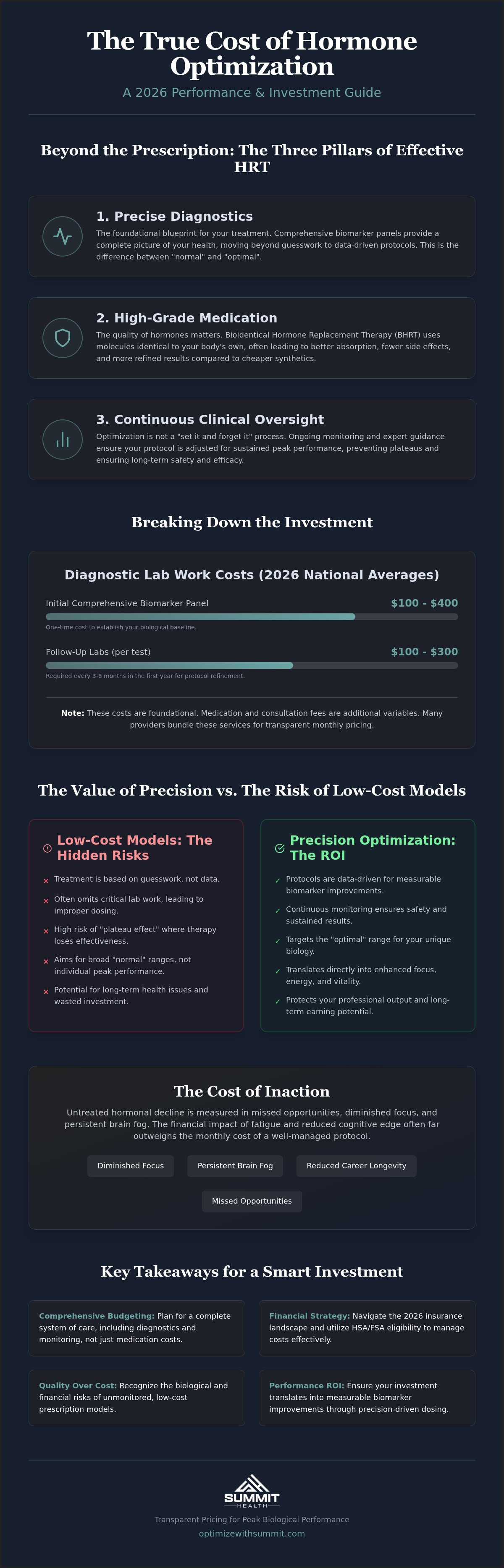
Optimization is an investment in your biological equity. It's never a single transaction at a pharmacy counter. To understand the true hormone replacement therapy cost, one must view it as a three-pillar system: precise diagnostics, high-grade medication, and continuous clinical oversight. Many entry-level providers lure patients with low monthly medication prices. However, these often omit the very labs required to ensure the treatment is actually working. Without data, you aren't optimizing; you're guessing.
Choosing Hormone Replacement Therapy (HRT) involves a critical decision between synthetic options and Bioidentical Hormone Replacement (BHRT). While synthetic alternatives are frequently cheaper, BHRT utilizes hormones that are molecularly identical to those produced by the human body. This biological alignment often results in better absorption and fewer side effects. It's the preferred choice for those seeking refinement rather than just a baseline fix.
There is also the "Cost of Inaction" to consider. For the high-performing professional, the price of untreated hormonal decline is measured in missed opportunities, diminished focus, and persistent brain fog. When your cognitive edge dulls, your career trajectory often follows. Investing in optimization isn't just about feeling better. It's about protecting your professional output and long-term earning potential. The financial impact of fatigue far outweighs the monthly cost of a well-managed protocol.
The Performance Premium: Why Quality Matters
Precision requires data. Standard medical care typically settles for "normal" laboratory ranges, which are often based on a broad, aging population. Peak performance targets the "optimal" range. Reaching these levels safely demands high-end diagnostics and frequent monitoring. These labs act as a biological insurance policy, preventing the long-term health expenditures associated with improper dosing or secondary health issues. Consistent hormonal balance is a direct contributor to career longevity and sustained physical vigor.
Virtual vs. Traditional Clinic Overhead
Traditional, in-person clinics carry significant administrative costs that are inevitably passed on to the patient. Telehealth-led practices like Summit Health eliminate these inefficiencies. By removing the need for physical office visits and travel time, the virtual model maximizes the value of every dollar spent. Digital health coaching and virtual monitoring also improve treatment adherence. It's a more streamlined approach that prioritizes your time and results over sterile waiting rooms. You can explore how this efficiency translates to value by reviewing transparent pricing models that bundle these essential services.
Breaking Down the Investment: Labs, Consultations, and Medications
Data drives dosing. A successful protocol begins with a rigorous assessment of your current biological state. When calculating the total hormone replacement therapy cost, you must account for the infrastructure of care, not just the medication. This infrastructure includes high-fidelity diagnostics, expert clinical oversight, and the delivery method of the hormones themselves. Precision is the difference between a generic prescription and a high-performance strategy.
The Diagnostic Foundation: Lab Work Costs
Safety requires evidence. A comprehensive hormone panel test isn't an optional add-on; it's the foundational blueprint for your treatment. In 2026, national averages for initial comprehensive biomarker panels typically range between $100 and $400. These tests evaluate more than just testosterone or estrogen; they look at metabolic health, inflammatory markers, and thyroid function to create a complete picture of your health.
Precision demands consistency. For the first 12 months, expect follow-up hormone blood work every 3 to 6 months. These follow-up labs, which usually cost between $100 and $300, allow for micro-adjustments in your protocol to ensure you stay within the optimal performance zone. Without these regular check-ins, you risk the "plateau effect" where therapy loses its edge as your body adapts.
Medication Delivery Methods and Pricing
Your delivery method influences both your results and your monthly budget. Hormone replacement therapy pricing reflects the complexity of the preparation and the frequency of use.
- Creams and Gels: These offer steady absorption and are easy to apply. They provide consistent monthly costs but require daily diligence to avoid transference to others.
- Injections: Often considered the gold standard for precision dosing. Injections are frequently the most cost-effective choice for those comfortable with self-administration, allowing for immediate bioavailability.
- Pills and Troches: While oral options like generic estradiol can be as low as $10 to $30 per month, they often face absorption challenges in the digestive tract. Troches offer a middle ground in both price and efficacy.
Clinical supervision is the final, vital component. Ongoing virtual monitoring and health coaching ensure that your protocol evolves with your lifestyle. Additionally, many patients find that ancillary support through supplements like Vitamin D, DHEA, or Magnesium Glycinate is necessary to maximize the benefits of their hormones. To understand which biomarkers require your attention, you can schedule a clinical consultation to review your options.
Insurance vs. Out-of-Pocket: Navigating the Financial Landscape
Financial strategy is as vital as biological strategy. The total hormone replacement therapy cost often hinges on how you navigate the divide between traditional insurance and concierge optimization. Most standard insurance plans are built for disease management. They prioritize "medical necessity," which typically means treating a condition only after it falls outside a broad, standardized range. For the individual seeking peak performance, this reactive model often creates a barrier to proactive refinement.
Standard insurance frequently presents hidden obstacles. High deductibles mean you may pay for months of care out-of-pocket before benefits ever activate. Additionally, the "prior authorization" hurdle remains a significant bureaucratic delay in 2026. This process allows insurers to question a physician's protocol, often resulting in denials for the high-grade preparations required for hormone therapy. Choosing a concierge, cash-pay model bypasses these delays, offering a direct path to the specialized care your biology demands.
Maximizing Your Insurance Benefits
Knowledge is leverage. If you maintain a traditional plan, ask your provider specifically about "out-of-network" reimbursement for specialist consultations. While the therapy itself might be denied for optimization, diagnostic labs are often the easiest component to get covered. Standard plans are more likely to approve blood work if it's coded for general wellness. However, you must accept the reality that insurance rarely funds the shift from "normal" to "optimal." For many, the clinical authority and transparency of a private model outweigh the frustrations of insurance claims.
Medical authorities, such as those discussing Menopause hormone therapy, emphasize that treatment should be highly individualized. This level of customization is difficult to achieve within the rigid confines of a standard insurance network. Concierge models prioritize this bespoke approach, ensuring that your financial investment translates directly into biological results.
The HSA and FSA Strategy
Pre-tax dollars offer a powerful advantage. You can often use health savings accounts (HSA) or flexible spending accounts (FSA) to fund the best online hormone replacement therapy options. Because HRT is a qualified medical expense when prescribed by a licensed provider, these accounts effectively reduce your net hormone replacement therapy cost by up to 30 percent, depending on your tax bracket. It's a sophisticated way to leverage the cash-pay concierge model while maintaining fiscal efficiency.
Documentation is the key to this strategy. Ensure your provider delivers a detailed invoice or a Letter of Medical Necessity to justify the expense to your account administrator. This proactive step secures the long-term tax savings of your performance journey. By utilizing these accounts, you maintain the elite clinical standards of a private practice while utilizing the structural benefits of the modern financial system.
The Hidden Costs of Low-Quality Care vs. Precision Optimization
Cheap is a distraction. The initial hormone replacement therapy cost of a generic prescription often masks the long-term financial burden of unmanaged side effects and missed targets. When you opt for a low-cost, pill-only model, you're essentially paying for a product without a plan. This lack of strategy frequently leads to the "Cheap Pill" trap. Patients often end up spending significantly more on secondary treatments for skin issues, mood swings, or metabolic shifts caused by improper dosing.
Ineffective dosing is a sunk cost. If your biomarkers don't move into the optimal range, every dollar spent on medication is wasted. Many unmonitored protocols fail to achieve the necessary biological shift, leaving the patient in a cycle of persistent symptoms and financial drain. Precision optimization ensures that every milligram of therapy works toward a specific performance goal. This data-driven approach protects your investment by confirming that your protocol is actually delivering measurable results.
Siloed healthcare is inherently inefficient. Treating hormonal decline in one clinic while seeking Weight Loss support or sleep aids elsewhere creates redundant expenses and conflicting advice. A unified optimization plan reduces these integration costs by managing your biology as a single, interconnected system. Utilizing expert Health Coaching within this framework also prevents treatment burnout. This ensures you stay the course long enough to realize the full ROI of your therapy.
Synergy and Cost-Efficiency
Biological systems thrive on balance. By combining Weight Loss protocols with HRT, you achieve faster metabolic refinement and more sustainable results. This synergy often reduces the long-term need for expensive recovery aids or stimulants. When your hormones are optimized, your sleep quality naturally improves. This eliminates the recurring cost of over-the-counter supplements. A single, high-performance partner simplifies your budget and accelerates your progress.
The Quality of Monitoring
Proactive care is a fiscal advantage. Virtual monitoring allows for real-time adjustments that prevent the start-stop cycle common in traditional, slow-moving medical models. Instead of waiting for a health crisis to react, precision care identifies subtle shifts in your data before they manifest as symptoms. This preventative stance is significantly more cost-effective than reactive crisis management. Clinical Oversight is the primary differentiator in HRT value.
To ensure your health investment is backed by clinical authority and data-driven results, schedule your initial performance consultation today.
Summit Health: Transparent Pricing for Peak Biological Performance
Clarity is foundational. At Summit Health, we eliminate the financial ambiguity often associated with long-term medical care. Our commitment to transparent pricing ensures that your focus remains on biological progress rather than hidden fees. By consolidating diagnostics, clinical expertise, and premium medication into a structured model, we provide a definitive view of your total hormone replacement therapy cost from day one. You deserve a financial roadmap that is as precise as your clinical protocol.
The process is methodical. It begins with our diagnostic hormone quiz, a tool designed to identify the specific biomarkers requiring attention. This initial assessment is followed by comprehensive labwork that serves as the baseline for your optimization journey. Unlike traditional clinics that treat labs as a recurring surprise expense, we integrate these essential data points into our core protocols. This is the Summit Health difference. We are a telehealth-led, evidence-based practice built specifically for the high-performance individual who values efficiency and data-driven results.
Your Personalized Road Map
Optimization is a sequence. After your initial diagnostics are complete, you'll receive a bespoke treatment plan tailored to your unique physiology. Our coaching model is designed to maximize the ROI of your health investment by providing continuous virtual monitoring. This ongoing oversight ensures your protocol stays aligned with your evolving goals. We prioritize long-term health refinement over the quick-fix solutions that often lead to metabolic instability. Your roadmap is data-driven, clinical, and focused on sustained excellence. By removing the overhead of traditional brick-and-mortar clinics, we redirect those resources into higher-quality care and more frequent touchpoints with your clinical team.
Start Your Optimization Journey
Your future self requires an investment today. The path to peak biological performance is no longer obscured by confusing insurance policies or fragmented care. By choosing a partner dedicated to transparency and precision, you secure a higher standard of vitality. The first step is simple and diagnostic. Take our hormone quiz to begin the assessment of your current biological state. Once your data is reviewed, you can schedule a virtual consultation with our hormone specialists to finalize your optimization strategy. Invest in the version of yourself that performs at the highest level. True biological optimization is an asset that pays dividends in every area of your professional and personal life.
Secure Your Biological Future
Investing in your health is the most significant hedge against the physiological friction of aging. As this guide has demonstrated, the true hormone replacement therapy cost is a reflection of the clinical infrastructure required to sustain peak performance. It represents a fundamental shift from reactive symptom management to proactive biological optimization. By prioritizing comprehensive labwork protocols and expert health coaching, you ensure that every protocol adjustment is backed by definitive data rather than guesswork.
Summit Health delivers this through telehealth-led precision medicine. We remove the administrative bloat of traditional clinics to focus entirely on your measurable results. You now possess the clarity to move past the "cheap pill" trap and toward a unified, evidence-based strategy. This journey is about more than just achieving balance; it's about the refinement of your biological state for sustained career and life longevity. Your future self is a product of the decisions you make today.
View our transparent pricing and start your optimization journey
The pursuit of excellence is a continuous process. We are here to provide the clinical authority and aspirational guidance you need to reach your peak. Step into a version of yourself that is disciplined, knowledgeable, and fully optimized.
Frequently Asked Questions
How much does hormone replacement therapy cost per month on average in 2026?
Monthly costs in 2026 vary significantly based on the provider model and medication delivery method. Online clinics typically charge between $70 and $230 per month for comprehensive service packages that include clinician visits and monitoring. This range reflects the shift toward bundled pricing, though specialized medications or high-frequency lab work can increase the total monthly investment.
Is hormone replacement therapy covered by insurance for performance optimization?
Standard insurance rarely covers therapy specifically for performance optimization or sub-clinical refinement. Coverage is generally reserved for diagnosed medical necessity. While 2026 mandates in states like Illinois and New Jersey have expanded coverage for menopause care, individuals seeking peak performance typically utilize cash-pay models or HSA funds to bypass the rigid constraints of traditional insurance networks.
What are the hidden fees in online HRT programs?
Hidden fees often manifest as mandatory monthly membership dues, separate laboratory charges, or high shipping costs for prescriptions. Some platforms utilize a tiered subscription model where the base price excludes essential clinician consultations or follow-up labs. It is vital to confirm whether the quoted hormone replacement therapy cost includes the clinical oversight and health coaching required for long-term safety.
How much does the initial hormone blood work cost?
A comprehensive initial hormone panel typically costs between $100 and $400 in 2026. This foundational expense is necessary to establish a precise biological baseline across a broad spectrum of biomarkers. Follow-up labs, which are required every three to six months during the first year of therapy, generally range from $100 to $300 per session to ensure protocol accuracy.
Is bioidentical hormone therapy more expensive than synthetic options?
Bioidentical hormone therapy (BHRT) is often more expensive than synthetic alternatives, particularly when using custom-compounded preparations. Compounded BHRT typically costs between $50 and $200 per month and is rarely eligible for insurance reimbursement. Synthetic generic pills remain the most affordable entry point at $10 to $30 per month, though they often lack the molecular precision of BHRT.
Can I use my HSA or FSA for Summit Health hormone optimization?
Yes. You can typically use Health Savings Account (HSA) or Flexible Spending Account (FSA) funds for hormone optimization when prescribed by a licensed medical provider. Because HRT and diagnostic lab work are qualified medical expenses, utilizing these pre-tax dollars can effectively reduce your net hormone replacement therapy cost by up to 30 percent, depending on your tax bracket.
What is the cost difference between HRT pills, creams, and injections?
Delivery methods vary in price due to preparation complexity and absorption rates. Generic oral pills are the most affordable, often ranging from $10 to $30 per month. Transdermal creams and gels offer middle-ground pricing, while injections are frequently the most cost-effective choice for those seeking high-precision dosing and immediate bioavailability without the "pill-fatigue" of daily oral protocols.
Does the cost of HRT include health coaching and monitoring?
In a concierge or performance-focused model, the total investment includes ongoing clinical monitoring and expert health coaching. Many low-cost, prescription-only providers treat these as ancillary services or omit them entirely to reduce the sticker price. A high-value program views continuous oversight as a core component of the therapy, ensuring that your protocol evolves alongside your biological data.

Article by
Dr. David Richardson
David Richardson, is the founder and CEO of Summit Health and the author of "Insights from the Summit", where he writes about hormone optimization, metabolic health, thyroid function, longevity, and preventive medicine.
After entering healthcare in 2009, David became increasingly interested in a question that traditional medicine often struggles to answer:
Why do so many people continue to feel terrible despite being told their labs are "normal"?
That question eventually led him into the field of health optimization in 2020, where he became passionate about understanding physiology at a deeper level and helping patients uncover the root causes of their symptoms rather than simply managing them.
Today, David's philosophy is simple: normal and optimal are not the same thing. Every patient is physiologically unique, and meaningful healthcare begins by listening to symptoms, understanding the science, and recognizing that laboratory values are only one piece of a much larger picture.
Through Summit Health and Insights from the Summit, David's mission is to help people better understand their bodies, ask better questions, and make informed decisions that improve both their health span and quality of life.


