

IMPORTANT DISCLAIMERS
Medical Disclaimer: The information in this article is provided for educational purposes only and is not intended as medical advice or a substitute for individualized medical care. Every person's health needs are unique. Always consult a qualified healthcare professional before starting, stopping, or changing any medication, supplement, or treatment plan. -------
Article Disclaimer: Articles are reviewed and published by Summit Health to provide evidence-based educational information. While Summit Health strives to provide reliable and current health information, medical knowledge is always evolving over time. Depending on when you are reading this content, it may not reflect the latest research or apply to your individual circumstances.
Vasomotor symptoms aren't a mandatory tax on aging. They're a biological data point. When you experience the sudden disruption of night sweats and hot flashes, your body is signaling a system in need of precision recalibration. You've likely grown tired of the generic advice to "just wait it out" while your sleep quality and physical confidence suffer. It's time to move beyond mere management toward true optimization.
You deserve a strategy that respects your biology. We'll show you how to identify the specific drivers behind these symptoms and introduce a sophisticated framework for restoring systemic balance. This guide outlines the clinical path to a precision-mapped hormonal profile, ensuring you regain control over your metabolic health and daily performance. We'll explore the latest in bioidentical replacement and diagnostic labwork to help you reclaim a life of peak vitality.
Key Takeaways
- Decode the biological mechanism. Understand how estrogen fluctuations narrow the thermoneutral zone in the hypothalamus to trigger sudden temperature spikes.
- Protect your metabolic health. Discover the clinical correlation between frequent night sweats and hot flashes and long-term cardiovascular risk markers.
- Adopt a tiered intervention strategy. Move from foundational lifestyle refinements to sophisticated, precision-mapped clinical solutions.
- Prioritize diagnostic accuracy. Identify the essential biomarkers required for a comprehensive lab panel to eliminate guesswork and generic medical advice.
- Leverage virtual expertise. Access personalized hormone optimization and ongoing monitoring through a modern, telehealth-led medical framework.
Understanding the Mechanism: Why Hot Flashes Occur
Clinical clarity is essential. Vasomotor symptoms, or VMS, is the medical designation for the sudden sensations of heat and perspiration colloquially known as night sweats hot flashes. These episodes aren't merely "flushes." They're complex neurological events. While often dismissed as a minor inconvenience, VMS represents a profound shift in the body's internal regulatory environment. Understanding the transition from perimenopausal spikes to the postmenopausal steady-state decline is the first step toward optimization.
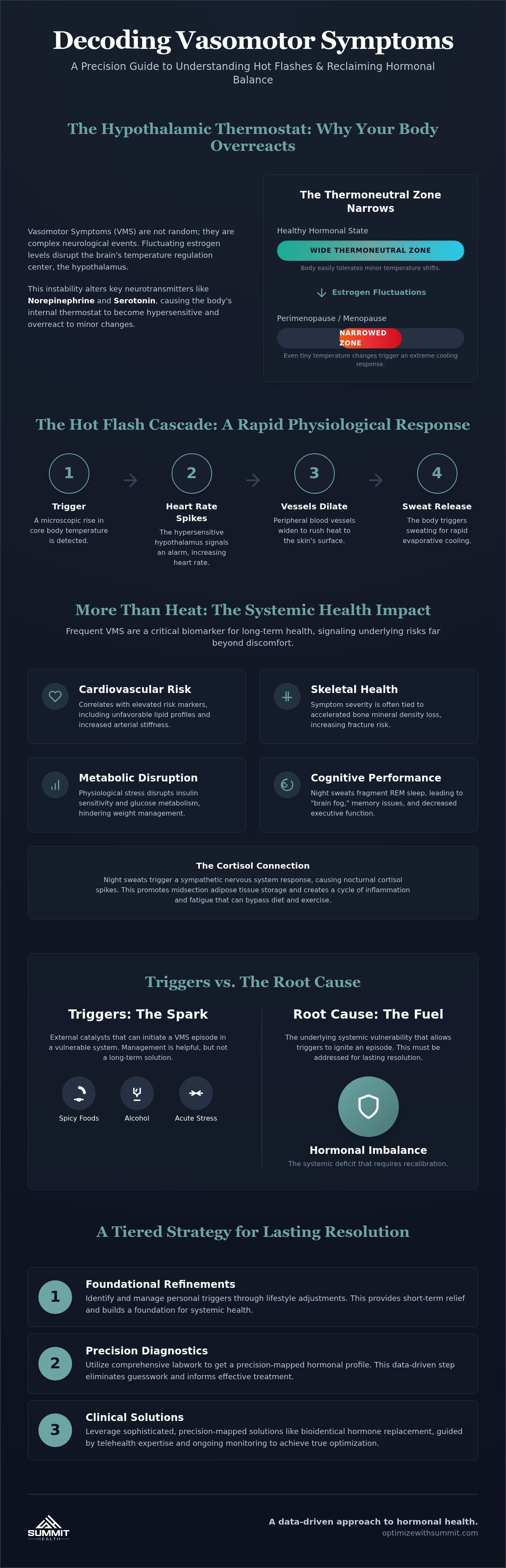
The brain is a complex machine. Estrogen acts as a vital stabilizer within the central nervous system, particularly in the hypothalamus. When estrogen levels fluctuate erratically during perimenopause, the brain's thermostat loses its baseline. This instability alters the levels of norepinephrine and serotonin, two neurotransmitters critical for temperature regulation. The result is a narrowed "thermoneutral zone," where even a microscopic rise in core body temperature triggers an aggressive cooling response. Precision matters here; we aren't just treating a symptom, but recalibrating a biological sensor.
The Hypothalamic Reset
The brain becomes hyper-alert. In a healthy state, the hypothalamus manages temperature with subtle adjustments. During hormonal transition, it becomes hypersensitive to slight shifts. This sensitivity initiates a rapid physiological cascade. First, the heart rate increases. Next, peripheral blood vessels dilate to move heat to the skin's surface. Finally, the body releases sweat to induce evaporative cooling. This process is particularly damaging at night. It fragments sleep architecture and prevents the body from entering deep, restorative REM cycles. Without quality sleep, cognitive performance and physical recovery suffer.
Triggers vs. Root Causes
Distinguish the spark from the fuel. Many people focus on external catalysts such as alcohol, spicy foods, or acute stress. These are triggers. They initiate the heat response, but they don't cause the underlying vulnerability. Hormonal imbalance is the fuel that allows these triggers to ignite a VMS episode. Identifying these catalysts is helpful for short-term management, but long-term resolution requires addressing the systemic deficit.
The thermoneutral zone is the specific temperature range within which the body maintains its core temperature without needing to trigger active cooling or heating mechanisms. When this zone narrows, your body's tolerance for temperature variance vanishes. Restoring this range requires more than lifestyle avoidance; it demands a data-driven approach to hormonal balance and systemic health. It's about moving from reactive cooling to proactive stabilization.
Beyond the Heat: The Impact of Hot Flashes on Metabolic Health
Hot flashes are more than a sensory experience. They serve as a vital biomarker for your systemic health. Frequent episodes often correlate with elevated cardiovascular risk markers, including unfavorable lipid profiles and increased arterial stiffness. When you ignore these signals, you miss a critical window for metabolic protection. These symptoms are your body's early warning system for long-term vascular health and systemic resilience.
Structural integrity is at stake. Research indicates that the severity of vasomotor symptoms is often tied to accelerated bone mineral density loss. This isn't just about "feeling hot." It is about skeletal preservation. Similarly, the physiological stress of chronic episodes disrupts insulin sensitivity and glucose metabolism. This makes weight management an uphill battle regardless of caloric intake or exercise intensity. Finding effective hot flash management strategies is therefore a metabolic necessity, not a luxury.
The Cortisol Connection
Biological stress is cumulative. Night sweats trigger an immediate sympathetic nervous system response, leading to a nocturnal cortisol spike. You wake up feeling "tired but wired," a state that actively promotes adipose tissue storage in the midsection. This hormonal cascade bypasses traditional diet and exercise logic. It creates a cycle of inflammation and fatigue that is difficult to break without clinical intervention. To understand how your specific symptoms align with these patterns, take our Hormone Quiz to begin your data-driven assessment.
Cognitive Performance and Night Sweats
Precision performance requires restorative sleep. Severe night sweats fragment sleep architecture, specifically targeting the REM cycles needed for memory consolidation and emotional regulation. This disruption manifests as "brain fog," characterized by decreased executive function and a loss of mental sharpness. For the high-performing professional, managing night sweats and hot flashes is essential for maintaining a competitive edge. It is the difference between surviving the day and leading it. Cognitive longevity depends on the quality of your recovery.
Biological balance is the foundation of peak performance. Addressing these metabolic impacts requires a clinical framework that looks beyond the surface. You can schedule a comprehensive consultation to start mapping your specific path to systemic restoration and long-term metabolic health.
Strategic Interventions: Lifestyle Refinements and Clinical Solutions
Tiered resolution works. We categorize effective interventions into three distinct levels: Foundation, Support, and Precision. While lifestyle shifts provide the necessary base, clinical solutions offer the definitive recalibration needed for severe night sweats and hot flashes. Relying solely on one layer often leads to incomplete results. A sophisticated plan integrates all three to ensure long-term systemic balance and peak performance.
- Foundation: Metabolic health and nutritional optimization.
- Support: Targeted supplementation and sleep environment technology.
- Precision: Data-driven clinical therapies like BHRT.
Non-hormonal options exist but often provide only marginal relief for severe cases. While certain botanicals or SSRIs can reduce the frequency of episodes, they don't address the underlying hormonal deficit. Bioidentical Hormone Replacement Therapy remains the superior choice for those seeking a total return to vitality. It doesn't just mask the heat. It restores the biological signals the brain requires to regulate temperature correctly.
Lifestyle and Foundations
Biology rewards consistency. Weight management is a primary lever for reducing VMS severity. Excess adipose tissue can contribute to hormonal dysregulation and increased core temperature, making episodes more frequent. Focus on dietary shifts that support estrogen metabolism, such as increased cruciferous vegetable intake. For those struggling with sleep fragmentation, we recommend Magnesium Glycinate for sleep. It serves as a foundational recovery tool by calming the nervous system and supporting deeper rest cycles.
The Clinical Standard: BHRT
Precision medicine is the gold standard. Bioidentical Hormone Replacement Therapy, or BHRT, uses hormones that are molecularly identical to those produced naturally by your body. Distinguish between systemic therapy, which treats the whole body, and localized options like Estradiol Vaginal Cream, which targets specific tissue health. Both have unique roles in a comprehensive optimization plan.
Safety is confirmed. The 2026 clinical consensus confirms that for healthy women under 60, the benefits of BHRT for managing symptoms and protecting bone density far outweigh the risks. This data-driven perspective allows for a proactive rather than reactive approach to aging. For acute relief during a sudden temperature spike, practice box breathing. This technique down-regulates the sympathetic nervous system and provides immediate physiological calm. Combine this with temperature-regulated bedding or wearable cooling tech to maintain a stable thermoneutral zone throughout the night.
Diagnostic Precision: Identifying the Root Cause via Labwork
Data drives decisions. A "wait and see" approach is a passive strategy that wastes valuable time while your systemic health declines. To effectively manage night sweats and hot flashes, you need a precise map of your internal landscape. Without comprehensive labwork, any intervention is merely an educated guess. We believe in diagnostic certainty over symptomatic speculation.
Precision diagnostics require a specific midlife hormone panel. This isn't a standard wellness screen. It must include Estradiol to measure primary estrogen production, Follicle Stimulating Hormone (FSH) to determine the brain's signaling intensity, and Progesterone to assess hormonal balance. We also screen thyroid markers and adrenal function. These systems often mimic vasomotor symptoms; ruling out thyroid dysfunction or adrenal fatigue is essential for an accurate diagnosis. Identifying the root cause is the only path to a permanent solution.
The Summit Health Protocol
Data over guesswork. Our clinical approach centers on Hormone Blood Work as the foundation of precision medicine. Baseline testing allows us to see exactly where your levels sit before any optimization begins. This prevents the "trial and error" cycle common with generic prescriptions. We use your unique biological data to build a bespoke plan that targets the deficiency directly. It's about moving from broad treatment to individualized restoration.
Interpreting the Results
Optimal is the goal. Most clinical labs provide "normal" ranges based on a broad population average, which often includes individuals with suboptimal health. We focus on "optimal" ranges designed for peak performance and long-term metabolic protection. Your FSH levels, for instance, provide clear confirmation of your specific stage in the menopausal transition. Knowing this allows for better timing and dosing of clinical interventions. Use this checklist for your next assessment:
- Estradiol (E2): To evaluate primary estrogen levels.
- FSH: To confirm the stage of hormonal transition.
- Progesterone: To ensure balance and sleep support.
- Thyroid Panel: Including TSH, Free T3, and Free T4.
- AM Cortisol: To assess adrenal health and stress response.
Hormonal optimization starts with a clear baseline. You can't manage what you don't measure. If you're ready to move beyond generic advice and see your actual data, book your comprehensive lab review today to begin your journey toward systemic balance.
Modern Management: Telehealth-Led Hormone Optimization
Access is the catalyst. Traditional medicine often requires navigating sterile waiting rooms for brief consultations that result in generic solutions. Telehealth-led care removes these barriers. It offers a private, streamlined environment where you can engage with experts who specialize in biological balance. This model provides ongoing virtual monitoring, ensuring your treatment evolves alongside your physiology. It's a continuous partnership designed to eliminate night sweats and hot flashes while elevating your overall quality of life.
Data meets guidance. At Summit Health, we integrate comprehensive lab results with personalized health coaching to create a cohesive roadmap. We don't just provide a prescription. We provide a framework for refinement. This involves a logical transition from the initial diagnostic phase to a tailored Hormone Therapy plan. By combining clinical precision with behavioral support, we ensure your body has the resources it needs for sustained metabolic protection and peak performance.
Focus on the upward movement. Traditional healthcare is often reactive, focusing on the "treatment" of illness once it becomes unbearable. Optimization is different. It is an intentional, proactive pursuit of excellence. We view hormonal health as a performance tool. By refining your current state, we help you achieve a premium version of your life where symptoms don't just disappear; they're replaced by vitality and resilience. It's about moving from baseline to peak.
The Boutique Telehealth Experience
Convenience is a prerequisite for consistency. Our approach utilizes at-home lab kits and virtual specialist visits to respect your time and privacy. There's no need for the clinical friction of traditional settings. We've replaced the sterile doctor's office with a bespoke, tech-forward experience. This focus on efficiency allows you to prioritize long-term wellness refinement without disrupting your professional or personal commitments. You receive specialist access with the sleekness of a modern innovator.
Taking the First Step
Information is only valuable when followed by action. You've identified the biological drivers and explored the clinical solutions. Now, it's time to move toward resolution. Whether you choose to dive into a full consultation or start with a preliminary assessment, the path forward is clear. You can take our hormone quiz to identify your specific needs or connect with us to speak with a specialist. It's time to Optimize your hormonal health with Summit Health and reclaim your peak state.
Reclaim Your Biological Edge
Systemic balance is achievable. You've moved beyond the surface level of temperature management and into the sophisticated territory of biological recalibration. The sudden onset of night sweats and hot flashes are no longer disruptions to be endured; they're data points that guide your path toward optimization. By identifying hypothalamic drivers and metabolic impacts, you've established a foundation for long-term health and cognitive longevity.
Peak performance requires precision. Our telehealth-led hormone optimization uses comprehensive labwork to build bespoke plans that reflect your unique physiology. With ongoing health coaching, you don't just eliminate symptoms; you refine your state of being. It's time to move from surviving the transition to mastering it through data-driven results and expert guidance.
Your journey toward a premium version of life starts with a single, intentional step. You can Begin Your Optimization Journey with a Precision Hormone Quiz to discover exactly what your body needs. Reclaiming your vitality is a pursuit of excellence, and we're here to guide you to the peak of your potential. You've got the tools; now it's time to use them.
Frequently Asked Questions
How long do hot flashes typically last during menopause?
Vasomotor symptoms typically persist for seven to ten years, though the duration varies significantly between individuals. For some, the transition is brief; for others, the biological recalibration takes a decade or longer. Early clinical intervention can prevent this extended period of discomfort and systemic decline, allowing for a more efficient return to peak performance.
Can hot flashes occur during perimenopause before periods stop?
Yes, vasomotor symptoms frequently manifest during perimenopause, often years before your final menstrual period. These early episodes are biological signals of fluctuating estrogen levels. Addressing these shifts early through data-driven optimization prevents the escalation of symptoms and hot flashes as you approach the menopausal transition. It's a proactive step toward maintaining systemic balance.
Are hot flashes dangerous for my heart health?
Frequent and severe episodes are clinically correlated with increased cardiovascular risk markers, including arterial stiffness and unfavorable lipid profiles. They aren't just "bothersome" events; they're indicators of vascular stress. Managing them is a critical component of a long-term strategy for heart health and metabolic protection. Precision management ensures your vascular system remains resilient during hormonal shifts.
What is the most effective non-hormonal treatment for hot flashes?
Cognitive behavioral therapy and certain low-dose SSRIs are currently considered the most effective non-hormonal options for symptom reduction. While these can decrease frequency by roughly 40 to 60 percent, they don't address the underlying hormonal deficit. They're management tools rather than optimization solutions. They provide relief without recalibrating the system's biological baseline.
Does weight loss help reduce the frequency of hot flashes?
Reducing adipose tissue significantly lowers the frequency and severity of vasomotor symptoms. Fat tissue can contribute to hormonal dysregulation and increased core temperature, making episodes more aggressive. Achieving a healthy weight through metabolic optimization creates a more stable thermoneutral zone. This provides foundational relief from systemic heat spikes and supports overall metabolic health.
Can magnesium or other supplements stop hot flashes?
Magnesium glycinate supports the nervous system and improves sleep quality, but it rarely stops vasomotor symptoms on its own. Supplements function as foundational support rather than primary treatment. For definitive resolution of and hot flashes, precision-mapped clinical interventions are typically required to restore hormonal balance and stabilize the hypothalamic thermostat.
How do I know if my hot flashes are severe enough for HRT?
If symptoms disrupt your sleep architecture, impair your cognitive performance, or affect your physical confidence, they're severe enough to consider clinical intervention. You don't need to reach a state of total exhaustion before seeking help. A comprehensive lab review will determine if your biomarkers justify a tailored BHRT plan for optimal restoration.
What is the difference between a hot flash and a night sweat?
A hot flash is a sudden sensation of intense heat during waking hours, while a night sweat is a vasomotor episode that occurs during sleep, often leading to soaked bedding. Both share the same underlying mechanism of hypothalamic hypersensitivity. Night sweats are particularly damaging because they fragment REM cycles and impair cognitive recovery, leading to chronic daytime fatigue.

Article by
Dr. David Richardson
David Richardson, is the founder and CEO of Summit Health and the author of "Insights from the Summit", where he writes about hormone optimization, metabolic health, thyroid function, longevity, and preventive medicine.
After entering healthcare in 2009, David became increasingly interested in a question that traditional medicine often struggles to answer:
Why do so many people continue to feel terrible despite being told their labs are "normal"?
That question eventually led him into the field of health optimization in 2020, where he became passionate about understanding physiology at a deeper level and helping patients uncover the root causes of their symptoms rather than simply managing them.
Today, David's philosophy is simple: normal and optimal are not the same thing. Every patient is physiologically unique, and meaningful healthcare begins by listening to symptoms, understanding the science, and recognizing that laboratory values are only one piece of a much larger picture.
Through Summit Health and Insights from the Summit, David's mission is to help people better understand their bodies, ask better questions, and make informed decisions that improve both their health span and quality of life.


