

IMPORTANT DISCLAIMERS
Medical Disclaimer: The information in this article is provided for educational purposes only and is not intended as medical advice or a substitute for individualized medical care. Every person's health needs are unique. Always consult a qualified healthcare professional before starting, stopping, or changing any medication, supplement, or treatment plan. -------
Article Disclaimer: Articles are reviewed and published by Summit Health to provide evidence-based educational information. While Summit Health strives to provide reliable and current health information, medical knowledge is always evolving over time. Depending on when you are reading this content, it may not reflect the latest research or apply to your individual circumstances.
Your clinical lab results say you are "normal." Your body tells a different story. Persistent fatigue, brain fog, and stubborn midsection weight gain suggest a system out of balance, yet traditional diagnostics often fail to capture the nuance of your endocrine health. Precision hormone testing for women is no longer just about identifying disease. It is about engineering peak performance. Data driven. Personalized. Restorative.
You're likely tired of being told everything is fine while feeling anything but. We agree that true health is a state of optimization, not just the absence of illness. This 2026 guide provides the blueprint for moving beyond standard ranges to achieve hormonal excellence. You'll discover the specific markers required for a complete biological profile, the impact of the FDA's recent removal of the "black box" warning on hormone therapy, and how expert-led telehealth can translate your data into actionable weight loss and energy insights.
Key Takeaways
- Diagnostic precision. Move beyond "normal" lab results to identify the sub-optimal states causing persistent fatigue and weight gain.
- Comprehensive data. Learn why effective hormone testing for women requires analyzing specific biomarkers like free testosterone to unlock metabolic clarity.
- Strategic timing. Master the protocol for cycle-syncing your labs on days 19, 20, or 21 to ensure your results reflect your true biological state.
- Personalized design. Discover how diagnostic data transforms into a customized treatment plan featuring bioidentical hormone replacement and medical weight loss.
Beyond "Normal": Why Precision Hormone Testing Matters
Normal is not a destination. It is a statistical average of a population that is increasingly unwell. When you receive a lab report stating your levels are "within range," you are being compared to a broad demographic that includes the sedentary and the chronically stressed. This is the "normal" trap. For the high-performing individual, hormone testing for women is the only way to move beyond these generic averages to find a personal peak.
Diagnostic precision. This is the shift from merely checking for disease to actively testing for performance. Traditional medicine often waits for a system to fail before intervening. We believe in refinement. Your biological individuality means your baseline is unique; a level that allows one person to thrive might leave you feeling depleted and foggy. True wellness requires a diagnostic approach that respects your specific physiological requirements.
The Limitations of Traditional Lab Panels
Standard medical testing typically focuses on isolated markers. A physician might check your Glucose or TSH and stop if the numbers fall within the expected range. However, hormones do not work in isolation. They exist in a delicate, interconnected web. Looking at one marker without considering the interplay between others, such as the ratio of progesterone to estradiol, leaves a massive gap in your health story. While many women first encounter these markers through a comprehensive overview of fertility testing, the broader implications for energy, weight management, and mood are often ignored in conventional settings. We prioritize a deep dive into these relationships to identify sub-optimal states before they manifest as chronic issues.
Summit Health: A New Standard in Diagnostics
We have redefined the diagnostic experience to meet the needs of the modern, high-achieving woman. Our approach uses comprehensive labwork as the foundational data set for hormone therapy and restorative wellness. We don't just hand you a report. We integrate your biological data with high-performance health coaching to ensure your results translate into tangible improvements in your daily life. Through our telehealth-led practice, we provide nationwide access to advanced diagnostics and virtual monitoring. This ensures that your optimization plan is as convenient as it is precise. Data driven. Personalized. Restorative.
Hormone testing for women is the essential biological blueprint for high-performance living.
The Essential Female Hormone Panel: Key Biomarkers
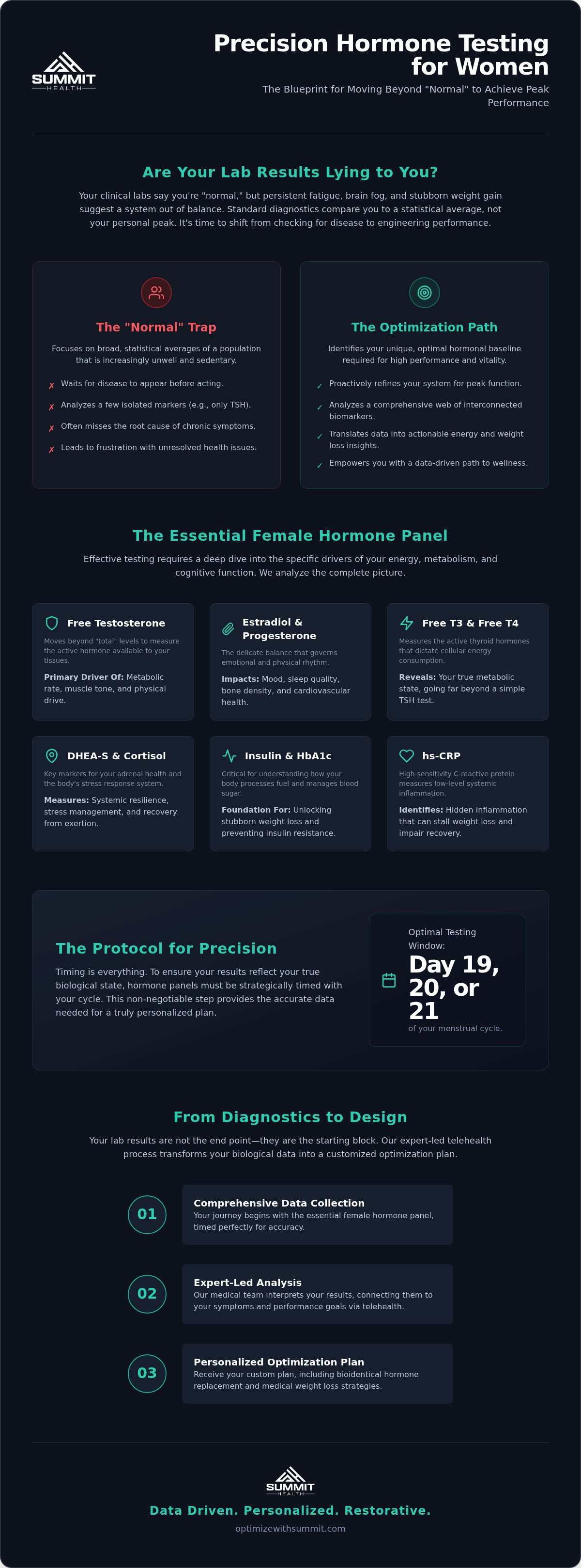
Biological clarity. A comprehensive diagnostic panel is the only way to map your internal landscape with precision. While standard medicine often relies on a handful of surface-level markers, hormone testing for women must be exhaustive to be effective. We analyze the specific drivers of your energy, metabolism, and cognitive function to move beyond guesswork into data-driven optimization.
Total vs. Free Testosterone. Most providers only measure total testosterone, yet this only shows your body's reservoir. Free testosterone represents the active hormone available to your tissues. It is the primary fuel behind your metabolic rate and physical drive. Estradiol and Progesterone govern your emotional and physical rhythm. An Estrogen Levels Test provides insight into bone density and cardiovascular health, but it must be balanced against progesterone. Progesterone acts as a natural sedative for the brain, facilitating the deep, restorative sleep necessary for cellular repair and cognitive clarity.
Thyroid Optimization. We look past TSH. To understand your true metabolic state, we must measure Free T3 and Free T4. These are the active thyroid hormones that dictate how every cell in your body consumes energy. DHEA-S and Cortisol measure your body’s resilience. They reveal how your system manages stress and recovers from exertion. If you are curious about how these biomarkers currently align, you can take our hormone quiz to begin your assessment.
Metabolic Markers and Weight Loss
Stubborn weight gain is rarely a matter of willpower. It is often a metabolic signaling error. Insulin and HbA1c are critical for understanding how your body processes fuel and whether you are trending toward insulin resistance. These markers are the foundation of successful weight loss outcomes. We also monitor high-sensitivity C-reactive protein (hs-CRP) to identify systemic inflammation that may be stalling your progress. Hormonal balance and metabolic health are inseparable.
Adrenal and Stress Response Testing
The "Cortisol Steal." When your body is under chronic stress, it prioritizes cortisol production over sex hormones like progesterone and testosterone. This biological trade-off leads to persistent fatigue and muscle loss. DHEA-S serves as a vital counter-balance to cortisol; it is essential for cognitive longevity and physical recovery. Low DHEA-S levels are a hidden link to midsection weight gain and decreased mental sharpness. By identifying these adrenal imbalances early, we can implement strategies to restore your body's stress-management capacity and protect your long-term vitality.
Interpreting Your Results: Reference Ranges vs. Peak Optimization
Interpretation is the bridge between raw data and transformative action. A lab report is only as valuable as the lens through which it is viewed. Standard reference ranges are designed to detect pathology, not to define excellence. They identify the point where you become "clinically ill," but they fail to mark the point where you begin to truly thrive. For hormone testing for women to be effective, we must look beyond these broad population averages to find your specific "Sweet Spot" of vitality.
Refining the range requires an understanding of your unique baseline. We don't just look for numbers that fall within the lines; we look for the levels that align with your symptoms and lifestyle goals. If your energy is low despite "normal" results, the numbers are sub-optimal for your system. Optimal is the state where biological markers support peak physical and mental performance. It is a proactive target rather than a reactive measurement.
Serial testing tells a story that a single snapshot cannot. Hormones are dynamic. They fluctuate based on your cycle, stress levels, and recovery. By analyzing trends over time, we can identify whether your system is trending toward optimization or drifting toward imbalance. This contextual analysis allows for a more nuanced approach to your health, ensuring that every adjustment is based on a clear trajectory of biological data.
Normal vs. Optimal: A Clinical Comparison
Standard reference ranges represent the absence of acute illness. They are calculated based on the average of everyone who visits a lab, including those with chronic conditions. In contrast, an optimal range represents the presence of peak energy, focus, and metabolic efficiency. At Summit Health, we focus on the upper quartiles of "normal" for performance markers like testosterone and DHEA-S. We believe that being in the bottom 10 percent of a range is not the same as being healthy; it is simply not being sick yet.
The Role of SHBG in Hormone Availability
Sex Hormone Binding Globulin (SHBG) acts as a primary regulator in your system. High "Total" levels on a lab report can often mask a functional deficiency in "Free" hormones. SHBG binds to hormones like testosterone and estrogen, making them unavailable for your cells to use. If your SHBG is too high, you may experience symptoms of low hormones even if your total numbers look impressive. We interpret the Free Androgen Index to gain a clearer picture of your actual hormonal availability. This level of detail is what separates basic diagnostics from true health optimization.
The Testing Protocol: Timing, Preparation, and Accuracy
Data integrity is paramount. If the collection protocol is flawed, the resulting data is useless. Precision hormone testing for women requires more than a simple blood draw; it demands tactical timing and meticulous preparation. To build an accurate biological profile, we must align your diagnostics with the natural fluctuations of your endocrine system.
Cycle-syncing your labs is the most critical factor for accuracy. For women with regular cycles, we prioritize testing on Day 19, 20, or 21. This window represents the peak of the luteal phase, providing the only reliable snapshot of your progesterone production and its relationship with estradiol. Testing outside of this window often leads to "normal" results that mask a functional deficiency. For a deeper dive into these temporal requirements, consult our sibling article: The Best Time to Test for Hormone Imbalance: A 2026 Optimization Guide.
Fasting and hydration are equally essential. We require a 12-hour fast to ensure the integrity of your metabolic and lipid markers, including insulin and glucose. Dehydration can artificially concentrate certain markers, leading to skewed interpretations. Supplement awareness is another often-overlooked variable. High doses of Biotin, common in many "hair and nail" vitamins, can interfere with the immunoassays used to measure TSH and other critical hormones. We recommend pausing these supplements 48 to 72 hours before your draw.
Precision Logistics for Reliable Data
Morning testing is non-negotiable for specific markers. Cortisol and testosterone follow a diurnal rhythm, peaking between 8:00 AM and 10:00 AM. Testing later in the day provides a diminished view of your system's capacity. Consistency in lab providers also matters; different facilities may use varying assays and reference ranges, making long-term tracking difficult. You can prepare for your hormone blood work by ensuring you are well-rested and have avoided strenuous exercise for 24 hours prior to collection.
Navigating Menopause and Perimenopause Testing
Testing strategies change when cycles become irregular or absent. In perimenopause, we rely on the relationship between FSH (Follicle-Stimulating Hormone) and LH (Luteinizing Hormone) to determine your current hormonal stage. For women in menopause, hormone testing for women can be conducted at any time, as the biological volatility has leveled. However, symptom tracking remains just as important as blood work during this transition. Your subjective experience of energy, mood, and sleep provides the necessary context for your objective lab data. To begin your data-driven journey, you should schedule a consultation with our clinical team to review your testing options.
From Diagnostics to Design: Your Personalized Optimization Plan
Data driven design. At Summit Health, we believe that a lab report is only as valuable as the protocol it inspires. Comprehensive hormone testing for women is not the end of the journey; it is the foundation for a sophisticated, high performance lifestyle. We transform raw biological data into a structured, architectural plan for your health. This is the shift from reactive treatment to proactive refinement.
The integrative edge. We align hormone optimization with targeted sleep and recovery support to ensure your system functions as a cohesive unit. While 80 percent of women suffer from a hormonal imbalance at some point in their lives, very few receive a plan tailored to their specific biological state. We bridge this gap by combining clinical precision with lifestyle engineering. It's a bespoke experience designed for those who refuse to settle for "fine."
The Summit Health Telehealth Experience
Efficiency matters. Our telehealth model respects your time while providing elite clinical oversight. You won't spend hours in a waiting room; instead, you'll engage in high level virtual consultations that prioritize your specific performance goals. Access to specialized health coaching ensures you have the support needed to implement your protocol effectively. Ongoing monitoring is the key to maintaining your peak state. We don't just set a plan and walk away; we refine your strategy as your biology evolves, ensuring long term vitality.
Next Steps: Taking Control of Your Biology
Your journey begins with clarity. Start with our Hormone Quiz to identify your primary needs and metabolic priorities. Once you've established your focus, you can book your comprehensive diagnostic panel through our national lab partners. This ensures professional collection and data integrity. During your initial virtual results review, a Summit Health specialist will walk you through your markers, explaining the "why" behind every recommendation. You'll leave with a clear understanding of your current state and a definitive path forward. With 72 percent of clinicians now reporting that patients are bringing their own data to appointments, the era of passive healthcare is over.
Claim your biological edge and begin your optimization today.
Master Your Biological Blueprint
Precision is the standard. You now understand that "normal" lab results often mask sub-optimal health states that drain your energy and stall your metabolic progress. By utilizing comprehensive 2026 diagnostic protocols, you can identify the exact biomarkers required to unlock your peak performance. This is the foundation of telehealth-led precision medicine. It's about moving from guesswork to a data-driven strategy that respects your unique biological state and long term goals.
Effective hormone testing for women is the essential first step toward a life defined by vitality rather than symptom management. We provide the personalized plans and virtual monitoring necessary to refine your health as your body evolves. Your biology isn't static; your optimization plan shouldn't be either. It's time to stop settling for a baseline existence and start engineering your elite state. You deserve a healthcare partner that values excellence as much as you do.
Start your optimization journey with our hormone quiz today and discover what's possible when your body is in perfect alignment. The path to your most optimized self is clear, intentional, and backed by science.
Frequently Asked Questions
How often should women have their hormones tested?
Frequency depends on your current stage of optimization. We recommend an initial baseline diagnostic followed by re-testing every three to six months during the active refinement phase of your treatment. Once you achieve and maintain your peak state, annual or bi-annual monitoring is sufficient to ensure long term biological stability and performance.
Can I test my hormones while on birth control?
You can test, but the results will reflect the influence of synthetic hormones. Hormonal contraceptives suppress your natural endocrine production, which makes it difficult to assess your true baseline estradiol or progesterone levels. However, hormone testing for women remains vital for monitoring thyroid function, adrenal health, and metabolic markers while using birth control.
What is the best time of the month for hormone testing?
Precision requires specific timing within your cycle. For women with a regular menstrual cycle, the clinical gold standard is testing during the mid-luteal phase, typically on Day 19, 20, or 21. This specific window provides the most accurate data regarding your progesterone production and its critical balance with estradiol.
What is the difference between blood, saliva, and urine hormone testing?
Serum blood testing is the clinical gold standard for diagnostic precision. It provides the most reliable measurement of total and free hormone levels currently circulating in your system. While saliva and urine tests can track hormone metabolites over time, blood work offers the definitive data required for medical grade hormone therapy and optimization.
Do I need to fast before a female hormone panel?
Yes, a 12-hour fast is mandatory for accurate results. Many markers in a comprehensive panel, such as insulin, glucose, and lipids, are highly sensitive to recent food intake. Fasting ensures the integrity of your biological data and prevents temporary fluctuations from skewing your personalized optimization plan.
Why did my doctor say my hormone levels are "normal" when I still feel tired?
Standard lab ranges are designed to identify acute disease, not to define peak vitality. You can fall within the "normal" range while being functionally deficient for your unique biological needs. We move beyond these broad population averages to identify the optimal ranges where you feel your best, focusing on the presence of health rather than the absence of illness.
Can hormone testing help with weight loss resistance?
Hormone testing for women is a critical tool for overcoming stubborn weight gain. By identifying sub-optimal thyroid function, insulin resistance, or elevated cortisol levels, we can address the biological barriers that make fat loss difficult. This data driven approach allows us to design a plan that works with your biology instead of against it.
Is hormone testing covered by insurance at Summit Health?
We recommend reviewing our pricing and FAQs page for the most current information regarding payment and laboratory options. Many of our patients choose to utilize their HSA or FSA funds to cover the cost of their comprehensive diagnostic panels. Our priority is providing a premium, telehealth-led experience that delivers actionable results without the constraints of traditional insurance models.

Article by
Dr. David Richardson
David Richardson, is the founder and CEO of Summit Health and the author of "Insights from the Summit", where he writes about hormone optimization, metabolic health, thyroid function, longevity, and preventive medicine.
After entering healthcare in 2009, David became increasingly interested in a question that traditional medicine often struggles to answer:
Why do so many people continue to feel terrible despite being told their labs are "normal"?
That question eventually led him into the field of health optimization in 2020, where he became passionate about understanding physiology at a deeper level and helping patients uncover the root causes of their symptoms rather than simply managing them.
Today, David's philosophy is simple: normal and optimal are not the same thing. Every patient is physiologically unique, and meaningful healthcare begins by listening to symptoms, understanding the science, and recognizing that laboratory values are only one piece of a much larger picture.
Through Summit Health and Insights from the Summit, David's mission is to help people better understand their bodies, ask better questions, and make informed decisions that improve both their health span and quality of life.


