

IMPORTANT DISCLAIMERS
Medical Disclaimer: The information in this article is provided for educational purposes only and is not intended as medical advice or a substitute for individualized medical care. Every person's health needs are unique. Always consult a qualified healthcare professional before starting, stopping, or changing any medication, supplement, or treatment plan. -------
Article Disclaimer: Articles are reviewed and published by Summit Health to provide evidence-based educational information. While Summit Health strives to provide reliable and current health information, medical knowledge is always evolving over time. Depending on when you are reading this content, it may not reflect the latest research or apply to your individual circumstances.
A blood test doesn’t become less clinical because the appointment is virtual. Telehealth blood work can start with a conversation about your health, goals, and symptoms. A clinician then decides whether testing may help and which tests fit the questions you’re trying to answer. It’s natural to wonder where the sample will be collected and how results can be interpreted without an in-person visit.
The process involves more than receiving a test order. Labwork is one part of a broader assessment, and findings make the most sense alongside your health history and a clinician’s guidance. Collection methods and preparation depend on the tests ordered, so it’s important to follow the specific instructions you receive.
This guide explains the usual sequence, from virtual consultation and lab order to sample collection, results review, and follow-up. You’ll learn what information to prepare, how to avoid guessing about fasting or timing, and how diagnostic findings can inform a personalized care plan for hormone health and overall wellness.
Key Takeaways
- Telehealth blood work combines a virtual clinical assessment with a separate sample-collection step.
- Test selection should reflect your health history, goals, and clinician’s assessment, not a one-size-fits-all panel.
- Collection options and test suitability vary, so follow the instructions provided for your specific lab order.
- Confirm fasting, timing, and other preparation details before testing rather than relying on general advice.
- Lab findings are most useful when discussed with a clinician and considered alongside your broader health context and follow-up plan.
What Is Telehealth Blood Work, and When Can It Help?
Telehealth blood work combines a virtual clinical conversation with laboratory testing when a clinician determines that testing may help clarify your health picture. The appointment and blood draw are separate steps: the conversation helps establish whether testing is appropriate, while you provide a sample later using the method specified for the order.
Telehealth broadly describes healthcare delivered through communication technologies. For labwork, this means the care interaction can happen remotely even though collecting a blood sample may require a visit to a laboratory or another appropriate collection method. A test result is information to consider, not a diagnosis by itself.
What happens during a telehealth blood work appointment?
The clinician may ask about your health history, symptoms, goals, medications, and other relevant details. For example, changes in sleep, energy, or body composition may be part of a conversation about hormone or wellness concerns. They don’t automatically determine which tests are needed. The clinician considers the full picture and decides whether laboratory testing is appropriate for your situation.
If testing is recommended, ask what each test is intended to assess and how the findings may inform next steps. Results need to be interpreted alongside your history and circumstances. A value outside a reference range, or one within it, doesn’t independently determine a diagnosis or treatment plan. A virtual consultation also has limits: it doesn’t replace hands-on medical care or emergency services when those are needed.
Telehealth blood work versus an at-home test kit
The key difference is how testing fits into care. With clinician-directed labwork, a virtual consultation can help determine whether testing is suitable and which tests may be relevant. A consumer-ordered kit may be purchased without a prior clinical consultation. Neither approach is right for every person or purpose. The test, collection process, and need for clinical interpretation all matter.
Collection methods vary. Some orders involve having a sample collected at a laboratory, while certain tests may use an at-home collection kit. These options aren’t interchangeable for every test. Follow the collection instructions attached to the specific order, and use the clinician’s guidance to understand what the results can and can’t tell you. The value of labwork comes from connecting the findings to a thoughtful assessment, not simply obtaining a number.
How Telehealth Blood Work Moves from Consultation to Results
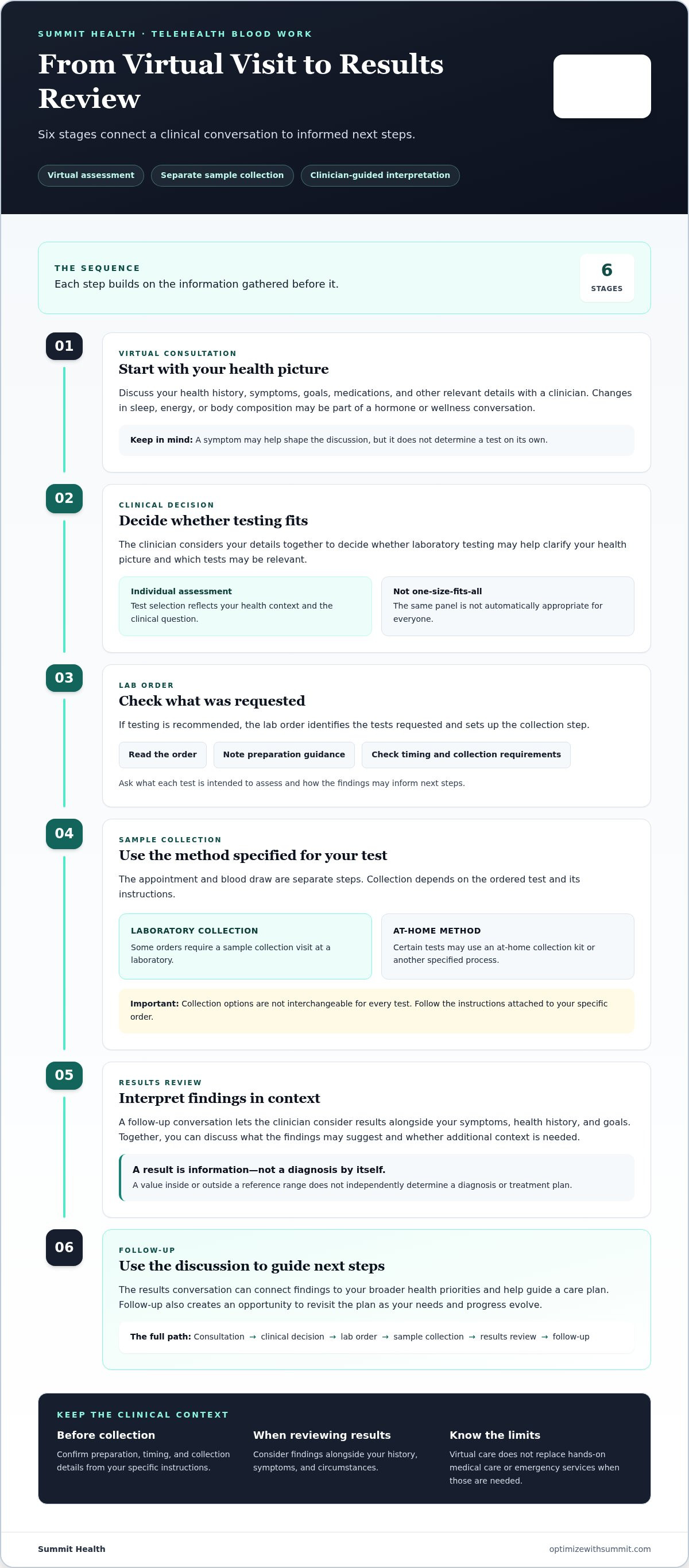
A clear process connects a virtual conversation to meaningful next steps. With telehealth blood work, test selection should reflect the clinician’s assessment and your health context, rather than defaulting to the same panel for everyone. The process typically moves through six stages: consultation, clinical decision, lab order, sample collection, results review, and follow-up.
From virtual consultation to a lab order
The conversation starts with your goals, health history, symptoms, medications, and other relevant details. Changes in energy or sleep, for example, may help shape a discussion about hormone health, but they don’t determine a test on their own. The clinician considers these details together and decides whether testing is appropriate and which tests may inform the assessment.
If testing is recommended, the lab order identifies what has been requested and provides the basis for the next step. Before arranging collection, read the order and note any preparation guidance, timing, or collection requirements. A broad overview of how testing can inform hormone-related discussions is available in this hormone blood work guide.
From sample collection to results review
The sample is collected according to the requirements of the ordered test and the instructions for the selected setting. Some tests involve a laboratory collection visit; certain tests may use another collection process. Follow the directions for your specific order, since preparation and collection procedures can differ.
Once results are available, a follow-up conversation gives the clinician a chance to interpret the findings alongside your symptoms, history, and goals. A result is one piece of information, not a complete explanation by itself. The discussion can help clarify what the findings may suggest, whether additional context is needed, and how they relate to your broader health priorities. Follow-up also creates an opportunity to revisit the plan as your needs and progress evolve.
In brief: Discuss your health with a clinician, determine whether testing is appropriate, receive a lab order, complete the instructed collection, review the results together, and use that conversation to guide next steps.
Is Telehealth Blood Work Reliable? Understand Collection and Clinical Context
Telehealth describes how you and a clinician communicate, not how your blood is collected. Telehealth blood work may involve a sample collected at a laboratory or, for some tests, an at-home collection method. Reliability depends on whether the test and collection process fit the clinical question and whether the findings are interpreted in context. No single collection method is automatically right for every test.
Laboratory collection and at-home collection: what differs?
The practical differences come down to setting, instructions, and test requirements. A laboratory collection takes place at a designated lab, following that lab’s process. An at-home kit is completed outside the lab using the kit’s specific instructions. The appropriate option depends on the ordered test and care process. Sample handling requirements also vary, so follow the directions provided rather than assuming methods are interchangeable.
| Consideration | Laboratory collection | At-home collection |
|---|---|---|
| Where it happens | At a laboratory or other designated collection setting. | At home, when the specific test and kit support this method. |
| Instructions | Follow the order and the collection site’s directions. | Follow the kit’s directions for collecting and preparing the sample. |
| Test suitability | Depends on the test ordered and its collection requirements. | Available only when the test is appropriate for the kit’s collection method. |
This comparison is a guide, not a ranking. The collection method should match the test’s requirements. If any part of your specific instructions is unclear, raise it in the clinical conversation before providing the sample.
Why results need more than a reference range
A reference range offers a comparison point, not a diagnosis. A result outside that range doesn’t automatically establish a condition, and a result within it doesn’t necessarily explain every symptom. Clinicians consider results alongside health history, symptoms, medications, and other relevant findings. That context helps distinguish a useful signal from a number that needs further discussion.
For hormone-related concerns, follow-up connects lab findings with your goals and overall health picture. A hormone therapy care overview can help you understand how clinical discussion and ongoing care relate. Useful interpretation is individualized, measured, and focused on what the findings mean for your next steps.
How to Prepare for Telehealth Blood Work
Preparation starts with clear information, not guesswork. For telehealth blood work, what you need to do before testing depends on the specific tests ordered and the clinician’s instructions. Use this checklist to make the consultation more focused and the collection step easier to plan.
Before the virtual consultation
Bring a concise picture of your health and the questions you want answered. A few notes can help you share details accurately without relying on memory during the appointment.
- Write down your goals and relevant symptoms. Include when they began and any changes you’ve noticed.
- Gather relevant prior test results. Note when they were taken, if you know.
- List medications and supplements. Include prescription medicines and supplements you currently take, with details as accurately as possible.
- Prepare questions. Ask what a proposed test is intended to assess and what preparation it requires.
Don’t stop, skip, or change a medication or supplement to prepare for testing unless your clinician specifically directs you to. If you’re unsure how something you take relates to the test, raise it during the consultation.
Before the blood draw
Fasting isn’t a universal requirement. Some tests may call for specific preparation, while others may not. Follow the instructions for your particular order, including any directions about fasting, collection timing, or where the sample will be collected. If instructions seem unclear or conflict with other guidance you’ve received, resolve that with the clinical team before collection.
Test-specific instructions take priority over general advice.
Keep the lab order and its directions accessible. Review them before leaving for a collection appointment or beginning an at-home collection process. Don’t assume preparation advice for one blood test applies to another. Requirements can differ, so use the guidance provided for your order instead of making changes based on general tips.
Being organized helps your clinician connect the results to your health goals and discuss useful next steps. If hormone-related concerns are among your priorities, explore Summit Health’s hormone therapy as part of a clinician-guided conversation.
How Summit Health Connects Telehealth Blood Work to Personalized Care
Lab results are most useful as part of a broader health assessment. Summit Health provides comprehensive diagnostic labwork within a clinician-led process that also considers your health history, symptoms, and goals. Findings can inform a personalized discussion, but no single result automatically determines a diagnosis or treatment plan.
Connecting diagnostic findings with individual health goals
During a virtual consultation, you can discuss what you want to address and how you’ve been feeling. Depending on your needs, the conversation may include hormone optimization, weight loss, or sleep and recovery. A clinician considers lab findings alongside that context to shape next-step discussions, rather than treating a number as a conclusion on its own.
This approach keeps testing connected to the question it is intended to help explore. Diagnostic findings, for example, may contribute to a hormone health discussion, while symptoms and personal goals provide additional context. The result is a more individualized conversation about potential care options, not a guarantee that a particular treatment will be recommended.
Continue the conversation with Summit Health
Care can continue beyond the initial review. Summit Health’s virtual consultations, tailored plans, ongoing monitoring, and health coaching support continued discussion of progress and whether a care plan should be revisited. The focus is on using relevant information over time, with clinical guidance shaped around the person rather than a standalone lab report.
For details about Summit Health services and common questions, visit Summit Health pricing and FAQs. To discuss your health goals and whether labwork may be relevant, schedule an appointment. A consultation begins a clinical conversation; testing and any treatment recommendations depend on the clinician’s assessment.
Turn Lab Insights Into a More Personalized Plan
Telehealth blood work is a clinician-guided process, from deciding whether testing fits your needs to reviewing what the results may mean. Sample collection is a separate step, and preparation instructions should match the specific test. Lab values are only part of the picture. Health history, symptoms, and personal goals help put findings into context.
At Summit Health, comprehensive diagnostic labwork supports individualized health assessments, while virtual consultations and ongoing monitoring connect evaluation with continued care. Results can inform a personalized conversation, but they don’t automatically determine a diagnosis or treatment.
Bring your questions and health priorities into that conversation. Schedule a personalized appointment to discuss your goals and possible next steps with Summit Health. A clearer understanding of your health can begin with one thoughtful conversation.
Frequently Asked Questions
Can you get blood work through telehealth?
Yes, a clinician may order blood work during telehealth care if testing is appropriate for your situation. The virtual consultation can cover your health history, symptoms, medications, and goals before the clinician decides whether labwork may be useful. The blood draw is a separate step, completed using the collection method specified for the test. Results should be reviewed with a clinician and considered alongside your broader health context.
How does telehealth blood work work?
Telehealth blood work generally begins with a virtual consultation. A clinician reviews your health information and decides whether testing is appropriate, then provides an order and relevant collection instructions if needed. You complete the sample collection according to those directions. After results are available, a follow-up discussion can put the findings in context and inform possible next steps. The specific tests and collection process depend on your individual assessment.
Can telehealth blood work be done at home?
Some blood tests may use an at-home collection kit, but not every test can be collected this way. Other orders may require sample collection at a laboratory. The appropriate method depends on the test and its collection requirements. Follow the instructions associated with your order rather than assuming a kit or lab visit will apply to every situation.
Do I need to fast before telehealth blood work?
Fasting depends on the specific test and the clinician’s instructions. Don’t assume every blood test requires fasting or that general advice applies to your order. Follow the directions you receive for preparation and timing. If you’re uncertain about fasting or how a medication or supplement relates to the test, raise the question with your clinician before making any changes.
How long does it take to get telehealth blood work results?
There isn’t one timeline that applies to every test. The time to receive results can depend on the tests ordered and the laboratory’s process. Your clinician or the instructions for your order can clarify what to expect in your specific case. Once results are available, a follow-up conversation helps explain how they relate to your health history, symptoms, and goals.
Are at-home blood tests as reliable as lab tests?
Reliability depends on whether the test is suitable for the collection method and whether its instructions are followed. Some tests may be designed for at-home collection, while others require a laboratory collection process. Neither method is automatically more reliable for every test. Use the method specified for your order, follow its instructions carefully, and discuss the findings with a clinician rather than relying on a result alone.
Can telehealth blood work diagnose a hormone imbalance?
Blood test results can contribute useful information to an assessment of hormone-related concerns, but they don’t establish a diagnosis on their own. A clinician considers results alongside symptoms, health history, medications, and other relevant context. A finding outside a reference range doesn’t automatically confirm a hormone imbalance, and a result within range may not explain every concern. Discuss your results with a clinician to understand what they may mean for you.

Article by
Dr. David Richardson
David Richardson, is the founder and CEO of Summit Health and the author of "Insights from the Summit", where he writes about hormone optimization, metabolic health, thyroid function, longevity, and preventive medicine.
After entering healthcare in 2009, David became increasingly interested in a question that traditional medicine often struggles to answer:
Why do so many people continue to feel terrible despite being told their labs are "normal"?
That question eventually led him into the field of health optimization in 2020, where he became passionate about understanding physiology at a deeper level and helping patients uncover the root causes of their symptoms rather than simply managing them.
Today, David's philosophy is simple: normal and optimal are not the same thing. Every patient is physiologically unique, and meaningful healthcare begins by listening to symptoms, understanding the science, and recognizing that laboratory values are only one piece of a much larger picture.
Through Summit Health and Insights from the Summit, David's mission is to help people better understand their bodies, ask better questions, and make informed decisions that improve both their health span and quality of life.


