
IMPORTANT DISCLAIMERS
Medical Disclaimer: The information in this article is provided for educational purposes only and is not intended as medical advice or a substitute for individualized medical care. Every person's health needs are unique. Always consult a qualified healthcare professional before starting, stopping, or changing any medication, supplement, or treatment plan. -------
Article Disclaimer: Articles are reviewed and published by Summit Health to provide evidence-based educational information. While Summit Health strives to provide reliable and current health information, medical knowledge is always evolving over time. Depending on when you are reading this content, it may not reflect the latest research or apply to your individual circumstances.
Biological bottlenecks. That’s the silent reality for high-performers facing diminishing returns despite disciplined sleep and nutrition. You’ve likely felt the frustration of persistent fatigue or the confusion of a recovery market saturated with conflicting technology. True recovery is a metabolic recalibration, not just the absence of activity. By integrating peptide therapy for muscle recovery, you can move beyond these physical plateaus and master the science of biological restoration. Elite refinement. Precise advancement. It’s time to secure the peak version of your physical self.
This 2026 optimization guide provides the definitive framework for your restoration journey. We’ve entered a new era of medical accessibility following the February 2026 HHS reclassifications and the subsequent July PCAC recommendations for essential compounds like BPC-157 and TB-500. You’ll learn how to eliminate fatigue through research-driven protocols and evidence-based hormonal balance. Measurable gains. Data-driven results. We’ll explore the specific diagnostic-led processes required to align your biology with your ambitions, ensuring every training session translates into performance. The path to elite optimization is now clear, scientific, and within your reach.
Key Takeaways
- Systemic recalibration. Learn why elite recovery requires a proactive metabolic shift to resolve the cumulative physiological debt of high-intensity output.
- Data-driven readiness. Identify the critical biomarkers that dictate your recovery capacity, moving beyond subjective feelings that often mask your true physical state.
- Cellular signaling. Leverage peptide therapy for muscle recovery to activate specific repair pathways and biological restoration at a level traditional supplements cannot reach.
- Precision protocols. Build a bespoke 2026 recovery schedule using a diagnostic-first approach to ensure every intervention is tailored to your unique hormonal profile.
- Performance optimization. Master the framework for choosing between passive and active recovery interventions to maximize efficiency and eliminate persistent fatigue.
The Architecture of Performance Recovery Methods
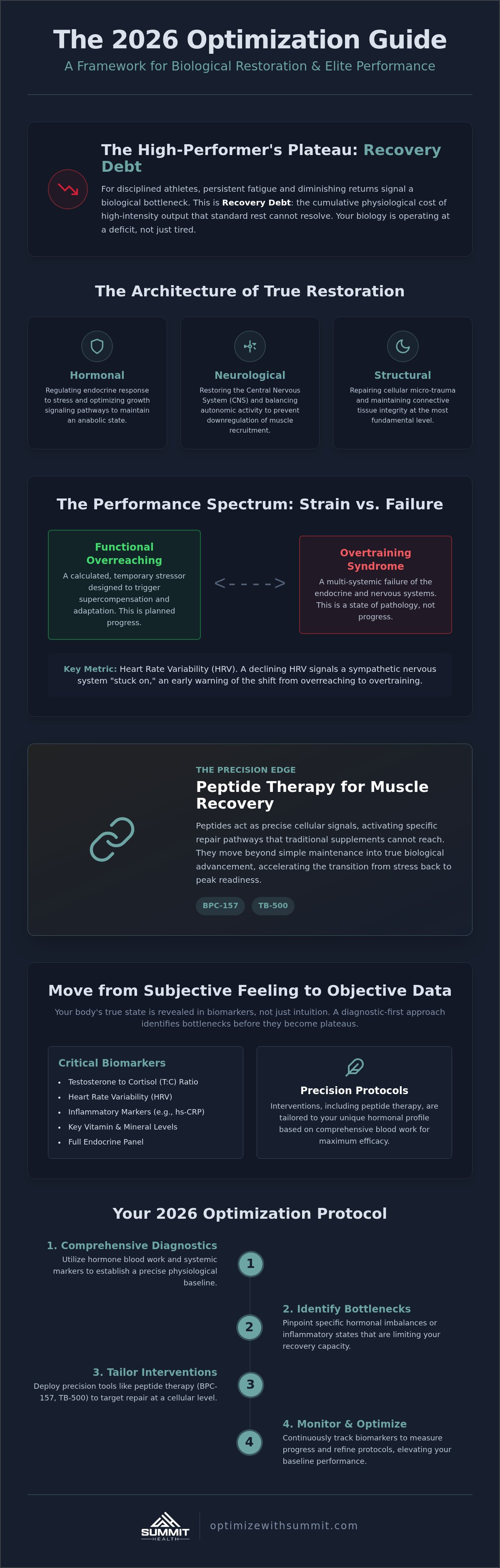
Systemic recalibration. Recovery is not the absence of activity. It is a precise realignment of your body’s homeostatic state. For the high-performer, training is an investment, but the physiological cost often exceeds the immediate return. This creates what we define as Recovery Debt. It is the cumulative physiological cost of high-intensity output that remains unresolved by standard rest cycles. If left unmanaged, this debt compounds, leading to a permanent decline in output and metabolic efficiency. You don't just feel tired; your biology begins to operate at a deficit.
Foundational pillars. True restoration requires a tripartite approach. We focus on three distinct areas of the human system:
- Hormonal: Regulating the endocrine response to stress and optimizing growth signaling pathways.
- Neurological: Restoring the Central Nervous System (CNS) and balancing autonomic nervous system activity.
- Structural: Repairing cellular micro-trauma and maintaining connective tissue integrity.
The Physiology of Systemic Fatigue
The Central Nervous System acts as the ultimate governor of your physical potential. When the CNS detects a breach in safety margins, it downregulates muscle fiber recruitment to prevent injury. You feel this as heavy limbs or a lack of explosive drive. Inflammation serves as the initial repair signal, yet persistent, systemic inflammation becomes a barrier to protein synthesis and cellular repair. Resting without active restoration results in performance plateaus where the body remains in a defensive, catabolic state rather than an anabolic, building phase. You aren't getting better; you're just surviving the load.
Overreaching vs. Overtraining Syndrome
Calculated strain. The line between progress and pathology is thin. Functional overreaching is a deliberate, temporary stressor designed to trigger adaptation. In contrast, Overtraining Syndrome is a multi-systemic failure of the endocrine and nervous systems. Early detection is critical for sustained performance. Monitoring Heart Rate Variability (HRV) offers a window into your systemic readiness, as a declining HRV signals that the sympathetic nervous system is stuck in an "on" position. Utilizing advanced protocols, including BPC-157, can help mitigate these risks. By incorporating peptide therapy for muscle recovery, you can accelerate the transition from overreaching back to peak readiness, ensuring that your training remains an asset rather than a liability.
Biological Markers: Tracking Systemic Readiness
Precision diagnostics. This is the cornerstone of elite performance. While many athletes rely on intuition, subjective feeling is a lagging indicator of physical readiness. By the time you feel "burnt out," your systemic systems have likely been operating in a deficit for weeks. To master your biological restoration, you must move toward a data-driven approach. Utilizing comprehensive hormone blood work allows for the identification of specific biological bottlenecks before they manifest as performance plateaus. Protocols involving peptide therapy for muscle recovery are most effective when they're guided by these objective metrics, ensuring that your interventions are as precise as your training.
Hormonal health dictates the speed of both tissue repair and cognitive processing. When your endocrine system is optimized, your body remains in an anabolic state, facilitating rapid protein synthesis and neural plasticity. Conversely, imbalanced markers signal a state of defensive conservation, where repair processes are deprioritized. Tracking these markers isn't just about avoiding injury; it's about identifying the exact moment your body is primed for maximum output. If you're ready to move beyond guesswork, you can schedule a diagnostic consultation to evaluate your current readiness.
The Cortisol-Testosterone Axis
The T:C ratio is the primary metric of your anabolic-catabolic balance. A high ratio indicates a state of growth and repair, while a declining ratio suggests that chronic stress is blunting your body’s natural recovery signals. Cortisol is necessary for acute performance, but its chronic elevation inhibits muscle protein synthesis and clouds mental clarity. Monitoring DHEA benefits is equally vital, as this precursor hormone supports cognitive longevity and provides the necessary substrate for tissue repair. When these markers are aligned, peptide therapy for muscle recovery acts as a powerful catalyst for restoration.
HRV and Autonomic Nervous System Readiness
Heart Rate Variability (HRV) remains the gold standard for monitoring Central Nervous System (CNS) strain. It measures the variation in time between consecutive heartbeats, reflecting the balance between your sympathetic (fight or flight) and parasympathetic (rest and digest) nervous systems. High HRV signals parasympathetic dominance, indicating that your CNS is ready for high-intensity load. Low HRV suggests systemic fatigue. By using daily HRV data, you can intelligently adjust your training volume or cognitive load, ensuring you only push when your biology is prepared to adapt. This real-time feedback loop transforms recovery from a passive wait into an active, managed process.
Comparative Analysis: Passive vs. Active Recovery
Strategic restoration. Recovery is not a binary choice between resting and doing. It is a spectrum of interventions tailored to the specific stressor encountered. While passive rest allows for the cessation of acute stress, active interventions facilitate the clearance of metabolic byproducts and the recalibration of neural pathways. High-performers often fall into the trap of over-relying on expensive gadgets, forgetting that the most advanced technology is the biological system itself. True optimization requires a framework that matches the intervention to the insult.
Minimum Effective Dose. More technology does not always equate to faster results. Red light therapy and cryotherapy are valuable tools, but they function as supplements to, not replacements for, biological foundations. Excessive cold immersion, for example, can actually blunt the natural hormetic response required for muscle hypertrophy if timed incorrectly. The objective is to apply just enough stimulus to trigger repair without overriding the body’s adaptive signals. When integrated with peptide therapy for muscle recovery, these active technologies can enhance tissue repair speed, but they must be applied with clinical precision to avoid diminishing returns.
Sleep: The Primary Passive Intervention
Non-negotiable restoration. Sleep remains the only biological process that cannot be hacked or bypassed. It is during the deep, slow-wave sleep stages that the pituitary gland releases significant pulses of Growth Hormone (GH), which is essential for cellular repair and metabolic regulation. Without sufficient sleep, the efficacy of any peptide therapy for muscle recovery protocol is significantly compromised. High-performers should prioritize stabilizing the nervous system before bed. Integrating Magnesium Glycinate for sleep can help extend these restorative cycles, ensuring you maximize the anabolic window every night. Rest is the foundation of every gain.
Active Recovery and Neuromuscular Reset
Deliberate movement. Active recovery involves low-intensity activity that promotes blood flow without adding to the systemic load. This process facilitates metabolic waste clearance and delivers oxygenated nutrients to damaged tissues. Myofascial release and mobility work are equally critical, addressing structural longevity by maintaining tissue sliding surfaces and joint health. Contrast therapy-alternating between heat and cold-acts as a vascular pump, forcing vasodilation and vasoconstriction to flush the system. These methods transform recovery from a period of stagnation into a proactive pursuit of readiness.
Peptide Therapy for Muscle Recovery: The Precision Edge
Cellular signaling. This is the fundamental shift in modern restoration. Peptide therapy involves the use of short-chain amino acids that act as precise biological messengers, signaling your cells to initiate specific repair sequences. Unlike traditional supplements that merely provide raw building blocks, peptides instruct the body to prioritize healing where it's needed most. This targeted approach allows you to bypass the limitations of passive recovery and address the root causes of systemic fatigue. By leveraging peptide therapy for muscle recovery, you aren't just waiting for repair; you're directing it.
Targeted pathways. Traditional oral supplements often struggle with bioavailability or lack the specificity required for deep tissue restoration. Peptides target specific growth factor pathways that other interventions miss, particularly those involved in the repair of tendons, ligaments, and muscle fibers. This precision is why healing peptides have become a staple for high-performers looking to maintain structural integrity under heavy loads. However, this level of biological intervention requires expert guidance. Safety and efficacy are only guaranteed through specialized hormone therapy and clinical oversight.
Mechanisms of Action in Muscle Repair
Precision repair. Peptides promote angiogenesis, the formation of new blood vessels, which increases nutrient delivery and oxygenation to damaged muscle tissue. Simultaneously, they stimulate collagen synthesis to reinforce the structural matrix of your body. This dual action accelerates the healing of micro-tears and reduces the systemic burden of chronic inflammation. Peptide therapy for muscle recovery bridges the gap between rest and performance. It transforms the inflammatory response from a lingering barrier into a productive signal for growth and long-term structural resilience.
Integrating Peptides into an Optimization Plan
Precision tools. Peptides should be viewed as a surgical intervention within a broader wellness strategy, not a magic bullet. Their true potential is unlocked when they work in synergy with optimal hormone levels and disciplined lifestyle habits. Ensuring your endocrine system is balanced provides the necessary environment for these signaling molecules to function effectively. Clinical-grade sourcing is non-negotiable to avoid the risks associated with unregulated research compounds. To begin your data-driven restoration, book your diagnostic consultation today.
Designing Your 2026 Optimization Protocol
Precision execution. Translating biological theory into a daily protocol requires a methodical framework. To design your 2026 optimization protocol, you must begin with a diagnostic-first approach. This eliminates the waste of time and capital on ineffective trends that lack individual relevance. A bespoke recovery schedule is not a static document; it is a dynamic system that evolves with your training load and physiological feedback. By integrating peptide therapy for muscle recovery into a structured plan, you ensure that cellular repair is synchronized with your peak output periods. You aren't just resting; you're engineering a state of readiness.
Adherence is the variable that separates high-performers from the elite. This is where health coaching becomes essential. A professional coach provides the objective oversight needed to interpret data and adjust interventions in real-time. Beyond the clinic, successful protocols integrate micro-recovery habits into the high-performance workday. Short, five-minute CNS resets, such as box breathing or postural shifts, prevent the accumulation of Recovery Debt between high-stakes cognitive tasks. These small interventions maintain your autonomic balance, ensuring that you don't arrive at your evening recovery window in a state of total systemic exhaustion. You're recovering for the next win, not just from the last one.
The Summit Health Advantage: Telehealth Precision
Virtual specialization. The modern high-performer operates on a national scale, making traditional clinic visits a logistical bottleneck. Summit Health provides the advantage of telehealth-led precision medicine, allowing for comprehensive consultations from your home or office. We utilize data-driven diagnostics to build bespoke coaching plans that are specific to your unique biology. This model ensures that your lab work and treatment transitions are seamless, providing ongoing monitoring without disrupting your professional momentum. Access to elite peptide therapy for muscle recovery is no longer limited by geography.
The Roadmap to Peak Performance
Your journey toward optimization begins with identifying the silent barriers to your progress. Start by taking the Hormone Quiz to uncover hidden fatigue markers and hormonal imbalances. Transitioning from surviving to optimized is a deliberate choice that requires professional expertise and high-quality clinical oversight. Every protocol we design is built on a foundation of comprehensive lab work and evidence-based solutions. Secure your future output and master your biological restoration by scheduling your consultation at Summit Health Appointments. Move upward. Refine your state. Achieve the peak version of yourself.
Master Your Biological Restoration
Systemic excellence. We've moved beyond the era of passive rest. True performance optimization requires a diagnostic-led approach that addresses hormonal, neurological, and structural pillars simultaneously. By utilizing real lab data to guide your protocol, you ensure that every intervention is tailored to your unique metabolic profile. Integrating peptide therapy for muscle recovery allows you to signal cellular repair with clinical precision, bridging the gap between high-intensity output and peak readiness. It's the difference between simple maintenance and true advancement.
Summit Health provides telehealth-led medical expertise and personalized protocols designed specifically for the modern high-performer. Our national service coverage ensures you have access to elite restoration regardless of your location. You don't have to navigate the complexities of 2026 recovery technology alone. It's time to move from surviving your training to mastering your biology through evidence-based solutions. Book your optimization consultation to master your recovery and secure your upward momentum. The path to your peak version is data-driven, intentional, and within reach. Refine your state.
Frequently Asked Questions
What are the most effective performance recovery methods for professionals?
Precision protocols that combine physiological foundations with advanced interventions are the most effective. Professionals prioritize restorative sleep, active mobility, and diagnostic-led supplementation. Success lies in the integration of hormonal balance and systemic repair tools. By moving beyond generic rest, you address the specific neurological and structural costs of high-intensity output. This ensures you return to your baseline faster and with greater resilience. It's about engineering readiness rather than waiting for it.
How does peptide therapy for muscle recovery actually work?
Peptide therapy for muscle recovery works by utilizing short-chain amino acids as signaling molecules to trigger specific cellular repair pathways. These compounds promote angiogenesis and collagen synthesis, which are critical for repairing micro-trauma in muscle and connective tissues. Unlike traditional supplements that provide raw materials, peptides act as precise biological messengers. They instruct your body to prioritize healing, effectively bridging the gap between metabolic fatigue and peak physical performance.
What is the difference between active and passive recovery?
Passive recovery involves the complete cessation of physical stress, such as deep sleep or total rest. Active recovery uses low-intensity movement to facilitate blood flow and metabolic waste clearance without adding to the systemic load. Passive methods are essential for neurological restoration and growth hormone release. Active methods, like mobility work or contrast therapy, maintain tissue sliding surfaces and structural longevity. Both are necessary components of a comprehensive optimization protocol.
How do I know if I need a hormone panel for recovery?
Persistent fatigue, diminishing returns on training, and sleep disturbances are clear signals that you need a comprehensive hormone panel. Subjective feeling is often a lagging indicator of systemic readiness. A diagnostic blood panel identifies imbalances in the Cortisol-Testosterone axis or DHEA levels that hinder tissue repair. Relying on data-driven diagnostics allows you to move beyond guesswork and implement interventions that are specific to your unique biological needs and goals.
Can magnesium glycinate really improve my sleep quality?
Magnesium glycinate significantly improves sleep quality by stabilizing the nervous system and promoting parasympathetic dominance. This specific form of magnesium is highly bioavailable and less likely to cause digestive distress compared to other variants. By enhancing the transition into deep sleep stages, it facilitates the critical window for growth hormone release and cellular restoration. It is a foundational tool for high-performers seeking to maximize the restorative power of their passive recovery cycles.
How often should I monitor my biomarkers for recovery?
High-performers should monitor their primary biomarkers every 90 to 120 days to ensure their optimization protocol remains effective. Frequent testing allows for real-time adjustments based on changes in training volume or lifestyle stress. Diagnostic monitoring typically focuses on hormonal balance, inflammatory markers, and metabolic health. This consistent feedback loop ensures your biology remains aligned with your performance goals, preventing the accumulation of unresolved recovery debt over time. Precision requires constant data.
Are peptides safe for performance recovery?
Peptides are considered a safe and effective tool when administered under professional medical supervision and sourced from clinical-grade compounding pharmacies. The safety of peptide therapy for muscle recovery depends on precise dosing and high-quality manufacturing. Using unregulated research compounds purchased online poses significant risks. Telehealth-led oversight ensures that your protocol is tailored to your health profile, minimizing potential side effects while maximizing the biological benefits of targeted, data-driven cellular signaling.
What is the fastest way to recover from overtraining?
The fastest way to resolve overtraining is a total systemic recalibration led by diagnostic data. You must immediately reduce training load and prioritize neurological restoration through deep sleep and parasympathetic activation. Integrating targeted interventions like peptide therapy and hormone optimization can accelerate the repair of the endocrine and nervous systems. This multi-systemic approach resolves the underlying biological failure, allowing you to return to peak output without risking long-term performance declines or metabolic plateaus.

Article by
Dr. David Richardson
David Richardson, is the founder and CEO of Summit Health and the author of "Insights from the Summit", where he writes about hormone optimization, metabolic health, thyroid function, longevity, and preventive medicine.
After entering healthcare in 2009, David became increasingly interested in a question that traditional medicine often struggles to answer:
Why do so many people continue to feel terrible despite being told their labs are "normal"?
That question eventually led him into the field of health optimization in 2020, where he became passionate about understanding physiology at a deeper level and helping patients uncover the root causes of their symptoms rather than simply managing them.
Today, David's philosophy is simple: normal and optimal are not the same thing. Every patient is physiologically unique, and meaningful healthcare begins by listening to symptoms, understanding the science, and recognizing that laboratory values are only one piece of a much larger picture.
Through Summit Health and Insights from the Summit, David's mission is to help people better understand their bodies, ask better questions, and make informed decisions that improve both their health span and quality of life.


