
IMPORTANT DISCLAIMERS
Medical Disclaimer: The information in this article is provided for educational purposes only and is not intended as medical advice or a substitute for individualized medical care. Every person's health needs are unique. Always consult a qualified healthcare professional before starting, stopping, or changing any medication, supplement, or treatment plan. -------
Article Disclaimer: Articles are reviewed and published by Summit Health to provide evidence-based educational information. While Summit Health strives to provide reliable and current health information, medical knowledge is always evolving over time. Depending on when you are reading this content, it may not reflect the latest research or apply to your individual circumstances.
The traditional rest-and-ice protocol is an outdated relic of reactive medicine. In 2026, elite performance is defined by how quickly you return to the field, the gym, or the boardroom. You already recognize the frustration of slow recovery times and the plateau that follows reduced muscle protein synthesis. It's a ceiling on your potential. Utilizing peptide therapy for muscle recovery represents the transition from passive waiting to active, molecular intervention. This is the new foundation of physical longevity and peak biological balance.
Precision repair. Biological efficiency. Peak output. This guide details how targeted peptide protocols accelerate tissue repair and silence systemic inflammation. You'll learn which specific sequences drive lean muscle retention and how to integrate these advancements through a sophisticated, telehealth-led approach that prioritizes data-driven results. We move beyond simple maintenance. Our focus remains on the refinement of your current state and the pursuit of a premium, optimized life. By mastering the intersection of medical science and high-performance lifestyle, you can finally overcome the fatigue that limits your progress.
Key Takeaways
- Overcome the physiological plateaus of aging by addressing cellular senescence and the biological limits of traditional rest.
- Identify the molecular catalysts, such as BPC-157 and growth hormone secretagogues, that accelerate tendon and muscle fiber regeneration.
- Contrast the direct cellular signaling of peptide therapy for muscle recovery against the slower digestive breakdown of standard nutritional supplements.
- Leverage precise diagnostic lab work to eliminate "one-size-fits-all" dosing and target your specific recovery bottlenecks.
- Integrate bespoke recovery protocols into your routine through a streamlined telehealth model designed for peak performance and long-term optimization.
The Biological Limits of Recovery: Why Rest is No Longer Enough
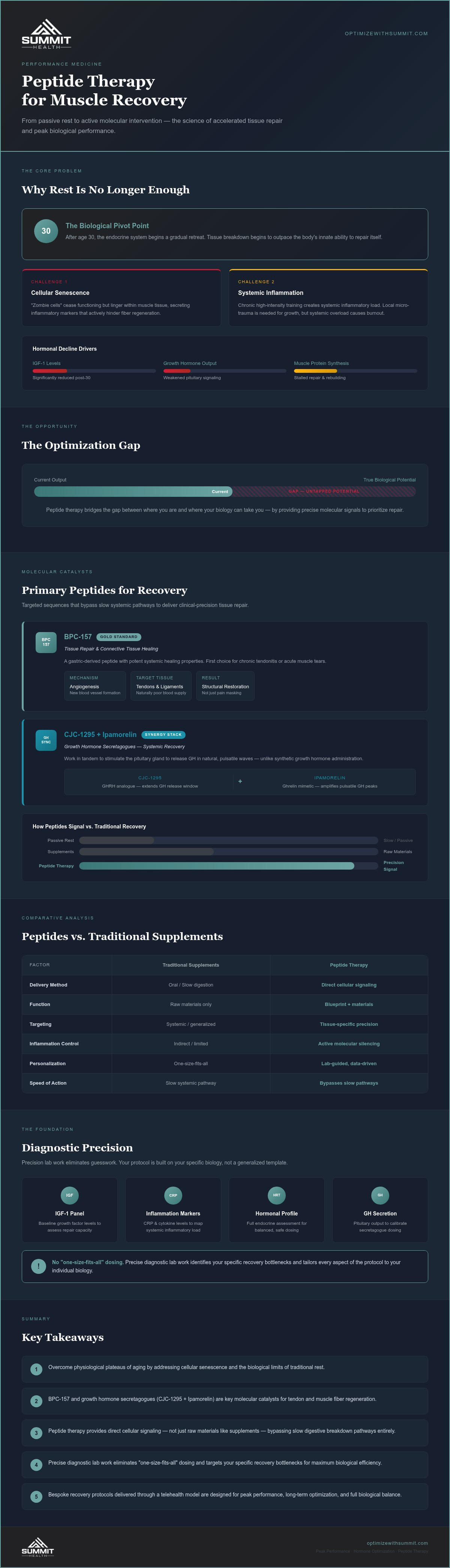
Age thirty marks a definitive biological pivot point. Before this threshold, the human body typically maintains a surplus of regenerative resources. After it, the endocrine system begins a gradual, calculated retreat. Traditional recovery methods like hydration and passive rest remain necessary, yet they often fail to address the underlying molecular shift occurring at the cellular level. This is the physiological ceiling. It's the precise moment where the rate of tissue breakdown begins to outpace the body’s innate ability to repair itself. Relying solely on "time off" is no longer a viable strategy for those pursuing peak performance.
Central to this decline is cellular senescence. These are often called "zombie cells" because they have ceased to function but refuse to clear away. Instead, they linger within muscle tissue, secreting inflammatory markers that actively hinder muscle fiber regeneration. When you combine this with the systemic inflammation caused by chronic, high-intensity training, you face a dual challenge. Local micro-trauma is essential for hypertrophy, but systemic load is what leads to long-term burnout. Integrating peptide therapy for muscle recovery represents a transition from reactive healing to proactive biological optimization. It targets these cellular bottlenecks before they manifest as chronic, nagging injuries.
The Science of Biological Decay
Declining IGF-1 and growth hormone levels are the primary drivers of stalled muscle protein synthesis. The endocrine system serves as the master conductor for tissue repair. When these hormonal signals weaken, the biological "repair crew" simply doesn't receive the message to initiate deep tissue reconstruction. Choosing to "push through" this deficit doesn't build resilience; it compounds structural degradation. For a deeper look at managing these systemic signals, exploring hormone therapy can provide the necessary context for total biological balance.
Recovery as a Competitive Advantage
Precision is the new standard. We define the "Optimization Gap" as the space between your current physical output and your true biological potential. In 2026, elite performance requires more than just the foundational pillars of sleep and nutrition. While these are mandatory, they are often insufficient for the modern athlete facing high-stress environments. Precise signaling molecules bridge this gap by bypassing the slow, traditional pathways of systemic distribution. By utilizing peptide therapy for muscle recovery, you are not just resting. You are actively directing your biology to prioritize repair, ensuring that every hour of downtime yields maximum physical refinement. This is how you redefine the boundaries of what your body can achieve.
The Molecular Catalysts: Primary Peptides for Muscle Recovery
Precision repair requires more than just rest. It demands specific biological signaling. Peptides act as these precise messengers, instructing your cells to prioritize repair, reduce inflammation, and optimize growth. While traditional supplementation provides the raw materials, peptide therapy for muscle recovery provides the blueprint. In 2026, the focus has shifted toward these targeted sequences to bypass the slow, systemic pathways of standard recovery. By utilizing these molecular catalysts, you can address specific structural weaknesses with clinical accuracy.
BPC-157: The Gold Standard for Tissue Repair
BPC-157 is a gastric-derived peptide with potent systemic healing properties. It is often the first choice for athletes facing chronic tendonitis or acute muscle tears. Its primary mechanism is angiogenesis, the process of forming new blood vessels. This is vital for connective tissues like tendons and ligaments, which naturally suffer from poor blood supply. By increasing the density of the vascular network at the injury site, BPC-157 ensures that oxygen and nutrients reach the damaged tissue efficiently. This accelerates the healing timeline and strengthens the structural integrity of the repair. It doesn't just mask the pain; it facilitates a fundamental restoration of the tissue.
CJC-1295 and Ipamorelin: The Growth Hormone Synergy
Systemic recovery is driven by the endocrine system. CJC-1295 and Ipamorelin are growth hormone secretagogues that work in tandem to optimize your body's natural output. Unlike synthetic growth hormone, these peptides stimulate the pituitary gland to release GH in natural, pulsatile waves. This avoids the "bleed" effect and maintains the body's delicate internal balance. The result is a significant improvement in Stage 3 and Stage 4 deep sleep cycles, which is the primary window for nocturnal muscle repair. By elevating IGF-1 levels, this combination supports lean muscle mass retention and ensures that your metabolism remains primed for performance. By consulting with a specialist to discuss your recovery goals, you can ensure your protocol is as precise as your training.
Advancing the Repair Cycle: TB-500 and GHK-Cu
To achieve a comprehensive recovery profile, practitioners often look toward cell migration and collagen synthesis. These two peptides provide the final layers of a sophisticated recovery strategy:
- Thymosin Beta-4 (TB-500): This peptide accelerates the migration of repair cells to the site of damage. It's particularly effective for improving flexibility and reducing the formation of restrictive scar tissue after an injury.
- GHK-Cu: A copper peptide that supports the synthesis of collagen and elastin. It ensures that the new tissue formed during the repair process is both resilient and pliable, maintaining the integrity of your musculoskeletal system.
Utilizing peptide therapy for muscle recovery allows you to target every phase of the healing process. From the initial inflammatory response to the final remodeling of the tissue, these molecular catalysts provide the control needed for a premium, optimized physical state.
Peptides vs. Traditional Supplements: A Comparative Analysis
Traditional supplementation provides the raw materials for physical repair. Whey protein, branched-chain amino acids, and creatine serve as the bricks and mortar of muscle tissue. They are essential, yet they are inherently passive. They rely on the body's existing, often diminished, signaling pathways to determine where and when those materials are deployed. Peptide therapy for muscle recovery introduces the architect into this process. Instead of simply providing building blocks, peptides provide the specific molecular instructions that dictate cellular behavior. They don't wait for the body to prioritize repair; they mandate it by interacting directly with cellular receptors to trigger immediate biological responses.
Why Bioavailability Changes the Game
The primary limitation of over-the-counter recovery aids is the digestive hurdle. Oral supplements must navigate the gastrointestinal tract, where enzymes and stomach acids break down complex structures into basic components. This "first-pass" metabolism often leaves only a fraction of the original compound available for systemic use. It's an inefficient delivery method for someone facing significant physiological stress. Systemic peptide administration bypasses this degradation entirely. By delivering precise sequences directly into the bloodstream, you ensure maximum biological impact at the target site. Because of this potency and the need for absolute purity, professional-grade therapy requires clinical oversight. This is a necessary evolution beyond "gym-store" alternatives that lack the concentration and precision required for true optimization.
The Cost of Inefficiency
Prolonged downtime is more than just a frustration; it's a performance tax that compounds over time. Every day spent in a suboptimal state is a day where muscle protein synthesis is stalled and momentum is lost. The return on investment for rapid recovery is measured in the ability to maintain a higher volume of quality work without hitting a physiological ceiling. Peptides don't replace foundational health protocols; they amplify them. They work in tandem with evidence-based solutions like magnesium glycinate for sleep to ensure the nervous system and muscular system recover in sync. Shortening the injury-to-performance window provides a strategic advantage that traditional supplements cannot match. It allows for the refinement of your current state rather than a constant cycle of catching up to your previous baseline.
Precision signaling. Targeted repair. Minimal downtime. This is the difference between general nutrition and molecular optimization. While traditional supplements remain a staple of a healthy diet, they cannot provide the direct cellular interaction necessary to redefine the boundaries of physical recovery in 2026. Transitioning to a bespoke peptide protocol ensures that your biological resources are utilized with maximum efficiency, allowing you to pursue a premium version of your life with confidence.
Diagnostic Precision: The Foundation of Safe Peptide Therapy
Precision is not optional. It is the baseline. Guesswork has no place in a high-performance lifestyle, especially when manipulating complex biological signaling. A "one-size-fits-all" approach to peptide therapy for muscle recovery is a significant risk to your biological optimization. Without data, you're simply guessing at dosages that may or may not address your specific cellular needs. True advancement requires a comprehensive understanding of your internal environment. It demands a shift from subjective feeling to objective measurement.
Sophisticated recovery begins with hormone blood work. This diagnostic deep-dive identifies the exact recovery bottlenecks holding you back. We analyze several key biomarkers to build your protocol:
- IGF-1: This serves as a direct marker of growth hormone activity and your body's innate tissue repair capacity.
- C-Reactive Protein (CRP): A critical measurement of systemic inflammation that can signal overtraining before an injury occurs.
- Testosterone: The primary hormonal driver of protein synthesis and lean muscle retention.
- Growth Hormone: The foundation of nocturnal repair and metabolic efficiency.
The telehealth advantage is one of accessibility and expertise. You're no longer limited by the specialists in your immediate geography. National access to elite performance medicine means you can consult with doctors who specialize in biological optimization from the privacy of your home. This ensures your recovery plan is as sophisticated as your training regimen.
The Lab-First Protocol
Data drives every clinical decision. We establish a definitive biological baseline before a single peptide is prescribed. This ensures your protocol is safe, effective, and tailored to your unique physiology. Monitoring is continuous. As your body responds and your performance metrics shift, we adjust your peptide sequences to maintain peak efficiency. Virtual monitoring and health coaching provide a layer of safety and accountability that traditional, local clinics often lack. We don't just provide a script; we provide a managed path toward excellence.
Bespoke Dosing and Administration
Your goals are specific. Your protocol should be too. Whether you're recovering from an acute injury or managing the cumulative stress of elite training, your peptide stack is customized to your needs. Administration protocols are clearly defined, as consistency is the primary driver of efficacy. Peptide therapy in 2026 is a precision medical intervention requiring professional supervision. It is a tool for refinement, not a casual supplement. To begin your data-driven journey toward peak recovery, you can schedule a consultation with our medical team today. This is the first step toward a premium, optimized version of your physical self.
The Summit Health Approach: Integrating Peptides into Your High-Performance Life
Summit Health treats recovery as a core pillar of high performance. We don't view peptides as a standalone fix. Instead, we integrate them into a broader ecosystem of biological optimization. This approach ensures that your molecular signaling is supported by the necessary hormonal and lifestyle foundations. By utilizing peptide therapy for muscle recovery within this structured framework, we help you achieve a level of physical refinement that passive rest simply cannot provide. Our focus remains on the steady, upward movement of your health journey. We speak to you as an equal seeking a premium version of life.
Modern performance medicine requires a move beyond traditional, sterile provider models. Our Sleep & Recovery pillar is built on the intersection of clinical authority and data-driven results. We provide the weight of specialist knowledge with the sleekness of modern innovation. This allows for a seamless transition from your initial curiosity to a clear, actionable path forward. By prioritizing the pursuit of excellence, we redefine what is possible for your physical longevity.
A Holistic Ecosystem of Performance
Maximum synergy requires a multi-dimensional strategy. We frequently connect peptide protocols with hormone replacement therapy to address the systemic declines that occur with age. This combination ensures that your body has both the molecular instructions and the hormonal environment needed for deep tissue reconstruction. Personalized health coaching further refines this environment, optimizing your sleep architecture and nutritional intake to support your therapy. Data-driven health is the only way to sustain long-term peak performance. We rely on your unique diagnostic labs to guide every adjustment, ensuring your protocol remains as dynamic as your lifestyle.
Your Path to Optimization Starts Here
The journey toward refinement is seamless. We've removed the barriers of traditional medical care to respect your time and ambition. Our onboarding process is designed for the busy professional who values efficiency and clinical precision. Your experience begins with a comprehensive lab panel, followed by a virtual consultation with an elite performance specialist. We discuss your diagnostic data and your bespoke recovery goals. Once finalized, your peptide therapy for muscle recovery protocol is delivered directly to your doorstep. This national telehealth model provides exclusive access to specialist expertise without the need for inconvenient clinic visits. You can schedule your precision health consultation today to begin. The pursuit of excellence is a deliberate choice. We provide the tools to make it a reality.
Redefining the Future of Physical Longevity
The evolution of physical recovery is no longer a matter of passive waiting. By leveraging the molecular precision of peptide therapy for muscle recovery, you transition from merely treating fatigue to actively refining your biological state. We have explored how targeted sequences like BPC-157 and growth hormone secretagogues bypass traditional physiological plateaus by addressing repair at the cellular level. This isn't a temporary fix. It's a foundational shift toward proactive health management.
Success in 2026 requires data, not guesswork. Summit Health operates as a specialized telehealth-led medical practice that utilizes comprehensive diagnostic lab markers to identify your specific recovery bottlenecks. Every plan is personalized and curated by performance experts to ensure your biology supports your highest ambitions. You deserve a recovery strategy that is as sophisticated as your training. It's time to bridge the optimization gap.
Secure Your Precision Performance Consultation
The path to your peak is clear. We are here to guide you toward an optimized, premium version of your life.
Frequently Asked Questions
Is peptide therapy for muscle recovery legal and safe in 2026?
Yes, peptide therapy is legal and safe when prescribed by a licensed medical provider and sourced from accredited compounding pharmacies. In 2026, the clinical status of compounds like BPC-157 and growth hormone secretagogues remains focused on professional supervision to ensure biological balance. Safety is contingent on utilizing comprehensive lab work to avoid contraindications. It's a precision medical intervention that requires ongoing monitoring to maintain its status as a safe, effective tool for performance optimization.
How quickly can I expect to see results from BPC-157 or Ipamorelin?
Initial physiological shifts in sleep quality and systemic inflammation often manifest within the first 10 to 14 days of a protocol. Structural tissue repair, such as improvements in tendon integrity or muscle fiber regeneration, typically requires a consistent cycle of 4 to 8 weeks. Efficacy depends on your baseline biological state and adherence to the prescribed administration schedule. Results are cumulative. They reflect the body's gradual transition into a state of heightened regenerative efficiency.
Do I need blood work before starting a peptide protocol?
Comprehensive diagnostic lab work is a mandatory baseline for every Summit Health patient. We never prescribe without data because identifying specific recovery bottlenecks is essential for both safety and efficacy. We analyze markers like IGF-1, CRP, and hormone levels to create your bespoke protocol. This data-driven approach ensures that your therapy is tailored to your unique physiology. It eliminates the risks associated with the "one-size-fits-all" dosing found in non-clinical environments.
Can peptide therapy be combined with Testosterone Replacement Therapy (TRT)?
Yes, these therapies are frequently combined to create a synergistic effect on muscle protein synthesis and tissue repair. While TRT provides the hormonal foundation for lean muscle mass, peptide therapy for muscle recovery targets the specific signaling pathways for injury repair and systemic inflammation. This integration is managed through our telehealth platform to ensure all treatments work in biological harmony. It's a sophisticated strategy for individuals seeking a premium, optimized version of their life.
What are the most common side effects of peptides like CJC-1295?
Mild side effects may include localized redness at the site of administration, temporary water retention, or a slight increase in hunger. Some individuals report a "flushing" sensation shortly after administration due to the rapid release of growth hormone. These effects are usually transient and can often be mitigated by adjusting the dosage or timing. Continuous virtual monitoring and health coaching are included in our service to help you manage these responses effectively and maintain progress.
Is peptide therapy covered by traditional health insurance?
Most traditional health insurance providers do not currently cover peptide therapy for performance optimization or muscle recovery. These protocols are typically categorized as elective, high-performance medicine rather than the treatment of a specific acute disease. We provide transparent pricing and structured service categories to help you manage your health journey. Many patients view this as a direct investment in their long-term physical longevity, metabolic health, and professional output.
How does the Summit Health telehealth process work for new patients?
Our process is designed for efficiency and clinical precision. It starts with an online intake followed by comprehensive lab work at a national partner facility. Once your data is processed, you'll have a virtual consultation with a performance expert to curate your personalized treatment plan. Your prescribed peptides are then delivered directly to your doorstep. This seamless transition from data to delivery respects your time and ensures professional supervision throughout the entire journey.
Can peptides help with chronic joint pain as well as muscle recovery?
Peptides like BPC-157 and TB-500 are highly effective for addressing chronic joint pain by promoting angiogenesis and reducing systemic inflammation. They facilitate the migration of repair cells to damaged cartilage and connective tissues. This doesn't just mask the discomfort. It actively directs the body to prioritize structural restoration. By masterfully integrating these catalysts, you can overcome the nagging injuries that often limit your progress and physical refinement.

Article by
Dr. David Richardson
David Richardson, is the founder and CEO of Summit Health and the author of "Insights from the Summit", where he writes about hormone optimization, metabolic health, thyroid function, longevity, and preventive medicine.
After entering healthcare in 2009, David became increasingly interested in a question that traditional medicine often struggles to answer:
Why do so many people continue to feel terrible despite being told their labs are "normal"?
That question eventually led him into the field of health optimization in 2020, where he became passionate about understanding physiology at a deeper level and helping patients uncover the root causes of their symptoms rather than simply managing them.
Today, David's philosophy is simple: normal and optimal are not the same thing. Every patient is physiologically unique, and meaningful healthcare begins by listening to symptoms, understanding the science, and recognizing that laboratory values are only one piece of a much larger picture.
Through Summit Health and Insights from the Summit, David's mission is to help people better understand their bodies, ask better questions, and make informed decisions that improve both their health span and quality of life.


