

IMPORTANT DISCLAIMERS
Medical Disclaimer: The information in this article is provided for educational purposes only and is not intended as medical advice or a substitute for individualized medical care. Every person's health needs are unique. Always consult a qualified healthcare professional before starting, stopping, or changing any medication, supplement, or treatment plan. -------
Article Disclaimer: Articles are reviewed and published by Summit Health to provide evidence-based educational information. While Summit Health strives to provide reliable and current health information, medical knowledge is always evolving over time. Depending on when you are reading this content, it may not reflect the latest research or apply to your individual circumstances.
The most effective metabolic intervention isn't always found in a pharmaceutical syringe. Clinical precision. Biological balance. Peak performance. For many, the search for sustainable weight loss is driven by a desire to quiet "food noise" without the burden of chronic nausea or the gaunt appearance often associated with rapid fat loss. You are likely asking: Are there natural alternatives to GLP-1 medications that provide clinical results? It's a valid question, especially as the list price for medications like Wegovy reached $1,350 per month in April 2026.
You deserve a path to health that respects your unique biology. We understand the frustration of stubborn midsection weight and the fear of pharmaceutical side effects. This article explores the biological mechanisms and natural compounds that mimic GLP-1 effects to optimize your metabolic health. We will analyze the evidence behind supplements like berberine, current regulatory insights from the EFSA, and the emerging science of the BRP molecule. Discover how to achieve a leaner profile and reduced appetite through a precise, data-driven approach to your long-term wellness.
Key Takeaways
- Master the biological mechanisms of GLP-1 signaling to achieve superior appetite suppression and insulin regulation.
- Identify evidence-based compounds like berberine and soluble fiber when evaluating if there are natural alternatives to GLP-1 medications that fit your lifestyle.
- Contrast the potency and side-effect profiles of natural stimulation versus pharmaceutical receptor saturation for a more informed health journey.
- Address the critical roles of cortisol management and sleep recovery in maintaining the hormonal synergy required for sustainable fat loss.
- Bridge the gap between nature and pharmacology with precision peptide therapy designed for customized metabolic optimization.
Understanding the GLP-1 Mechanism: Nature vs. Pharmacology
GLP-1 is a metabolic architect. It's a hormone, not a drug. Known formally as Glucagon-like peptide-1, this signaling molecule dictates appetite suppression, insulin regulation, and the speed of gastric emptying. It acts as a bridge between the gut and the brain, signaling when the body has received sufficient energy. While the public focus has shifted toward injections, GLP-1 is a biological reality your body manages every day. Achieving peak metabolic health requires understanding how this hormone functions in its native state versus its pharmaceutical mimics.
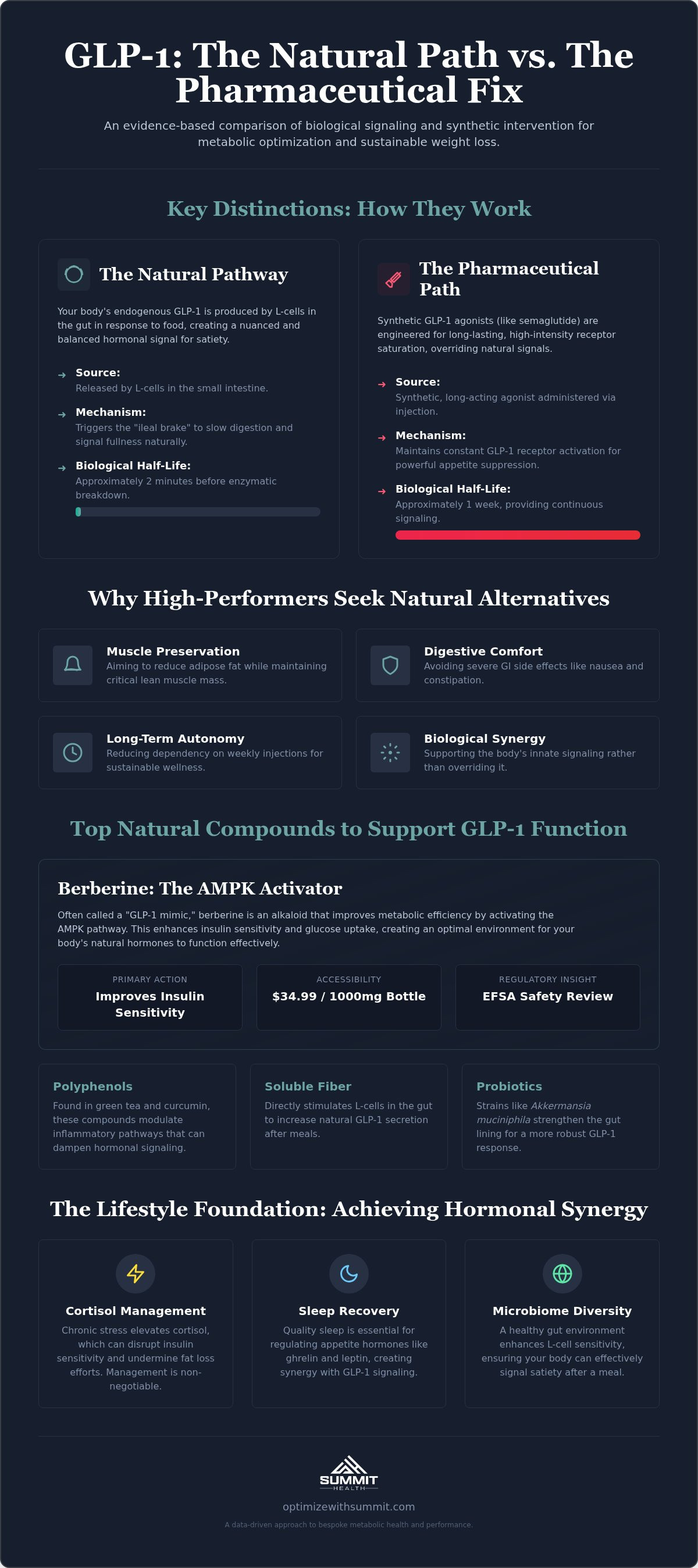
The pharmaceutical landscape changed with the arrival of semaglutide and tirzepatide. These medications revolutionized medical weight loss by acting as long-lasting agonists. However, a significant biological gap exists between natural secretion and synthetic intervention. Your endogenous GLP-1 has a half-life of roughly two minutes before it's broken down by enzymes. Synthetic versions are engineered for receptor saturation, remaining active in the system for an entire week. This intensity is why many patients ask: Are there natural alternatives to GLP-1 medications that offer a more balanced approach?
The Role of L-Cells in Your Gut
L-cells are the primary manufacturers of your body's GLP-1. Located mostly in the distal small intestine, these specialized, nutrient-sensing cells release the hormone in response to food intake. This process triggers the "ileal brake," a natural mechanism that slows the movement of food through your digestive tract to maximize nutrient absorption and signal fullness. Gut microbiome diversity is a critical factor here. A refined microbiome enhances the sensitivity of these L-cells, while a compromised gut can lead to "hormonal silence," where the body fails to signal satiety effectively even after a meal.
Why Searchers Seek Natural Alternatives
Pharmaceutical interventions often come with visible trade-offs. Rapid weight loss can occasionally lead to "Ozempic face," a loss of structural facial fat that can age the appearance prematurely. Beyond aesthetics, muscle mass preservation is a significant concern for high-performers. Many users experience gastrointestinal distress, including persistent nausea and constipation, which can disrupt daily productivity. The search for natural pathways is often driven by a desire for a "cleaner" metabolic optimization. Common motivations include:
- Muscle Preservation: Maintaining lean tissue while reducing adipose fat.
- Digestive Comfort: Avoiding the severe GI side effects of high-dose agonists.
- Long-term Autonomy: Reducing dependency on weekly injections.
- Biological Synergy: Supporting the body's natural signaling rather than overriding it.
Identifying whether there are natural alternatives to GLP-1 medications is the first step toward a bespoke health strategy. By focusing on the body's innate signaling, you can pursue a refined version of metabolic success that prioritizes longevity and performance over rapid, uncoordinated change.
Top Natural Compounds to Boost GLP-1 Secretion
Biological optimization. Targeted compounds. While synthetic agonists dominate the headlines, specific alkaloids and fibers can enhance your body's native hormone production. When asking, "Are there natural alternatives to GLP-1 medications?" the answer lies in understanding how these substances interact with your L-cells. These compounds don't just mimic a signal; they aim to restore the body's innate ability to regulate appetite and energy.
Polyphenols found in green tea and curcumin support this process by modulating inflammatory pathways that otherwise dampen hormonal signaling. Microbial balance is equally vital. Specific strains like Akkermansia muciniphila have been shown to strengthen the gut lining and promote a more robust GLP-1 response. These natural triggers work through multiple pathways to create a synergistic metabolic effect.
Berberine: Clinical Reality vs. Hype
Berberine is often mislabeled by marketing teams. It's an alkaloid that activates the AMPK pathway, which improves insulin sensitivity and glucose uptake. It doesn't mimic GLP-1 directly as much as it optimizes the environment for metabolic efficiency. Precision matters here. For instance, a 120-count bottle of Nature's Bounty 1000mg Berberine is priced at $34.99 as of August 2026, making it accessible but requiring consistent dosing for efficacy. Regulatory scrutiny is also increasing. The European Food Safety Authority (EFSA) has an open consultation on berberine safety ending July 10, 2026. This underscores the importance of sourcing high-quality, professional-grade supplements rather than generic retail options to ensure safety and bioavailability.
Dietary Triggers: Foods that Signal Fullness
Your plate is a signaling tool. Lean proteins trigger peptide YY, which works in synergy with GLP-1 to suppress hunger. Healthy fats, specifically oleic acid found in extra virgin olive oil, stimulate the release of oleoylethanolamide, which directly activates GLP-1 secretion. Fermented foods like kimchi and kefir strengthen the gut-brain axis by diversifying the microbiome. These dietary choices create a foundation for metabolic success. To determine which compounds align with your diagnostic profile, consider personalized weight loss guidance that looks at your full biological picture.
Real results require more than isolated supplements. While these natural compounds are effective, their potency differs from pharmaceutical receptor saturation. They are best used as part of a comprehensive strategy that includes lifestyle refinement and hormonal balance. Exploring whether there are natural alternatives to GLP-1 medications is about more than just finding a substitute; it's about refining your entire biological system for peak performance.
Natural Alternatives vs. Medical GLP-1s: Managing the Performance Gap
Potency varies significantly. When asking, "Are there natural alternatives to GLP-1 medications," it's vital to understand the difference between biological stimulation and receptor saturation. Natural compounds like berberine or soluble fiber stimulate the release of native GLP-1. Your body clears this native hormone in minutes. In contrast, pharmaceutical agonists like semaglutide are engineered for a seven-day half-life. This creates a performance gap where medical interventions produce more rapid weight loss but carry a higher risk of systemic side effects like nausea or muscle loss. Natural methods offer a gentler profile, yet they require more time and lifestyle discipline to yield measurable changes.
Cost is a major differentiator for many high-performers. As of April 2026, list prices for leading medications remain high. Ozempic sits at approximately $935 per month, while Wegovy can reach $1,350. Even with the Medicare GLP-1 Bridge program starting July 1, 2026, many people find themselves paying out-of-pocket for these therapies. Supplement stacks are more affordable, yet they often lack the clinical punch needed for significant metabolic resistance. Emerging research on the BRP molecule suggests a future where natural molecules might rival synthetic efficacy, but this research remains in the pre-clinical stage and is not currently available for human use.
The Problem with OTC Supplement Stacks
Regulation is often absent. Unlike prescription therapies, the FDA doesn't regulate dietary supplements with the same rigor, leading to inconsistent purity and dosage. Taking supplements without comprehensive labwork is a "blind approach" that rarely addresses the root cause of weight gain. For those seeking peak performance, a generic bottle from a retail shelf isn't a strategy; it's a gamble that often fails to bypass established metabolic plateaus.
When Natural Methods Aren’t Enough
Metabolic resistance is a physiological reality. Sometimes, even the most optimized diet and supplement regimen can't overcome deep-seated hormonal blockages or insulin resistance. This is where medical supervision becomes essential. Transitioning from basic supplements to a medically supervised weight loss program allows for precision. It ensures that any intervention, whether natural or pharmaceutical, is tailored to your specific diagnostic data rather than a generic protocol.
- Sustainability: Natural methods integrate easily into long-term lifestyle habits without medication cycles.
- Precision: Medical programs offer data-driven adjustments that supplements cannot match.
- Safety: Professional supervision mitigates the risk of gastrointestinal distress and ensures muscle preservation.
Identifying whether there are natural alternatives to GLP-1 medications is about finding the right tool for your current biological state. While natural compounds provide a solid foundation, significant metabolic shifts often require the clinical depth of a personalized medical program.
The Lifestyle Foundation: Hormonal Synergy and Sleep
Metabolic success isn't just about what you ingest. It's about what you inhibit. High cortisol and chronically elevated insulin act as biological "blockers" that sabotage even the most advanced GLP-1 signaling. When the body is in a state of high stress or insulin resistance, it actively suppresses the natural release of satiety hormones. This creates a cycle where you're constantly fighting against your own physiology. Reducing systemic inflammation through lifestyle refinement allows your native hormones to function as intended, creating the necessary environment for fat loss to occur.
Hormone optimization is the missing link in the weight loss conversation. Many people focus on supplements while ignoring the underlying endocrine environment that dictates how energy is stored and burned. To determine if there are natural alternatives to GLP-1 medications that will be effective for you, you must first address these foundational pillars. Without hormonal synergy, even the most potent natural compounds will struggle to override a system that's stuck in a storage-first mode.
Restorative Sleep and Metabolic Recovery
Sleep is the foundational metabolic catalyst. Utilizing specific protocols, such as magnesium glycinate sleep support, can significantly enhance insulin sensitivity by lowering nighttime cortisol. Sleep deprivation is a primary driver of metabolic failure. When you miss even a few hours of rest, your body suppresses natural GLP-1 production while simultaneously increasing ghrelin, the hormone responsible for hunger. This shift makes it nearly impossible to benefit from natural alternatives to GLP-1 medications, as your brain is essentially signaling for high-calorie survival foods to compensate for the energy deficit.
Hormone Balance for Weight Loss
Endocrine precision is non-negotiable. For many men and women, testosterone replacement therapy acts as a powerful natural catalyst for fat loss by improving muscle-to-fat ratios and overall metabolic rate. Estrogen dominance or low DHEA levels can trap the body in a state of metabolic resistance, regardless of your caloric intake. Before starting any weight loss program, obtaining comprehensive hormone blood work is essential to identify these specific hurdles. Addressing these deficiencies creates a synergistic effect that allows your body to respond to metabolic triggers with greater efficiency.
If you're ready to stop guessing and start optimizing your unique biology, schedule a diagnostic consultation today to build your personalized metabolic foundation.
Beyond OTC: Precision Peptide Therapy and Medical Optimization
Clinical precision. Targeted signaling. High-performance results. While the market is flooded with over-the-counter options, those seeking a refined metabolic state often find themselves in the gap between basic supplements and standard pharmaceuticals. Peptide therapy serves as a sophisticated bridge. It offers a level of biological specificity that generic herbs cannot match, moving beyond simple supplementation toward true cellular optimization. These molecules are bio-identical messengers that instruct your body to repair, recover, and regulate energy more efficiently.
Precision peptide therapy typically costs between $150 and $800 per month as of August 2026. This is generally an out-of-pocket investment, reflecting the bespoke nature of the treatment and the lack of standard insurance coverage for optimization protocols. Unlike mass-market agonists, these therapies are designed to work in harmony with your endocrine system. They provide a viable path for those asking, "Are there natural alternatives to GLP-1 medications that offer medical-grade potency?" By utilizing peptides, we can target specific metabolic pathways with surgical accuracy without the heavy-handed side effects of synthetic receptor saturation.
The Summit Health Approach to Weight Loss
Generic protocols fail high-performers. At Summit Health, we prioritize diagnostic depth. We identify your unique metabolic markers through comprehensive labwork before recommending a path forward. Our telehealth-led medical weight loss programs are tailored to your specific biology, ensuring that every intervention is intentional. We combine this clinical precision with dedicated health coaching. This ensures your metabolic improvements are sustainable, helping you maintain your peak state long after the initial phase of treatment. Results require a strategy, not a guess.
Getting Started with Metabolic Optimization
The transition from curiosity to optimization begins with data. A virtual consultation allows us to map your current physiological baseline and define a clear trajectory toward your goals. If you've been searching for clarity on whether there are natural alternatives to GLP-1 medications that actually deliver on their promises, a professional assessment is the only way to find a definitive answer. It is time to stop experimenting with retail-grade "hacks" and start a protocol built on your own data. Schedule your precision health assessment today to unlock your metabolic potential.
Refining Your Metabolic Baseline
True optimization is a deliberate process. You now understand that while natural compounds like berberine support insulin sensitivity, they are most effective when paired with a foundation of restorative sleep and hormonal synergy. The question of are there natural alternatives to GLP-1 medications is best answered through a lens of biological precision rather than generic supplementation. Sustained weight loss is not found in a single pill. It's found in the intersection of data-driven diagnostics and personalized lifestyle refinement. Your biology is unique. Your solution should be as well.
Summit Health provides the expertise needed to bridge the gap between nature and pharmacology. Through telehealth-led hormone optimization and comprehensive diagnostic labwork, we identify the specific biological hurdles holding you back from your peak state. Our approach combines personalized health coaching and virtual monitoring to ensure your progress is both measurable and permanent. You don't have to navigate metabolic resistance alone. We're here to guide your upward movement toward a premium, optimized version of your life. Optimize your metabolic health with a personalized Summit Health appointment today. Your peak state is within reach.
Frequently Asked Questions
Is berberine actually as effective as Ozempic?
No. Berberine is a potent metabolic tool, but it functions differently than semaglutide. While berberine activates the AMPK pathway to improve insulin sensitivity, it doesn't achieve the same level of GLP-1 receptor saturation as pharmaceutical agonists. It's an excellent option for those seeking gradual metabolic improvement without the intensity of clinical injections. Berberine supports your body's native signaling rather than overriding it with synthetic molecules.
Can I increase my GLP-1 levels naturally through diet alone?
Yes. You can stimulate endogenous GLP-1 through specific dietary triggers. Soluble fibers like psyllium and glucomannan act as mechanical signals to your gut's L-cells. Healthy fats, particularly oleic acid from olive oil, also promote hormone release. However, natural secretion has a very short half-life. Diet is a foundational maintenance strategy, but it rarely matches the sustained appetite suppression found in medical-grade weight loss protocols.
What are the best supplements for natural weight loss in 2026?
Quality matters more than quantity in 2026. High-performers often ask: Are there natural alternatives to GLP-1 medications that actually work? The most effective evidence-based options include professional-grade berberine, fermented fiber, and polyphenols like green tea extract. These supplements work best when they're part of a data-driven strategy. Always prioritize bioavailability and third-party testing to ensure you're receiving the precise dosage required for metabolic activation.
Does hormone therapy help with weight loss if GLP-1s fail?
Yes. Hormone therapy addresses the root cause of metabolic resistance. If your testosterone is low or you're dealing with estrogen dominance, your body will resist fat loss regardless of your appetite. While GLP-1s manage hunger, bioidentical hormone replacement therapy optimizes your body's ability to burn stored energy. These two tools are often synergistic, helping you break through plateaus that medications alone cannot resolve.
How long does it take to see results from natural GLP-1 boosters?
Expect a timeline of 4 to 12 weeks. Natural interventions require time to alter gut microbiome diversity and improve cellular insulin sensitivity. Unlike pharmaceutical agonists that can suppress appetite within hours, natural boosters work by gradually refining your internal signaling. Consistency is the key to success. You're building a sustainable metabolic foundation rather than forcing a rapid, temporary shift in your physiology.
Are there side effects to natural GLP-1 alternatives?
Yes. Natural doesn't mean exempt from side effects. High doses of berberine or soluble fiber can cause gastrointestinal sensitivity, including bloating or cramping. Regulatory bodies like the EFSA are currently reviewing berberine to establish safer intake levels as of July 2026. It's vital to start with conservative doses and monitor your body's response. Professional guidance ensures you achieve metabolic optimization without unnecessary digestive distress.
Can I take GLP-1 supplements while on HRT?
Generally, yes. These therapies often complement each other. Many patients find that taking natural GLP-1 boosters while on hormone replacement therapy helps stabilize glucose levels and enhances fat loss. This combination supports a more comprehensive approach to metabolic health. Always coordinate your supplement stack with your medical provider to ensure that every compound in your protocol is working toward your specific performance goals.
What is the best way to test my metabolic health?
Comprehensive diagnostic labwork is the only way to get a clear picture. You need to look beyond standard glucose tests. Assessing fasting insulin, HbA1c, and a full endocrine panel helps determine if there are natural alternatives to GLP-1 medications that fit your unique biological needs. Data-driven insights allow you to move away from generic guesses and toward a bespoke health strategy that delivers measurable results.

Article by
Dr. David Richardson
David Richardson, is the founder and CEO of Summit Health and the author of "Insights from the Summit", where he writes about hormone optimization, metabolic health, thyroid function, longevity, and preventive medicine.
After entering healthcare in 2009, David became increasingly interested in a question that traditional medicine often struggles to answer:
Why do so many people continue to feel terrible despite being told their labs are "normal"?
That question eventually led him into the field of health optimization in 2020, where he became passionate about understanding physiology at a deeper level and helping patients uncover the root causes of their symptoms rather than simply managing them.
Today, David's philosophy is simple: normal and optimal are not the same thing. Every patient is physiologically unique, and meaningful healthcare begins by listening to symptoms, understanding the science, and recognizing that laboratory values are only one piece of a much larger picture.
Through Summit Health and Insights from the Summit, David's mission is to help people better understand their bodies, ask better questions, and make informed decisions that improve both their health span and quality of life.


