

IMPORTANT DISCLAIMERS
Medical Disclaimer: The information in this article is provided for educational purposes only and is not intended as medical advice or a substitute for individualized medical care. Every person's health needs are unique. Always consult a qualified healthcare professional before starting, stopping, or changing any medication, supplement, or treatment plan. -------
Article Disclaimer: Articles are reviewed and published by Summit Health to provide evidence-based educational information. While Summit Health strives to provide reliable and current health information, medical knowledge is always evolving over time. Depending on when you are reading this content, it may not reflect the latest research or apply to your individual circumstances.
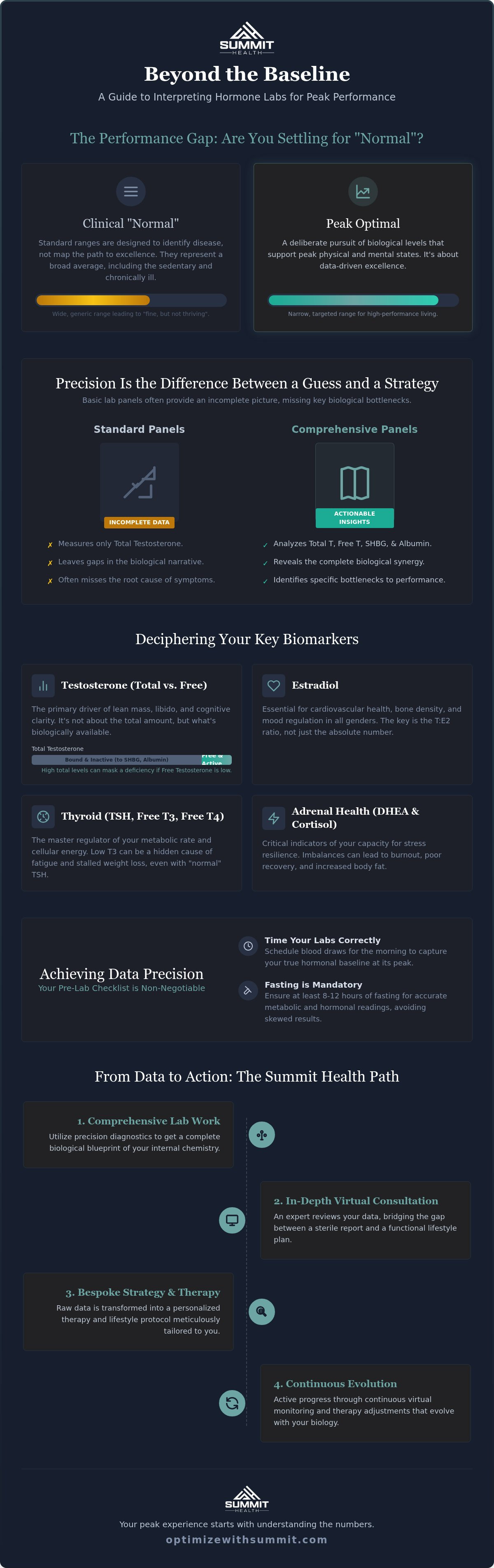
Your "normal" lab results might be the very thing holding you back from peak performance. Most clinical reference ranges are designed to identify the presence of disease, not to map the path to excellence. They represent a broad average of the population, including those struggling with chronic illness and sedentary lifestyles. Truly interpreting hormone lab results requires a shift in perspective from baseline survival to data-driven optimization. Precision matters. Your biology is not a generic template.
It's frustrating to feel your vitality slipping while a standard medical report claims everything is fine. You shouldn't have to settle for declining energy or stalled body composition simply because you fall within a statistical middle ground. This guide moves beyond the clinical baseline to reveal what your biomarkers actually say about your true performance potential. We will define what "optimal" looks like for a high-performance lifestyle and decode the complex acronyms that often cause confusion. You'll gain actionable insights to refine your internal chemistry and discover how a specialized partner can transform raw data into a bespoke strategy for growth. Your peak experience starts with understanding the numbers.
Key Takeaways
- Shift from "clinical normal" to "peak optimal" by understanding how standard reference ranges are designed for the average, not the elite.
- Identify the critical synergy between biomarkers like testosterone and estradiol to unlock better body composition and sharper cognitive focus.
- Ensure data precision by timing your labs correctly; morning draws and fasting are non-negotiable for capturing your true hormonal baseline.
- Master the art of interpreting hormone lab results to bridge the gap between standard medical reports and your true performance potential.
- Transition from static data to active progress through continuous virtual monitoring and personalized therapy adjustments that evolve with your biology.
Beyond the Baseline: Why Hormone Lab Results Matter
Hormones are your internal architecture. They function as the body’s chemical messengers, regulating everything from metabolic rate and muscle repair to emotional stability and cognitive speed. Most people view blood work as a binary pass-fail test. If the results are within range, they assume the engine is running perfectly. This is a mistake. Truly interpreting hormone lab results requires a deep understanding of biological synergy, where the interaction between different markers matters as much as the individual numbers themselves.
Standard medical protocols often overlook sub-clinical deficiencies. These are the "gray areas" where you aren't technically diseased, but you are far from thriving. You might experience persistent fatigue, weight gain, or a loss of drive while a practitioner insists your levels are fine because they fall within broad reference ranges for blood tests. Hormone optimization is the pursuit of biological levels that support peak physical and mental states. It is a deliberate transition from baseline survival to a state of high-performance excellence.
The Role of Precision Diagnostics
Precision is the difference between a guess and a strategy. Basic lab panels frequently provide an incomplete picture. They might measure total testosterone without looking at free testosterone, albumin, or sex hormone-binding globulin. This lack of detail leaves gaps in the narrative. Comprehensive lab work is superior because it identifies the specific bottlenecks in your biology that basic tests miss. Brain fog, low libido, and stalled recovery are often the visible symptoms of these invisible imbalances. Summit Health utilizes a data-driven, clinical approach to ensure every marker is accounted for. We don't just look at the numbers; we analyze how they work together to influence your daily reality.
The Telehealth Advantage in Lab Review
Modern health shouldn't be restricted by geography or the time constraints of a traditional office visit. Virtual consultations allow for a more focused, deeper dive into your biological data. This format bridges the gap between a sterile lab report and a functional lifestyle plan. It's about turning raw data into a roadmap for improvement. Through Summit Health: Advanced Online Hormone Replacement Therapy, patients receive specialized attention that translates complex biomarkers into actionable progress. Interpreting hormone lab results through a telehealth lens ensures that your protocol is convenient, continuous, and meticulously tailored to your evolving performance goals.
Deciphering the Biomarkers: Key Hormones and Their Roles
Hormones function in a state of constant, dynamic interplay. A single marker provides a snapshot; a comprehensive panel provides a blueprint. When interpreting hormone lab results, the focus shifts from individual numbers to the biological synergy between anabolic drivers, metabolic regulators, and stress responders. This holistic view is essential for identifying the root cause of performance plateaus and fatigue.
- Testosterone: The primary driver of lean mass, libido, and cognitive clarity.
- Estradiol: Essential for cardiovascular health and bone density in all genders.
- Thyroid (TSH, Free T3, Free T4): The master regulator of metabolic rate and cellular energy.
- DHEA and Cortisol: Critical indicators of adrenal health and your capacity for stress resilience.
Testosterone: Total vs. Free
Precision matters. Total testosterone represents the entire volume of the hormone in your bloodstream, but it only tells half the story. Most of this hormone is bound to Sex Hormone Binding Globulin (SHBG), rendering it biologically inactive. Free testosterone is the fraction actually available to your tissues for muscle protein synthesis and mood regulation. High total levels can mask a deficiency if SHBG is excessively elevated, soaking up the "available" hormone. Accurate measurement is crucial for those utilizing medical weight loss to preserve lean tissue while shedding fat. Furthermore, biological variables and laboratory pitfalls in hormone measurements can skew these results, making specialized interpretation a necessity for any optimization plan.
The Female Profile: Estrogen and Progesterone
Ratios define health. For women, the relationship between estradiol and progesterone dictates everything from sleep quality to metabolic flexibility. As women approach the perimenopause and menopause transition, these levels fluctuate significantly, often leading to a loss of vitality. Monitoring these shifts provides clarity on how long menopause lasts and how to optimize the experience through data-driven intervention. It is not about reaching a static number; it is about maintaining a functional balance that supports long-term cardiovascular and bone health.
Metabolic Markers and GLP-1 Context
Metabolism is foundational. Hormonal optimization cannot exist without metabolic stability. Fasting insulin and HbA1c act as the guardrails for biological health. When insulin sensitivity is compromised, it disrupts appetite regulation and hormonal signaling, making body composition goals difficult to achieve. This is why the most successful weight loss digital healthcare solutions prioritize blood sugar management alongside hormone therapy. If you are ready to move beyond generic advice, you can connect with a specialist to begin your data-driven journey toward peak performance.
Clinical Normal vs. Peak Optimal: The Performance Gap
Standard reference ranges are a snapshot of the general population. This includes the sick, the sedentary, and those with undiagnosed metabolic dysfunction. When interpreting hormone lab results, it becomes clear that "normal" is a statistical middle ground, not a gold standard for excellence. It is the floor, not the ceiling. Relying on these broad averages often results in missed opportunities for enhancement. You deserve a higher standard of health.
The Problem with Standard Reference Ranges
Labs calculate reference ranges using a bell curve. They take the average results from a specific region and set the boundaries at the extremes. Because the general population’s health has declined over the last several years, these ranges have shifted downward. Being in the bottom 5% of a "normal" range is rarely optimal for performance. This creates a "Gray Zone" where you are clinically healthy on paper but feel symptomatically deficient in real life. Age-adjusted normals further complicate this by accepting biological decline as an inevitable consequence of time rather than a manageable variable. We reject the idea that aging must equal exhaustion.
Defining Optimal for Longevity
Optimization requires a more refined lens. It focuses on the specific ranges where the body functions with the least friction and the most vitality. At Summit Health, our philosophy centers on identifying these individualized "sweet spots." We look at the intersection of your data and your felt experience to create a baseline for progress. Precision is our priority. Achieving these target levels often leads to profound improvements in sleep and recovery, allowing your body to repair itself with greater efficiency. This data-driven approach provides the clinical justification for bioidentical hormone replacement, ensuring that every intervention is tailored to your unique biological needs. Interpreting hormone lab results through an optimization framework allows you to reclaim the vitality that standard medicine often ignores. Data leads the way. Action follows.
Variables in Play: What Influences Your Lab Accuracy
Data is only as useful as its accuracy. When interpreting hormone lab results, the environment of the draw is just as critical as the analysis itself. Biological markers are highly sensitive to timing, nutrition, and even the vitamins in your morning routine. A failure to control these variables leads to skewed data and ineffective protocols. Precision requires discipline.
- Diurnal Rhythms: Morning draws are non-negotiable. Testosterone and cortisol peak in the early hours. Testing in the afternoon often results in artificially low readings that don't reflect your true potential.
- Fasting Status: A recent meal triggers insulin spikes and metabolic shifts. For a true baseline, a 10 to 12-hour fast is the clinical standard.
- Supplement Interference: High-dose Biotin (Vitamin B7) is a notorious disruptor of lab assays. It can mimic hyperthyroidism or mask low testosterone readings. Pause all non-essential supplements 48 to 72 hours before your draw.
- Cycle Timing: For women, timing is everything. Day 3 of the menstrual cycle provides a baseline for FSH and LH. Day 21 is the critical window for assessing peak progesterone levels.
Preparation Protocol for Accurate Data
Success begins 24 hours before the needle hits the vein. Proper hydration is essential. It maintains blood volume and ensures the concentration of markers remains stable. Dehydration can make blood draws difficult and potentially concentrate certain biomarkers, leading to a false narrative. Follow a strict Diagnostic Precision Pillar protocol to ensure your results reflect your actual biological state. Avoid strenuous exercise the day before. Acute inflammation from a heavy training session can temporarily elevate liver enzymes and cortisol, masking your baseline recovery status.
External Stressors and Short-Term Fluctuations
One bad night matters. Acute stress or significant sleep deprivation the evening before a test will skew your results. These factors trigger temporary spikes in inflammatory markers and suppress anabolic signals. While magnesium glycinate can help stabilize recovery markers and improve sleep quality, it cannot override the impact of a chaotic lifestyle on a single test. Remember that a lab draw is a snapshot, not the whole movie. Consistent monitoring over time is the only way to build a reliable narrative of your progress. If you are ready to establish your baseline with clinical precision, schedule your comprehensive lab review today.
From Data to Action: The Summit Health Optimization Path
Data is the foundation. Execution is the architect. While interpreting hormone lab results provides the necessary blueprint for your health, the real transformation occurs when that data is translated into a structured, clinical protocol. Understanding your numbers is the beginning of the journey. Optimizing them is the destination. At Summit Health, we bridge the gap between diagnostic insight and high-performance reality. We don't just identify deficiencies; we build solutions.
The Summit Health Consultation Process
Your journey begins with a comprehensive review of your biomarkers alongside a specialized provider. This is not a generic summary. It's a deep dive into your unique physiology. We craft a bespoke plan that integrates precision hormone therapy with targeted nutrition and lifestyle adjustments. This holistic approach ensures that every variable is optimized for your specific goals. Continuous virtual monitoring is a core pillar of our practice. We use evolving data to refine your treatment, ensuring that your protocol remains safe, effective, and aligned with your body’s changing needs. Safety is prioritized through regular, ongoing blood work that tracks your progress in real time.
Taking the First Step
Empowerment begins with information. Owning your biological data is the most effective way to protect your long-term vitality. You can start this process immediately by taking our Hormone Quiz. This tool is designed to identify the symptoms of imbalance and provide a clear path toward professional evaluation. Ordering a comprehensive panel through Summit Health is a seamless, telehealth-led experience. We provide the diagnostic precision required to move beyond standard medical advice. Stop guessing about your health. Start measuring your potential. Your peak experience is waiting. It is time to align your internal chemistry with your external ambitions.
Reclaim Your Biological Potential
Success is built on data, but it is realized through action. Moving beyond standard reference ranges allows you to transition from baseline health to elite performance. You've learned that "normal" is a statistical average often including the unwell; true optimization targets the specific "sweet spot" where energy, recovery, and body composition align. Mastering the art of interpreting hormone lab results is the first step toward a more vibrant version of yourself. Precision diagnostics and strictly controlled testing variables ensure that your roadmap is based on reality, not short-term fluctuations.
Summit Health provides the expertise needed to turn these insights into a sustainable lifestyle. Our telehealth-led precision medicine combines comprehensive diagnostic protocols with expert health coaching for long-term results. You don't have to navigate the complexities of your biology alone. It's time to stop accepting decline as inevitable and start pursuing your peak state with confidence. Begin your optimization journey with our Hormone Quiz today and discover what is truly possible when your internal chemistry supports your highest ambitions. Your future self is waiting for you to take the lead.
Frequently Asked Questions
How do I read my hormone blood test results?
Start by identifying the marker name and the corresponding value. Compare this to the reference range provided by the laboratory. However, interpreting hormone lab results goes beyond matching numbers to a chart. You must assess where your value sits within that range. A result at the extreme low end of "normal" often explains symptoms that a generic report might ignore. Professional interpretation connects these data points to your felt experience.
What hormones should be tested for a full panel?
A comprehensive panel must include Total and Free Testosterone, Estradiol, and a full Thyroid profile including TSH, Free T3, and Free T4. You should also measure SHBG, DHEA-S, and fasting insulin to understand metabolic health. Including markers like Prostate-Specific Antigen (PSA) for men or Progesterone for women provides a more complete biological map. This depth ensures no sub-clinical deficiencies are missed during the optimization process.
Why is my testosterone "normal" but I have symptoms?
Standard reference ranges are based on a broad population average that includes individuals with poor metabolic health. Your "normal" result might be significantly lower than your personal biological requirement for peak performance. This often happens when Total Testosterone looks acceptable but Free Testosterone is low due to high SHBG. Symptoms like fatigue or low libido occur when the hormone isn't biologically available to your tissues, regardless of the laboratory's baseline.
What is the best time of day to get hormone blood work done?
Schedule your blood draw between 7:00 AM and 10:00 AM for the most accurate data. Hormone levels, particularly testosterone and cortisol, follow a diurnal rhythm and are highest in the early morning. Testing later in the day will show naturally lower levels that don't reflect your peak baseline. Consistency in timing is essential for tracking progress across multiple tests and ensuring that every intervention is based on reliable, high-quality data.
Can supplements affect my hormone lab results?
Yes, certain supplements can significantly skew your data. Biotin is a primary culprit that interferes with the immunoassays used to measure thyroid and steroid hormones. It can cause falsely elevated or suppressed readings that lead to incorrect protocols. You should pause Biotin and other non-essential vitamins for at least 48 to 72 hours before your draw. Always disclose your full supplement regimen to your provider to ensure a precise clinical review.
What is the difference between total and free testosterone?
Total testosterone is the entire amount of the hormone in your bloodstream. Most of it is bound to proteins like SHBG and albumin, which prevents it from entering your cells. Free testosterone is the unbound fraction that is biologically active and ready for use. When interpreting hormone lab results, the free level is often more predictive of your actual vitality, muscle repair capacity, and cognitive focus than the total number alone.
How often should I have my hormone levels checked?
Most optimization protocols require testing every three to six months during the initial phase. Once you reach your target levels and symptoms have stabilized, an annual or bi-annual check is usually sufficient. Frequent monitoring allows for precise adjustments to your therapy and ensures your markers remain within the optimal range. Regular draws are the only way to confirm that your body is responding safely and effectively to your personalized plan.
Are home hormone tests as accurate as clinical blood draws?
Home tests using saliva or finger-prick blood spots are often less reliable than clinical venipuncture. These methods can be prone to collection errors and may not offer the same level of diagnostic depth as a full laboratory panel. Precision medicine requires the gold standard of a professional blood draw to ensure every biomarker is measured with clinical accuracy. For peak optimization, the quality of the data determines the quality of the results.

Article by
Dr. David Richardson
David Richardson, is the founder and CEO of Summit Health and the author of "Insights from the Summit", where he writes about hormone optimization, metabolic health, thyroid function, longevity, and preventive medicine.
After entering healthcare in 2009, David became increasingly interested in a question that traditional medicine often struggles to answer:
Why do so many people continue to feel terrible despite being told their labs are "normal"?
That question eventually led him into the field of health optimization in 2020, where he became passionate about understanding physiology at a deeper level and helping patients uncover the root causes of their symptoms rather than simply managing them.
Today, David's philosophy is simple: normal and optimal are not the same thing. Every patient is physiologically unique, and meaningful healthcare begins by listening to symptoms, understanding the science, and recognizing that laboratory values are only one piece of a much larger picture.
Through Summit Health and Insights from the Summit, David's mission is to help people better understand their bodies, ask better questions, and make informed decisions that improve both their health span and quality of life.


