

IMPORTANT DISCLAIMERS
Medical Disclaimer: The information in this article is provided for educational purposes only and is not intended as medical advice or a substitute for individualized medical care. Every person's health needs are unique. Always consult a qualified healthcare professional before starting, stopping, or changing any medication, supplement, or treatment plan. -------
Article Disclaimer: Articles are reviewed and published by Summit Health to provide evidence-based educational information. While Summit Health strives to provide reliable and current health information, medical knowledge is always evolving over time. Depending on when you are reading this content, it may not reflect the latest research or apply to your individual circumstances.
Sleep isn't just downtime. It's a biological recalibration. Precision restoration. Peak performance. You've likely spent eight hours in bed only to wake up feeling depleted. The racing thoughts at 3 AM and the persistent brain fog are clear signs that your internal architecture is out of sync. You're not alone in seeking a more refined approach to recovery that goes beyond basic hygiene.
This guide explores how peptides for sleep offer a sophisticated path to clinical hormone optimization. You'll discover how to silence mid-night cortisol spikes and trigger deep delta-wave recovery without the heavy sedation of traditional aids. We'll examine the science of circadian recalibration and the specific protocols designed to restore your natural growth hormone rhythms for 2026. From understanding the latest regulatory shifts to identifying the right precision-driven therapy, you'll gain a clear roadmap to reclaiming your morning vitality and long-term health. It's time to move toward a version of yourself that's fully optimized, starting with the foundation of restorative rest.
Key Takeaways
- Master the science of signaling. Learn how short-chain amino acids trigger endogenous hormone release to recalibrate your internal clock and restore deep sleep.
- Navigate the 2026 sleep stack. Discover how Ipamorelin and CJC-1295 function as precision tools within a targeted regimen of peptides for sleep.
- Resolve hormonal interference. Identify the critical link between cortisol spikes and non-restorative rest to achieve consistent delta-wave recovery.
- Transition to data-driven optimization. Understand why comprehensive diagnostic lab work is the essential foundation for a personalized and safe peptide protocol.
- Access expert-led recovery. See how telehealth-integrated coaching provides the virtual monitoring required to refine your performance as your biology evolves.
The Science of Recalibration: How Sleep Peptides Work
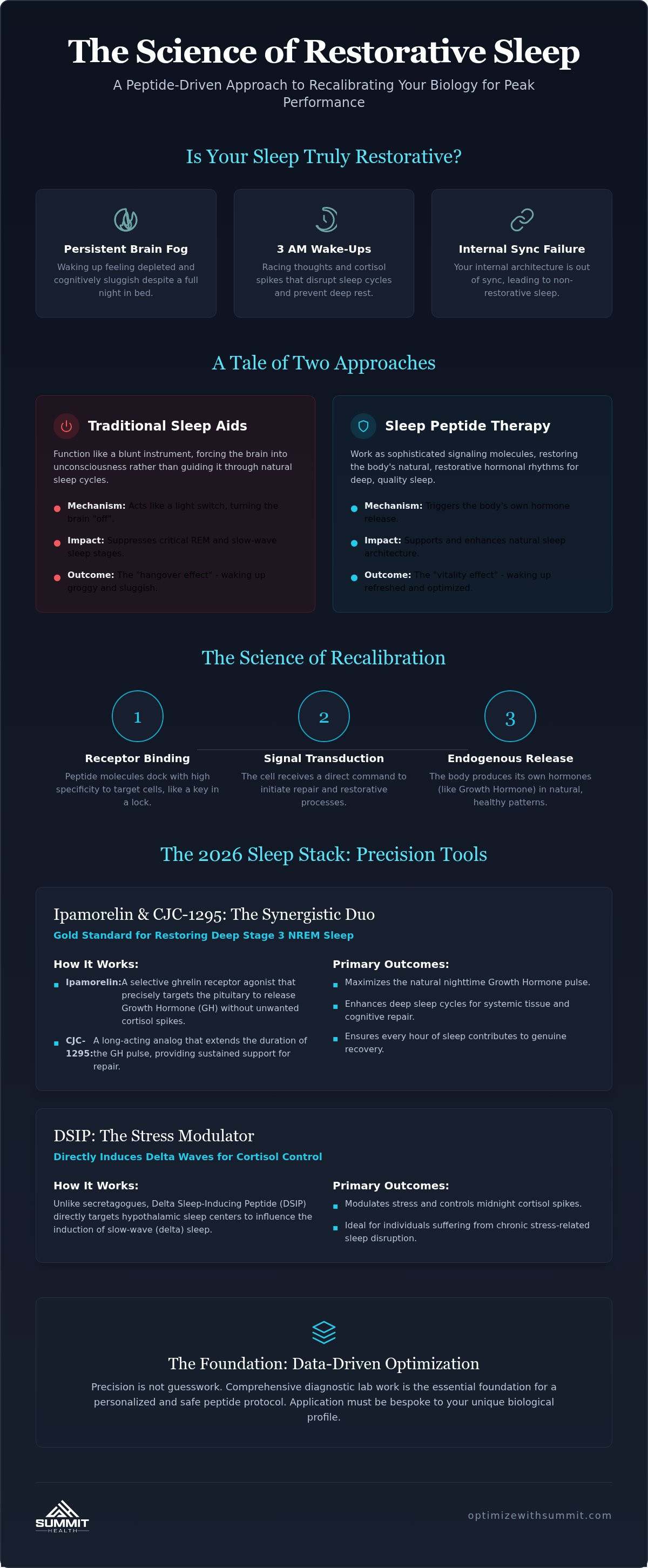
Biological precision. Endogenous restoration. Peptides for sleep are not sedatives. They are short-chain amino acid signaling molecules that act as the body's primary messengers. Instead of forcing the brain into a state of unconsciousness, these molecules bind to specific receptors to trigger the natural release of restorative hormones. This is the science of recalibration. It focuses on enhancing the body's existing pathways rather than overriding them with external chemicals.
As we age, our internal signaling efficiency declines. The biological noise increases. This leads to the non-restorative sleep many experience despite spending eight hours in bed. Targeted peptide therapy aims to clear this static. By mimicking natural signaling, these therapies restore the rhythmic pulses of growth hormone and other regulatory factors that define a healthy circadian rhythm. The goal is a return to peak biological efficiency.
The mechanism of action follows a clean, methodical process:
- Receptor binding: Molecules dock with high specificity to target cells.
- Signal transduction: The cell receives a direct command to initiate repair.
- Endogenous release: The body produces its own restorative hormones in natural, pulsatile patterns.
Peptides vs. Traditional Sleep Aids
Traditional pharmaceutical options often function like a light switch. They turn the brain off. However, sleep is not a passive state of "off." It is an active, highly structured process of biological maintenance. Sedatives frequently bypass the most critical stages of the sleep cycle, specifically suppressing restorative slow-wave sleep and REM. This leads to the infamous "hangover effect" where you wake up groggy and cognitively sluggish. Peptides for sleep offer a "vitality effect" by supporting natural sleep architecture. This includes protecting Delta-sleep-inducing peptide (DSIP) pathways and other endogenous mechanisms that ensure you wake up refreshed, not just unconscious.
The Role of the Pituitary Gland in Restorative Sleep
The pituitary gland is the master regulator. It sits at the center of your sleep-wake cycle, governing the release of growth hormone (GH) during the first half of the night. This GH pulse is vital for tissue repair and cognitive maintenance. When this feedback loop is disrupted, recovery stalls. Peptide therapy targets the hypothalamic-pituitary-adrenal (HPA) axis to restore balance. It encourages the pituitary to resume its natural, pulsatile secretion patterns. This doesn't just improve sleep quality; it enhances your body's ability to heal and regenerate. To see if your biological markers suggest a need for this level of precision, taking a Hormone Quiz can provide the first step toward a bespoke protocol.
The Sleep Stack: Top Peptides for Sleep in 2026
Precision tools. Target outcomes. Selecting the right peptides for sleep requires an understanding of how specific molecules interact with your unique biological profile. While the science of signaling is universal, the application is bespoke. In 2026, clinical protocols focus on four primary peptides to restore the architecture of rest and ensure peak daytime performance.
Ipamorelin and CJC-1295: The Synergistic Duo
Maximum GH pulse. Enhanced recovery. This combination is the gold standard for restoring Stage 3 NREM sleep. Ipamorelin is a selective ghrelin receptor agonist that avoids cortisol spikes. By targeting the pituitary with extreme precision, it encourages the release of growth hormone without the unwanted side effects of older secretagogues. When paired with CJC-1295, the effect is magnified. CJC-1295 acts as a long-acting analog that extends the duration of the growth hormone pulse, providing sustained support for deep sleep cycles and systemic tissue repair. This duo doesn't just help you stay asleep; it ensures that every hour spent in bed contributes to physical and cognitive restoration. It's about the quality of the delta-wave experience. For high-performance individuals, this synergy is often the key to waking up with genuine morning vitality rather than the grogginess of traditional aids.
DSIP: Directly Inducing Delta Waves
Stress modulation. Cortisol control. Delta Sleep-Inducing Peptide (DSIP) occupies a unique space in sleep therapy. Unlike secretagogues that focus on growth hormone, DSIP targets the hypothalamic sleep centers directly. It was discovered to influence the induction of slow-wave sleep, making it an ideal candidate for individuals suffering from chronic stress or midnight cortisol spikes. If you find yourself waking up with racing thoughts or a "wired" feeling in the early morning hours, DSIP offers a path to biological calm. It works by dampening the HPA axis response, allowing the brain to transition into deep, regenerative states more efficiently. It's a tool for those whose primary barrier to rest is an overactive nervous system that refuses to downregulate at night.
Sermorelin remains a foundational peptide for circadian rhythm alignment. It provides a gentler, more sustained approach to growth hormone optimization, making it suitable for long-term maintenance of biological balance. By strengthening the natural feedback loops of the pituitary, Sermorelin helps anchor your sleep-wake cycle to a more youthful pattern. This prevents the "sleep fragmentation" that often occurs as we age. For those ready to move beyond generic solutions and explore a data-driven assessment, you can schedule a consultation to determine which of these precision tools aligns with your specific recovery goals.
The Hormonal Link: Why Sleep Requires Biological Balance
Sleep is a biological mirror. It reflects the state of your internal chemistry. Often, non-restorative sleep is simply a primary symptom of broader hormonal dysregulation. To achieve truly regenerative rest, you must look beyond the bedroom environment and into your systemic balance. Clinical hormone optimization ensures that the messengers governing your recovery are functioning with precision. When utilizing peptides for sleep, the objective is to realign these chemical signals into a coherent, high-performance symphony. This approach integrates seamlessly with broader Hormone Therapy to address the root causes of sleep fragmentation.
Biological balance requires a delicate interplay between cortisol, melatonin, and growth hormone. For many, sleep maintenance is the hurdle. Optimized testosterone levels play a critical role here. Low testosterone is frequently linked to increased sleep apnea risk and frequent nighttime awakenings. By stabilizing these foundational markers, you create a physiological environment where deep sleep is the natural default, not a forced state. It's about building a foundation for upward health movement.
Cortisol Management and the Midnight Wake-Up
3 AM. Eyes wide. Heart racing. This common phenomenon is rarely about external noise. It's often a cortisol spike triggered by low blood sugar or an overactive sympathetic nervous system. When your body perceives a stressor, it initiates a "fight or flight" response that overrides your sleep drive. Targeted peptide protocols help temper this nocturnal adrenaline surge. By modulating the HPA axis, peptides allow for a smoother transition between sleep stages. This biological downregulation is further enhanced when paired with magnesium glycinate sleep support, which provides the mineral foundation for neurological calm. The result is a steady, uninterrupted night of rest.
Growth Hormone: The Nightly Repair Crew
The 2026 clinical view on growth hormone (GH) emphasizes its role as the ultimate nightly repair crew. GH is essential for cognitive longevity and physical tissue repair. However, poor sleep creates a vicious cycle. You need deep sleep to trigger GH pulses, but GH deficiency makes deep sleep harder to achieve. This leads to accelerated aging and persistent brain fog. Restoring the "pulse" through specific peptide protocols breaks this cycle. It allows your body to resume its natural regenerative functions during the first half of the night. You aren't just sleeping longer; you're sleeping deeper. This restoration of the GH rhythm is the cornerstone of moving from survival-mode rest to peak performance recovery.
Precision Implementation: Protocols, Safety, and Lab Work
Data before dose. Precision health optimization starts with comprehensive diagnostics. You cannot optimize what you do not measure. A baseline assessment through hormone blood work is the only way to ensure safety and efficacy. This objective data allows for the calibration of peptides for sleep to your specific metabolic needs, ensuring that the intervention matches your biological deficit.
Administration methods vary by bioavailability. Subcutaneous injection remains the clinical gold standard for growth hormone secretagogues because it ensures maximum absorption. Oral and nasal routes offer convenience, yet they often suffer from reduced or inconsistent signaling. Timing is equally essential for circadian alignment. Administering GHRH analogs in the evening mimics the body's natural nocturnal pulse. This strategic timing ensures the therapy supports your natural sleep architecture rather than disrupting it.
Complementary frameworks strengthen clinical results. The 10-5-3-2-1 sleep hygiene rule provides a structured wind-down for the nervous system:
- 10 hours before bed: No more caffeine.
- 5 hours before bed: No more food or alcohol.
- 3 hours before bed: No more work-related tasks.
- 2 hours before bed: No more blue light or screens.
- 1 hour before bed: Pure relaxation or meditation.
Why Medical Supervision is Non-Negotiable
Professional oversight is essential. Gray market sources lack third-party testing and purity guarantees, posing significant health risks. Clinical-grade compounding ensures you receive precise, sterile formulations. During treatment, monitoring IGF-1 levels is a key safety metric to evaluate pituitary response and prevent over-stimulation. Dosage adjustments must occur in real-time, guided by a specialist who interprets your bio-feedback and follow-up lab results to maintain biological equilibrium.
Administration and Best Practices
Precision delivery. Subcutaneous administration is nearly painless when performed correctly. Clean the injection site with alcohol. Pinch a small amount of adipose tissue, usually in the abdominal area. Insert the needle at a 45-degree angle and depress the plunger steadily. While most users tolerate the therapy well, some report minor water retention or temporary tingling in the extremities. These effects are typically dose-dependent and resolve as the body acclimates to the protocol. Peptide therapy must be tailored to individual baseline biomarkers for safety. To begin your data-driven journey, book your diagnostic consultation to build a personalized recovery protocol.
Summit Health: Virtual Sleep and Performance Optimization
Expertise without borders. Precision within reach. Summit Health provides a high-end, telehealth-led approach to peptide therapy designed for the modern high-performer. We understand that your time is as valuable as your health. By leveraging advanced virtual monitoring and diagnostic precision, we bring specialized sleep and recovery support to clients across the nation. This isn't a generic wellness service. It's a data-backed health optimization journey tailored to your unique biological architecture.
The transition from curiosity to clinical treatment is methodical. It begins with an objective assessment of your current state. By taking our Hormone Quiz, you provide the initial data points required to screen for potential dysregulation. From there, the process moves into comprehensive lab work and virtual consultations with specialists who understand the nuances of peptides for sleep. This is where clinical authority meets personalized care, ensuring your protocol is as unique as your DNA.
The Summit Health Telehealth Advantage
Seamless integration. Absolute convenience. Our model eliminates the friction of traditional medical visits. You receive virtual consultations with specialists who focus on optimization rather than just treating ailments. We integrate diagnostic lab work through national partners, allowing you to access premium care from any location in the US. All aspects of your journey, from protocol adjustments to health coaching, are managed via the clean, uncluttered Summit portal. This ensures you spend less time navigating the healthcare system and more time experiencing the benefits of restorative rest.
Beyond Sleep: A Holistic Performance Plan
Synchronized biology. Peak results. While restorative sleep is the foundation, true optimization is holistic. Many clients find success by integrating sleep peptides with Weight Loss protocols or bioidentical hormone replacement therapy (HRT). This creates a synergistic effect that compounds your progress across all biological markers. We don't just aim for symptom relief. We target the "peak" experience. Ongoing health coaching ensures your protocol evolves alongside your performance goals, providing the discipline and knowledge required for long-term excellence. Optimize your recovery with Summit Health today.
Reclaiming Your Peak Recovery
Restorative rest is the foundation of peak performance. It's the biological recalibration that allows you to wake up with genuine vitality. Throughout this guide, we've explored how peptides for sleep offer a clinical path to hormone optimization by targeting the root causes of sleep fragmentation. By moving away from the heavy sedation of traditional aids and toward precision signaling, you can restore your natural growth hormone rhythms and silence midnight cortisol spikes.
Achieving this level of biological balance requires more than just curiosity. It requires data. Summit Health provides the framework for this transformation through telehealth-led precision medicine and comprehensive diagnostic hormone panels. Our customized recovery and sleep protocols are built on your unique biomarkers, ensuring every intervention is intentional and safe. You're ready for a premium version of your life. Start your performance journey with a Hormone Quiz today to see how precision science can refine your rest. Your path to optimized recovery begins with a single, data-driven step.
Frequently Asked Questions
Are peptides for sleep safe for long-term use?
Safety is established through clinical oversight and regular biomarker monitoring. Using peptides for sleep under a specialist's care ensures that your IGF-1 levels and pituitary health remain within optimal ranges. Long-term use is generally sustainable when protocols are adjusted based on periodic lab work. This data-driven approach prevents the over-stimulation of natural pathways. Always prioritize clinical-grade compounding over unregulated sources to ensure the purity and biological integrity of your treatment plan.
How long does it take to see results from sleep peptides?
Initial improvements in sleep latency and depth typically manifest within the first 14 days of therapy. However, the systemic restoration of tissue repair and metabolic efficiency is a gradual process. Most patients experience the peak vitality effect after 3 to 6 months of consistent administration. This timeline allows your body to recalibrate its endogenous hormone pulses and solidify a more resilient circadian rhythm. Patience and consistency are the hallmarks of successful biological optimization.
Do I need a prescription for peptides like Ipamorelin or DSIP?
Yes, clinical-grade peptides require a prescription from a licensed medical professional. In 2026, the regulatory landscape emphasizes the necessity of physician oversight for compounded therapeutics. Sourcing these molecules from unregulated research websites carries significant risks regarding purity and concentration. A legitimate prescription ensures that your protocol is based on diagnostic lab work and that the substances are produced in a sterile, accredited compounding pharmacy. This is essential for both safety and legal compliance.
Can peptides help with sleep apnea or just insomnia?
Peptides primarily target the neurological and hormonal drivers of sleep quality rather than the mechanical issues of sleep apnea. While they are highly effective for insomnia and non-restorative sleep, sleep apnea often requires structural interventions like CPAP therapy. However, optimizing your hormonal profile can improve systemic inflammation and metabolic health, which may support overall respiratory resilience. It's essential to treat apnea as a separate clinical condition while using peptides to enhance the restorative quality of your rest.
Will sleep peptides make me feel groggy in the morning?
No, peptides for sleep don't induce the morning grogginess associated with traditional sedatives or antihistamines. Because these molecules support your natural sleep architecture rather than suppressing the central nervous system, you wake up feeling alert and cognitively sharp. This effect is a result of spending more time in restorative delta-wave sleep. By the time you wake, the signaling molecules have already initiated the body's natural repair processes, leaving you refreshed and ready for peak performance.
What happens if I stop taking peptides for sleep?
Discontinuing a peptide protocol won't cause a physiological crash, but your body will eventually return to its baseline signaling efficiency. The improvements in sleep quality and tissue repair may gradually diminish as natural growth hormone levels resume their age-related decline. However, many individuals find that the healthy circadian habits and biological recalibration achieved during therapy provide a lasting foundation for better rest. Periodic maintenance cycles are often used to sustain peak performance over the long term.
Can I take sleep peptides if I am already on TRT?
Yes, peptides for sleep are highly synergistic with Testosterone Replacement Therapy (TRT). Many patients find that combining these therapies addresses both daytime vitality and nighttime recovery more effectively than either treatment alone. While TRT optimizes foundational androgen levels, peptides enhance the pulsatile release of growth hormone and improve sleep depth. This combination creates a comprehensive environment for muscle preservation, cognitive clarity, and systemic repair. Your specialist will monitor both protocols to ensure perfect biological harmony.
How much does a typical peptide sleep protocol cost?
The financial investment for a personalized protocol varies based on the specific molecules used and the frequency of diagnostic monitoring. Costs typically reflect the quality of clinical-grade compounding and the level of expert supervision provided. While telehealth providers often offer more competitive pricing than traditional brick-and-mortar clinics, the total investment is determined by your unique baseline biomarkers and performance goals. A comprehensive consultation and initial lab panel are the first steps in defining your customized optimization budget.

Article by
Dr. David Richardson
David Richardson, is the founder and CEO of Summit Health and the author of "Insights from the Summit", where he writes about hormone optimization, metabolic health, thyroid function, longevity, and preventive medicine.
After entering healthcare in 2009, David became increasingly interested in a question that traditional medicine often struggles to answer:
Why do so many people continue to feel terrible despite being told their labs are "normal"?
That question eventually led him into the field of health optimization in 2020, where he became passionate about understanding physiology at a deeper level and helping patients uncover the root causes of their symptoms rather than simply managing them.
Today, David's philosophy is simple: normal and optimal are not the same thing. Every patient is physiologically unique, and meaningful healthcare begins by listening to symptoms, understanding the science, and recognizing that laboratory values are only one piece of a much larger picture.
Through Summit Health and Insights from the Summit, David's mission is to help people better understand their bodies, ask better questions, and make informed decisions that improve both their health span and quality of life.


