

IMPORTANT DISCLAIMERS
Medical Disclaimer: The information in this article is provided for educational purposes only and is not intended as medical advice or a substitute for individualized medical care. Every person's health needs are unique. Always consult a qualified healthcare professional before starting, stopping, or changing any medication, supplement, or treatment plan. -------
Article Disclaimer: Articles are reviewed and published by Summit Health to provide evidence-based educational information. While Summit Health strives to provide reliable and current health information, medical knowledge is always evolving over time. Depending on when you are reading this content, it may not reflect the latest research or apply to your individual circumstances.
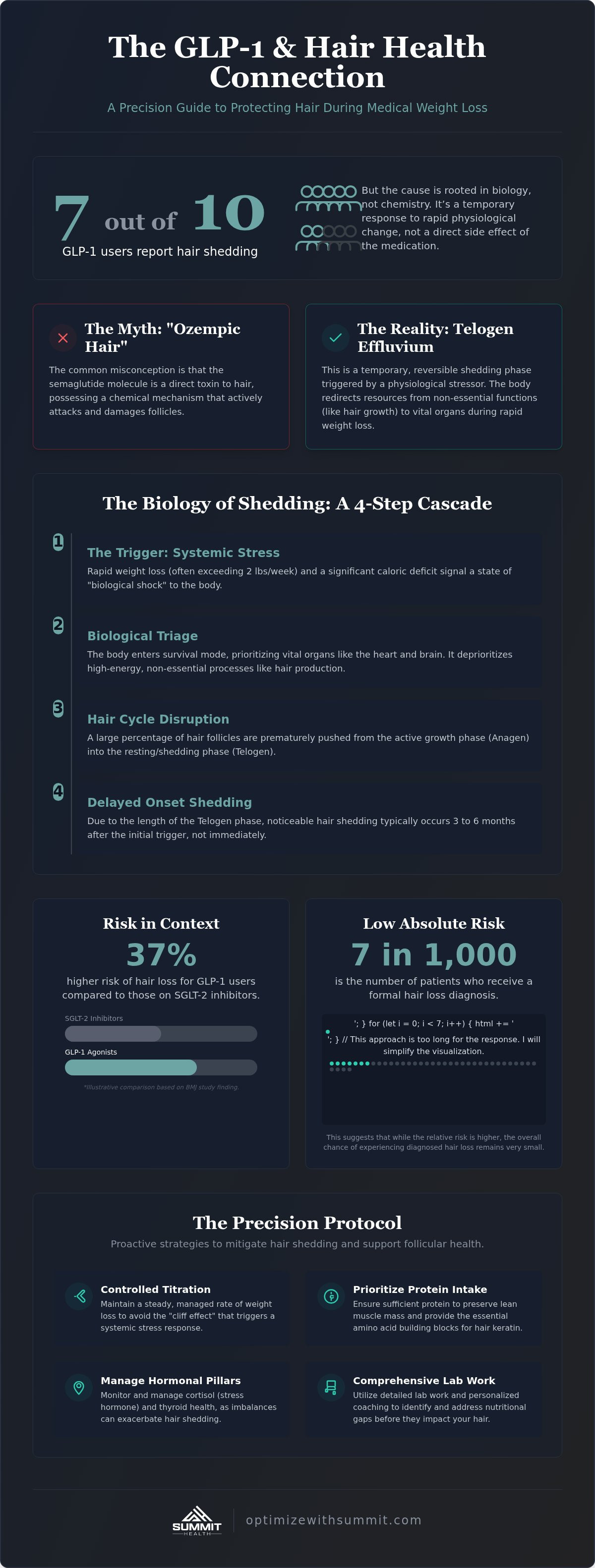
Seven out of ten. That is the number of GLP-1 users who reported some degree of hair shedding in a 2025 study. For many, the journey toward a refined physique is clouded by the sight of hair in the shower drain. It's a frustrating paradox. You're finally achieving the metabolic health you've always wanted, yet your reflection feels compromised. You are likely asking: does ozempic cause hair loss as a direct chemical side effect, or is your body signaling a deeper need for optimization?
We understand the anxiety of choosing between weight loss success and aesthetic integrity. You deserve both. Recent clinical data from 2026, including a significant study in The BMJ, highlights an increased risk of shedding, but the truth is more nuanced than a simple side effect. This precision guide separates physiological stress from medication chemistry. You'll learn the biological mechanics of telogen effluvium, how to address nutritional gaps, and the exact steps to stabilize hair density without pausing your progress. It's time to move beyond worry and into a state of peak biological balance where your health and your confidence rise together.
Key Takeaways
- Understand why the answer to "does ozempic cause hair loss" is rooted in telogen effluvium. This is a temporary shedding response to rapid physiological change rather than the medication’s chemical formula.
- Distinguish between direct follicular damage and the metabolic cost of transformation. Your body frequently prioritizes vital organs over hair growth during significant calorie deficits.
- Implement the Precision Protocol to protect your hair density. Focus on controlled titration and the specific protein requirements necessary for lean mass preservation.
- Identify the hidden roles of cortisol and thyroid health. Managing these hormonal pillars is essential for maintaining biological balance during GLP-1 therapy.
- Discover how comprehensive labwork and personalized coaching create a bespoke health journey. Achieve your weight loss goals without compromising your aesthetic standards.
Myth vs. Reality: Does Ozempic Directly Cause Hair Loss?
Precision is the foundation of modern medicine. When patients ask, does ozempic cause hair loss, they are often looking for a simple "yes" or "no." The clinical truth is a sophisticated biological interplay. While a 2025 study in PubMed Central noted that nearly seven out of ten users reported some degree of shedding, the data requires context. As of July 2026, the FDA is evaluating a potential safety signal regarding GLP-1 receptor agonists. This follows a July 2026 study in The BMJ which found that GLP-1 users have a 37% higher risk of hair loss compared to those taking SGLT-2 inhibitors. However, the absolute risk remains low; only about 7 in 1,000 patients receive a formal diagnosis. This suggests that the medication isn't a direct toxin, but a catalyst for systemic change.
The term "Ozempic Hair" is medically misleading. It implies the drug possesses a direct mechanism for follicular destruction. In reality, the shedding seen in clinical practice is a physiological response to rapid transformation. Original clinical trials focused heavily on gastrointestinal outcomes because those were the immediate, primary effects. Hair thinning often fell into the background because of its delayed onset. Most patients don't notice changes until three to six months after their first dose. This delay matches the natural resting phase of the hair cycle, pointing toward a metabolic trigger rather than a chemical one.
Defining Telogen Effluvium in 2026
Biological shock. Telogen effluvium occurs when a significant stressor pushes a large percentage of hair follicles into the resting phase prematurely. It is a temporary shift in the hair growth cycle. Unlike androgenetic alopecia, which involves permanent follicle miniaturization, this type of shedding is reversible. Your body is essentially hitting a "pause" button on non-essential functions to focus on metabolic restructuring. It is a protective mechanism, not a permanent aesthetic failure.
Why the Molecule Isn't the Culprit
The chemistry is intentional. Semaglutide functions as a GLP-1 receptor agonist, primarily targeting areas of the brain that regulate appetite and blood glucose. Semaglutide does not have a known biological mechanism for attacking or damaging hair follicles directly. We see nearly identical patterns of shedding in patients following bariatric surgery or aggressive caloric restriction. This confirms that the common denominator is the rate of weight loss and the resulting nutrient redirection, not the specific molecule in the syringe. When managed with a precision weight loss approach, this "shock" can be mitigated, allowing for both metabolic success and follicular health.
The Biology of Shedding: Why Rapid Weight Loss Triggers Telogen Effluvium
Biological triage. Transformation is a high energy process. When you utilize GLP-1 therapies to achieve significant metabolic shifts, your body enters a state of resource management. Survival comes first. When the system detects a significant caloric deficit or a rapid change in mass, it initiates a series of triage decisions to preserve essential functions. Vital organs like the heart and brain receive the majority of available energy. Non essential processes, such as the production of hair keratin, are the first to be deprioritized. This metabolic redirection is the fundamental reason why patients ask, does ozempic cause hair loss, as the body effectively mothballs the hair follicles to save fuel for critical systems.
The "Cliff Effect" occurs when weight loss exceeds the recommended threshold of two pounds per week. Losing weight at an aggressive pace acts as a systemic stressor. This stress triggers a spike in cortisol and a shift in the autonomic nervous system. It signals to the body that energy supplies are unstable. This perceived instability is the primary driver of shedding. It isn't the medication chemistry itself that causes the hair to fall out; it's the sheer speed of the biological change. Maintaining a steady, managed descent in weight is the key to bypassing this stress response and keeping the hair follicles in their active state.
The Hair Growth Cycle Disrupted
Precision requires understanding the cycle. Your hair typically exists in the Anagen phase, which is the period of active growth. Under normal conditions, about 90% of your hair is in this phase. The remaining 10% sits in the Telogen, or resting, phase. When metabolic shock occurs, it prematurely pushes a much higher percentage of follicles into the Telogen phase. This shift is why you don't see immediate thinning. There is a standard 90 day delay between the triggering event and the actual shedding. By the time you notice hair in the drain, the physiological shock actually occurred months prior. If you're looking for a way to navigate these shifts with professional oversight, you can schedule a consultation to review your metabolic data.
The Impact of Rapid Caloric Restriction
The "Starvation Signal" is a primitive biological alarm. When appetite is suppressed and caloric intake drops suddenly, the body treats the deficit as a famine. This leads to protein sparing. The body breaks down non essential tissues to protect muscle mass and organ function. Since hair is made almost entirely of a protein called keratin, it's often the first resource to be sacrificed. Rapid fat loss releases hormones and fat soluble compounds back into the bloodstream. These sudden hormonal shifts can destabilize the follicle's environment. Prioritizing protein intake and utilizing precision medical management ensures your body remains in a state of growth rather than defense.
Beyond the Scale: Hormonal and Nutritional Gaps in Unmanaged GLP-1 Therapy
Weight loss is a profound metabolic event. It is not just about the numbers on a scale. It is about biological harmony. When this harmony is disrupted, the body sends signals. Hair thinning is one of the most visible alarms. While the public asks does ozempic cause hair loss, the more precise question is: why is the body under enough stress to halt hair production? Generic weight loss programs often fail because they treat the medication as a standalone solution, ignoring the hormonal architecture that supports hair density. True optimization requires looking beyond the syringe.
The thyroid also serves as a metabolic thermostat. A sluggish metabolism frequently manifests as thinning hair. If GLP-1 therapy isn't paired with thyroid monitoring, the resulting metabolic slowdown can trigger shedding. It's a chain reaction. Precision medicine prevents this by ensuring every hormone is balanced, not just blood sugar. When thyroid function is optimized, hair follicles remain in the active growth phase even as the body transforms.
The Cortisol-Hair Connection
Chronic stress. Weight loss is inherently stressful to the central nervous system. When the body perceives a rapid drop in mass, it often responds by elevating cortisol. High levels of this "stress hormone" are known to inhibit hair follicle activity by disrupting the production of essential skin and hair molecules. Managing the central nervous system is vital. Identifying these underlying imbalances is the first step toward optimization. You can use our Hormone Quiz to see if your biomarkers are aligned for peak performance.
The Micronutrient Deficit: Iron, Zinc, and Ferritin
Nutrient malabsorption is the silent culprit. The appetite suppression that makes GLP-1s effective can also lead to significant gaps in micronutrients. Ferritin, which is stored iron, is the most critical marker for hair health. If your ferritin levels drop below a specific threshold, your hair will shed regardless of your protein intake. Zinc and B12 are also frequently depleted during GLP-1 therapy. These deficits contribute to both "Ozempic face" and hair thinning. We prioritize precision monitoring to catch these gaps early:
- Ferritin Monitoring: Ensures the hair follicles have the iron stores necessary for growth.
- Amino Acid Profiles: Supports the keratin structures that define hair strength.
- B12 Supplementation: Counteracts the reduced absorption often seen with GLP-1 use.
Optimization requires data. Generic programs lack the comprehensive labwork needed to catch these gaps before they become aesthetic problems. True health is achieved when weight loss and hair density coexist through precision management. By addressing these hormonal and nutritional pillars, you ensure that your transformation is as vibrant as your results.
The Precision Protocol: How to Prevent Hair Loss During Medical Weight Loss
Prevention is superior to recovery. When patients ask, does ozempic cause hair loss, the answer depends entirely on the management of their metabolic journey. A haphazard approach leads to physiological shock. A precision approach leads to refinement. By following a structured clinical protocol, you can maintain follicular integrity while achieving your weight loss goals. We utilize four specific pillars to ensure your biology remains in a state of upward progress, protecting your aesthetic results while you transform your health.
- Controlled Titration: We avoid the metabolic "crash" by scaling dosages based on your unique response. Sudden spikes in medication levels can trigger the systemic stress that leads to shedding.
- Protein Prioritization: We implement the "1 gram per pound" rule. Consuming one gram of high quality protein per pound of ideal body weight is essential for preserving lean mass and providing the building blocks for hair keratin.
- Targeted Supplementation: Precision dosing of Biotin, Collagen, and Saw Palmetto supports the scalp environment. These compounds work synergistically to maintain hair density during caloric deficits.
- Comprehensive Lab Monitoring: Tracking markers like ferritin and zinc allows us to address the question, does ozempic cause hair loss, with a definitive preventive strategy tailored to your specific bloodwork.
Strategic Dosing and Rate of Loss
Slower is faster. In the context of long term health, the rate at which you lose weight determines your aesthetic outcome. We define the "Sweet Spot" as losing 0.5% to 1.0% of your total body weight per week. This pace is fast enough to maintain motivation but steady enough to avoid triggering telogen effluvium. Working with a virtual weight loss doctor ensures your dosage is adjusted in real time based on your body's data. This prevents the physiological cliff that often accompanies unmanaged GLP-1 use.
Advanced Nutritional Support
Signal growth, not defense. High leucine protein sources, such as whey isolate or specific amino acid blends, serve as a biological signal to the body that energy is abundant. This prevents the protein sparing response discussed earlier. Hydration and electrolyte balance are also critical. Dehydration increases systemic stress and reduces blood flow to the scalp, starving follicles of oxygen. Vitamin D3 serves as a key regulator of the hair cycle and must be maintained at optimal levels. When your nutrition is precise, your body feels safe enough to continue producing vibrant, healthy hair. To begin your own precision journey, book your initial evaluation here.
Optimizing the Journey: Summit Health’s Integrated Weight Loss Approach
Precision is everything. While the public continues to ask does ozempic cause hair loss, the most successful patients are looking at the bigger picture. GLP-1 medications are transformative tools, but they are only one component of a high performance biological strategy. At Summit Health, we treat weight loss as a systemic refinement. Our online medical weight loss with GLP-1 protocol is built on the foundation of medical optimization. We don't just provide a prescription; we curate an environment where your body can shed weight while maintaining peak vitality.
The Summit Difference lies in our integrated architecture. We combine advanced medication with bespoke hormone optimization and dedicated health coaching. This multi-layered approach addresses the root causes of shedding before they begin. By utilizing comprehensive labwork, we identify the exact biomarkers that indicate physiological stress. We see the warning signs in your bloodwork long before you see them in the mirror. This proactive stance ensures that your energy levels, muscle mass, and hair density are protected throughout your entire transformation.
Telehealth Redefined: Expert Monitoring from Anywhere
Continuous oversight. Our telehealth model provides an elite level of access that traditional clinics often lack. Through ongoing virtual coaching, we adjust your plan in real time based on your body's data. We monitor thyroid function, cortisol rhythms, and micronutrient levels with clinical precision. If a nutrient gap appears or a hormone level shifts, we pivot immediately. This level of vigilance prevents the metabolic "cliffs" that lead to telogen effluvium. We aren't just chasing a lower number on the scale. We are guiding you toward Peak Optimization, a state where every biological system functions at its highest potential.
Your Next Steps to Precision Wellness
Move beyond generic. Standard weight loss programs often sacrifice aesthetic integrity for rapid results. You deserve a protocol that respects your long term health and your appearance. We invite you to explore Summit Health's weight loss programs to discover how precision medicine can elevate your experience. Our experts are ready to help you navigate the complexities of GLP-1 therapy with confidence and clarity. Don't leave your results to chance. Contact us today to begin your journey toward a refined, optimized version of yourself.
Mastering Your Metabolic Transformation
The journey toward a refined physique should never come at the expense of your aesthetic integrity. We have established that the question of does ozempic cause hair loss is less about the medication chemistry and more about the body’s response to rapid physiological change. By viewing shedding as a manageable signal rather than an inevitable side effect, you can reclaim control over your results. Success is found in the details. Precision titration, aggressive protein prioritization, and the stabilization of hormonal pillars like thyroid and cortisol ensure your transformation is both complete and sustainable.
Generic programs leave these critical variables to chance. You don't have to. Summit Health provides a sophisticated framework designed to protect your biological balance while you achieve your peak state. Our protocols are built on data. With comprehensive labwork included in every plan and the oversight of expert hormone optimization specialists, we ensure your path is as safe as it is effective. It's time to elevate your health standards and move toward a version of yourself that is optimized from the inside out.
Optimize your weight loss journey with Summit Health's precision programs and experience a personalized GLP-1 protocol designed to minimize side effects while maximizing your potential. Your most vibrant self is waiting.
Frequently Asked Questions
Is hair loss from Ozempic permanent?
No, hair shedding associated with this medication is not permanent. It is a temporary condition known as telogen effluvium. This type of hair loss is non-scarring and reversible. Once your body adapts to its new metabolic state and nutritional intake stabilizes, the growth cycle resumes. You don't have to fear long term aesthetic damage if the underlying physiological stress is addressed through proper optimization.
How long after starting semaglutide does hair loss occur?
Shedding typically begins three to six months after the initial triggering event. This delay reflects the natural biological timeline of the hair follicle's resting phase. Many patients ask, does ozempic cause hair loss immediately, but the impact is rarely instant. It takes time for the follicles to transition from the resting stage to the actual shedding phase seen in your daily routine. Understanding this delay helps in tracking your progress.
Can I take Biotin or hair supplements while on Ozempic?
Yes, targeted supplementation is often a vital component of a precision weight loss protocol. Biotin, collagen, and saw palmetto can support the scalp environment during calorie deficits. However, supplements should complement a foundation of high quality protein and micronutrient balance. We recommend using comprehensive labwork to identify specific deficiencies before starting a new regimen to ensure your approach is intentional and effective for your unique biology.
Should I stop taking Ozempic if my hair is thinning?
You don't necessarily need to discontinue your medication if you experience thinning. Stopping abruptly can create additional systemic stress, potentially prolonging the shedding phase. The more effective path is often dose titration and nutritional optimization. Consult with a specialist to adjust your protocol. Managing the rate of weight loss usually resolves the issue without sacrificing your metabolic progress or your long term health goals.
Will my hair grow back while I am still taking weight loss medication?
Yes, hair regrowth can and does occur while you continue GLP-1 therapy. The shedding is a response to the rapid change in weight and energy, not the presence of the drug itself. Once your weight loss plateaus or the rate of loss becomes steady, your body exits the survival mode that deprioritized hair growth. Recovery is about reaching a state of biological equilibrium where your system feels safe to grow again.
Does Tirzepatide (Mounjaro) cause less hair loss than Ozempic?
Current clinical data suggests the risk is comparable between both medications. Since the primary trigger is the speed of weight loss rather than the specific molecule, any potent GLP-1 or GIP agonist carries a similar potential for shedding. Tirzepatide often leads to more rapid weight loss, which might increase the likelihood of telogen effluvium if the descent isn't carefully managed through precision medical guidance and steady monitoring.
How much protein should I eat to prevent hair loss on GLP-1s?
Aim for one gram of protein per pound of your ideal body weight daily. This rule is critical for preserving lean muscle mass and providing the keratin building blocks your hair requires. Protein prioritization signals to your brain that the body isn't in a state of famine. This reduces the likelihood that your system will enter the protective triage mode that halts hair production to save energy for vital organs.
What vitamins are best for hair growth during medical weight loss?
Focus on Ferritin, Zinc, Vitamin D3, and B12 for optimal follicular health. Ferritin is especially important, as low iron stores are a primary driver of thinning. When patients wonder, does ozempic cause hair loss, the culprit is frequently an unaddressed micronutrient gap. Regular monitoring of these biomarkers allows for the customization of your supplement stack, ensuring your hair receives the precise nutrients it needs to thrive during your transformation.
Article by
Dr. David Richardson
David Richardson, is the founder and CEO of Summit Health and the author of "Insights from the Summit", where he writes about hormone optimization, metabolic health, thyroid function, longevity, and preventive medicine.
After entering healthcare in 2009, David became increasingly interested in a question that traditional medicine often struggles to answer:
Why do so many people continue to feel terrible despite being told their labs are "normal"?
That question eventually led him into the field of health optimization in 2020, where he became passionate about understanding physiology at a deeper level and helping patients uncover the root causes of their symptoms rather than simply managing them.
Today, David's philosophy is simple: normal and optimal are not the same thing. Every patient is physiologically unique, and meaningful healthcare begins by listening to symptoms, understanding the science, and recognizing that laboratory values are only one piece of a much larger picture.
Through Summit Health and Insights from the Summit, David's mission is to help people better understand their bodies, ask better questions, and make informed decisions that improve both their health span and quality of life.


