

IMPORTANT DISCLAIMERS
Medical Disclaimer: The information in this article is provided for educational purposes only and is not intended as medical advice or a substitute for individualized medical care. Every person's health needs are unique. Always consult a qualified healthcare professional before starting, stopping, or changing any medication, supplement, or treatment plan. -------
Article Disclaimer: Articles are reviewed and published by Summit Health to provide evidence-based educational information. While Summit Health strives to provide reliable and current health information, medical knowledge is always evolving over time. Depending on when you are reading this content, it may not reflect the latest research or apply to your individual circumstances.
Your sleep isn't just rest. It's a precisely timed biological symphony that requires the right conductor. You likely already know that magnesium is the foundation of relaxation, yet you still find yourself staring at the ceiling with a brain that won't turn off. It's exhausting to wake up feeling unrefreshed despite your efforts to supplement. Finding the precise magnesium glycinate dosage for sleep is the critical shift needed to move from basic supplementation to true hormonal optimization.
This 2026 protocol provides the exact framework to recalibrate your sleep architecture and restore systemic balance. We will analyze the latest clinical data, including the 350 mg upper limit for supplemental intake and the specific role of glycine in reducing sleep latency. You'll learn how to move beyond generic advice to find the specific elemental magnesium level that triggers deep, restorative REM cycles. This guide ensures you stop guessing and start achieving the peak morning clarity you deserve. We are focusing on data driven results to help you reach a premium version of your daily life.
Key Takeaways
- Define the gold standard. Discover how the chelated bond between magnesium and glycine facilitates both physical relaxation and neurological calm.
- Precision is paramount. Calibrate your magnesium glycinate dosage for sleep by calculating elemental weight rather than relying on total compound mass.
- Timing is biological. Target the 30 to 60 minute pre-sleep window to align supplementation with your natural circadian rhythm.
- Prioritize gentle absorption. Identify your specific bowel tolerance to prevent the "Magnesium Flush" while maintaining peak bioavailability.
- Look beyond the mineral. Integrate magnesium into a comprehensive hormonal framework to address imbalances in testosterone and progesterone that disrupt rest.
The Science of Magnesium Glycinate: Why It Is the Gold Standard for Sleep
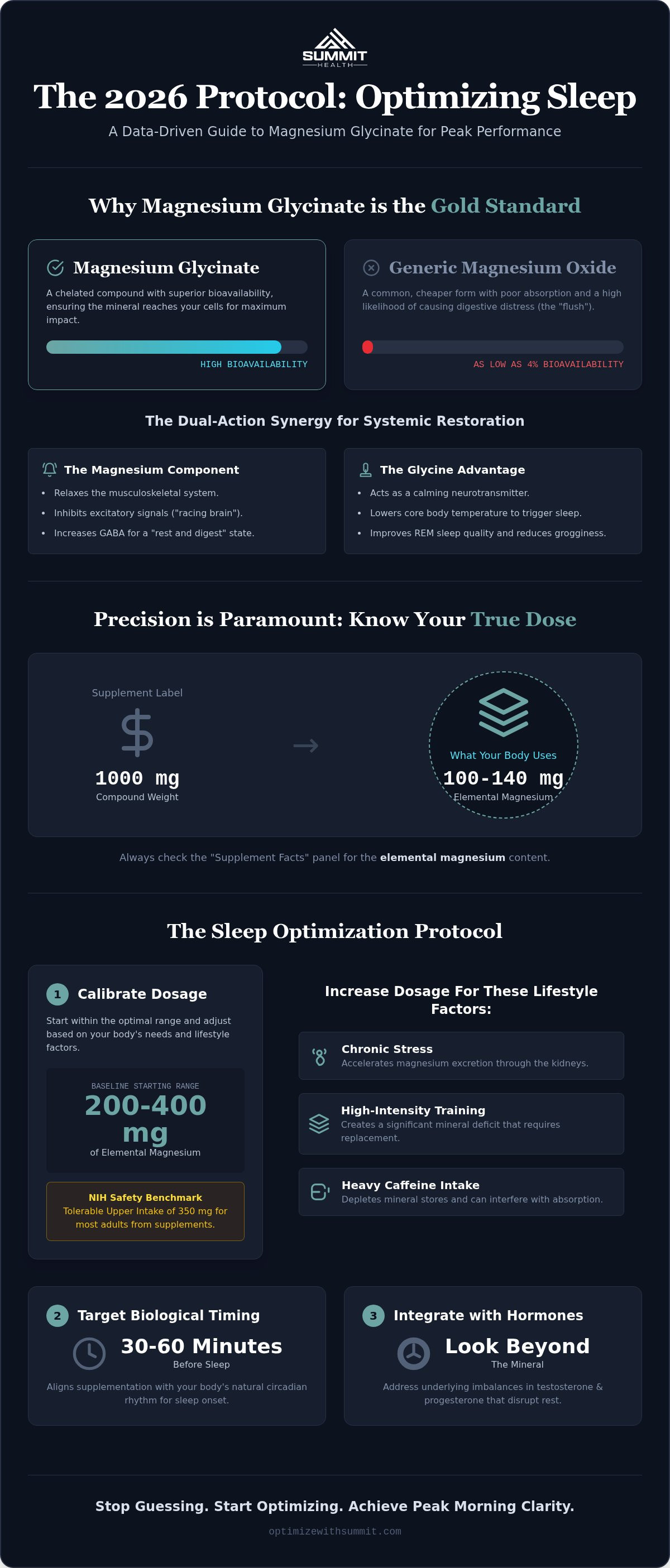
Precision is the foundation of performance. To calibrate your magnesium glycinate dosage for sleep, you must understand the molecular synergy at play. Understanding what magnesium glycinate is reveals a chelated compound where elemental magnesium is chemically bound to the amino acid glycine. This creates a highly stable molecule that survives the acidic environment of the stomach. Most generic supplements use magnesium oxide, which has a bioavailability rate as low as 4%. In contrast, the glycinate form utilizes specialized peptide pathways for absorption. It offers superior gastric tolerance and ensures the mineral actually reaches your intracellular stores.
The mechanism is dual-pronged. While the magnesium relaxes the musculoskeletal system, the glycine acts as a calming agent for the brain. Magnesium acts as a chemical antagonist at the NMDA receptor to inhibit excitatory signaling and prevent neurological overstimulation. This prevents the "racing brain" phenomenon that many high-achievers experience at midnight. It is a refined approach to recovery that moves beyond simple sedation toward true systemic restoration.
How Magnesium Regulates Your Sleep Architecture
Biological quiet is essential. Magnesium serves as a primary agonist for GABA receptors, the central nervous system’s "brake" pedal. By increasing GABA availability, the body transitions from a sympathetic "fight or flight" state into a parasympathetic "rest and digest" state. This transition is vital for reducing sleep latency, the specific metric of how long it takes to fall asleep. Magnesium also facilitates the enzymatic conversion of serotonin to melatonin. This stabilizes your circadian rhythm and ensures your internal clock remains synchronized with your environment.
The Glycine Advantage: More Than Just a Carrier
Glycine is a powerhouse in its own right. As an inhibitory neurotransmitter, glycine helps lower core body temperature, which is a required biological trigger for deep sleep onset. Research suggests that this amino acid improves REM sleep quality and reduces daytime grogginess. For individuals managing high cortisol levels or investigating hormone therapy to resolve chronic stress, this specific chelate is indispensable. It provides the neurological "off switch" that simpler forms of magnesium lack. By addressing both the physical and the cognitive barriers to rest, magnesium glycinate establishes the baseline for peak morning cognitive clarity.
Determining Your Ideal Magnesium Glycinate Dosage for Sleep
Precision is the standard. A generic approach to supplementation often leads to mediocre results. When you're looking for the correct magnesium glycinate dosage for sleep, you must distinguish between the total compound weight and the elemental magnesium content. A capsule might be labeled as 1,000mg, but this represents the weight of the magnesium bound to glycine. The actual elemental magnesium, which is what your body uses for biological processes, typically accounts for only 10% to 14% of that total. Always check the supplement facts panel to verify the elemental milligrams to ensure you aren't under-dosing your recovery.
Baseline requirements are influenced by your daily biological tax. Most high-performing adults require a starting range of 200mg to 400mg of elemental magnesium to support sleep architecture. However, specific lifestyle factors significantly increase this demand. Chronic stress causes the body to excrete magnesium through the kidneys at an accelerated rate. Similarly, high-intensity training and heavy caffeine intake create a mineral deficit that requires a higher precision dose. If you don't replace what you've depleted, your sleep quality will remain stagnant despite basic supplementation.
Safety remains a pillar of optimization. The National Institutes of Health identifies a Tolerable Upper Intake Level for supplemental magnesium of 350mg for healthy adults. While clinical protocols for sleep often exceed this under professional guidance, it serves as a valuable benchmark to avoid gastrointestinal issues. By starting within this range and adjusting based on your specific stress markers, you can find the "sweet spot" that triggers restorative REM cycles without side effects.
Dosage Guidelines for Men vs. Women
Biological sex dictates different mineral targets. Men generally require 400mg to 420mg of elemental magnesium to support both sleep and healthy testosterone production. Women typically target 310mg to 320mg, though these needs often increase during the luteal phase of the menstrual cycle when magnesium levels naturally dip. As we age, mineral absorption efficiency declines. This makes a slightly higher, more bioavailable magnesium glycinate dosage for sleep essential for maintaining cognitive clarity and bone density in later years.
The "Test, Don’t Guess" Protocol
Stop relying on guesswork. Most standard serum magnesium tests are deceptive because only 1% of your body's magnesium is stored in the blood. We recommend Magnesium RBC (Red Blood Cell) testing to get an accurate biological snapshot of your intracellular levels. This data-driven approach allows you to learn about our comprehensive labwork and how we identify the specific mineral gaps hindering your performance. If you want to refine your protocol further, consider speaking with an optimization expert to build a customized plan based on your unique markers.
The Sleep Optimization Protocol: Timing and Synergy
Timing is everything. Taking your magnesium glycinate dosage for sleep 30 to 60 minutes before bed is the biological sweet spot. This window allows the amino acid glycine to initiate the cooling of your core body temperature while the magnesium begins its work on the GABA receptors. It's about creating a pharmacological bridge between your active day and your recovery phase. When you align supplementation with your natural circadian dip, you maximize the efficiency of the mineral's sedative properties.
Mastery requires repetition. Unlike some supplements that you can "pulse" for immediate effect, building your magnesium glycinate dosage for sleep into a nightly ritual is required to saturate intracellular stores. It takes time to replenish the body's mineral bank. If you miss doses, you disrupt the stabilization of your sleep architecture. Consistency ensures that your nervous system remains in a perpetual state of readiness for deep rest rather than constantly playing catch-up.
Balance is the standard. High doses of magnesium can compete with calcium for absorption at the cellular level. Maintaining a stable ratio between these minerals ensures optimal nerve conduction and prevents muscle cramping. Consuming your magnesium with a small carbohydrate snack may enhance uptake by triggering a minor insulin response that facilitates mineral transport into the cells. It's a simple adjustment that yields a higher return on your investment in recovery.
Stacking for Peak Performance
Synergy amplifies results. Combine magnesium glycinate with 200mg of L-theanine to achieve advanced cognitive de-loading. This stack targets both physical relaxation and mental quiet. Adding Vitamin B6 is equally vital; it acts as a cofactor for neurotransmitter synthesis, helping convert raw materials into sleep-promoting chemicals. However, you must manage your intake carefully. Avoid taking high-dose zinc or iron at the same time as your magnesium. These minerals compete for the same transport pathways and can reduce the efficacy of your protocol.
Magnesium and the Cortisol Reset
Stress management is non-negotiable. For many high-achievers, an evening cortisol spike prevents the transition into deep sleep. Evening magnesium helps blunt this spike, allowing for a smoother descent into restorative cycles. This is particularly important because deep, uninterrupted sleep is the primary driver for the natural rise of morning testosterone. When you optimize your rest, you optimize your hormonal baseline. To explore the broader implications of this mineral on your biology, read our detailed analysis on Magnesium Glycinate for Sleep: The Precision Guide to Restorative Recovery.
Safety First: Managing Side Effects and Contraindications
Safety is the silent partner of performance. While magnesium glycinate is widely recognized as the gold standard for gastric tolerance, maintaining a precise magnesium glycinate dosage for sleep requires an understanding of your biological limits. Unlike magnesium citrate or oxide, which often act as osmotic laxatives by drawing water into the colon, the glycinate form is absorbed through specialized dipeptide channels. This chelated structure ensures the mineral reaches your bloodstream rather than irritating your digestive tract. It is the most sophisticated choice for those with sensitive systems.
Listen to your biology. Even the gentlest forms of magnesium have a threshold known as bowel tolerance. If you exceed your body's current requirement, you may experience the "Magnesium Flush," a temporary softening of the stool. This is not a complication; it is your body's natural regulatory mechanism for clearing excess minerals. To avoid this, we recommend a gradual titration of your dose until you reach your optimal recovery baseline. High-quality, pharmaceutical-grade sourcing is non-negotiable to ensure your supplement is free from heavy metal contaminants like lead or mercury, which are often found in lower-tier mineral products.
Clinical boundaries are essential. Individuals with chronic kidney disease must exercise extreme caution, as the kidneys are responsible for filtering supplemental magnesium. Similarly, because magnesium influences heart rhythm and muscle contraction, it may interact with certain cardiac medications, including beta-blockers and calcium channel blockers. If you are managing a complex medical profile, you should schedule a consultation with our medical team to ensure your protocol aligns with your existing treatments.
Common Side Effects and How to Avoid Them
Adjustment periods are normal. Some individuals report mild nausea during the first few nights of use. To mitigate this, transition from taking your supplement on an empty stomach to consuming it with the light carbohydrate snack mentioned in our timing protocol. You might also notice more vivid dreams during your initial week. This is often a sign of your sleep architecture recalibrating as you spend more time in restorative REM cycles. It is a biological "reboot" rather than a side effect to be feared.
Pharmaceutical Interactions to Monitor
Precision requires awareness. Magnesium can bind to certain medications, significantly reducing their absorption and efficacy. This is particularly true for Tetracycline and Quinolone antibiotics, as well as bisphosphonates used for bone density. To maintain the integrity of your treatment, separate your magnesium glycinate dosage for sleep from these medications by at least two to four hours. Consulting with a virtual health coach can help you build a personalized safety profile that accounts for these variables while pushing you toward your peak performance goals.
Optimizing Sleep Through Hormonal Precision
Hormones are the master key. While calibrating your magnesium glycinate dosage for sleep addresses the neurological and muscular barriers to rest, it cannot override a systemic hormonal deficit. If your testosterone or progesterone levels are clinically depleted, even the most precise mineral protocol will yield diminishing returns. You must view sleep as a multi-dimensional biological event. Magnesium provides the quiet, but your hormones provide the architecture. If you've optimized your magnesium glycinate dosage for sleep yet still feel unrefreshed, the issue is likely rooted in your endocrine system.
The relationship is bidirectional. Poor sleep triggers a rise in evening cortisol, which directly antagonizes testosterone production. Lower testosterone then degrades sleep quality, creating a downward spiral that accelerates biological aging. Breaking this cycle requires a move toward comprehensive biological optimization rather than relying on isolated supplements. Summit Health is your partner in this journey, bridging the gap between over-the-counter fixes and medical-grade precision.
The Link Between Sleep and Testosterone
Deep sleep is the factory of youth. During the initial stages of deep, slow-wave sleep, the body initiates the pulsatile release of Luteinizing Hormone (LH) and Growth Hormone. This is the primary mechanism for maintaining peak male vitality. One of the most reliable markers of this process is the presence of nocturnal penile tumescence, or "morning wood." If this marker is absent, it often indicates that your sleep architecture is failing to support your hormonal health. For those seeking a deeper intervention, understanding Testosterone Replacement Therapy: The 2026 Guide to Precision Optimization is the next logical step in your recovery protocol.
Your Path to Peak Recovery
Recovery is a skill. Beyond magnesium, compounds like DHEA play a vital role in supporting systemic resilience against the effects of sleep deprivation. DHEA acts as a precursor to both androgens and estrogens, helping the body maintain balance during periods of high metabolic stress. You can explore these synergies in our guide on DHEA Benefits: The Precision Guide to Hormonal Optimization in 2026. The path to peak performance begins with data. Start by taking our Hormone Quiz to identify the specific biological gaps that magnesium alone cannot fill. It's time to stop guessing and start optimizing your entire biological system for a premium version of your life.
The Path to Peak Biological Recovery
Precision is the standard. You now understand that achieving the correct magnesium glycinate dosage for sleep requires more than a generic supplement. It demands a calculation of elemental weight and a deep awareness of your unique hormonal landscape. True recovery happens at the intersection of mineral balance and endocrine health. By targeting the optimal pre-sleep window and addressing the underlying biological gaps, you move from simple rest to high-performance restoration. We focus on progress. We focus on results.
Summit Health provides the medical-grade precision required to refine your current state. We specialize in telehealth-led hormone optimization and evidence-based health solutions that look beyond surface symptoms. Our personalized recovery coaching ensures every protocol is tailored to your specific diagnostic data. Don't settle for baseline health when peak performance is within reach. It's time to stop guessing and start measuring.
Optimize Your Sleep Architecture with Summit Health and reclaim your cognitive clarity today. Your journey toward a premium, optimized version of life is just beginning. We are ready to help you reach the peak.
Frequently Asked Questions
How much magnesium glycinate is too much for sleep?
Precision matters. Exceeding 350mg of elemental magnesium daily is generally considered the upper limit for supplemental intake. This threshold, known as the Tolerable Upper Intake Level, is designed to prevent gastrointestinal distress in healthy adults. While professional protocols may temporarily use higher amounts to correct severe deficiencies, exceeding your personal bowel tolerance often results in osmotic diarrhea. Always prioritize your specific biological feedback over generic labels to ensure safety and comfort.
Can I take magnesium glycinate every night?
Stability is key. Daily supplementation is the clinical standard for maintaining healthy intracellular mineral levels. You can take magnesium glycinate every night to ensure your nervous system remains in a parasympathetic state during the recovery window. Consistency is vital for long term sleep optimization and metabolic health. Don't skip doses as it prevents the mineral saturation required to stabilize your circadian rhythm and support deep, restorative REM cycles.
How long does it take for magnesium glycinate to work for sleep?
Results take time. Acute relaxation often occurs within 30 to 60 minutes of ingestion. However, correcting a chronic deficiency and seeing systemic changes in sleep quality typically requires two to four weeks of consistent nightly use. Reaching biological saturation is a gradual process. Patience is a requirement for those seeking to refine their sleep architecture through a precise magnesium glycinate dosage for sleep and achieve peak morning clarity.
Does magnesium glycinate interact with melatonin?
Synergy is powerful. Magnesium glycinate and melatonin are highly compatible and do not have negative interactions. While melatonin serves as the primary signal for sleep onset, magnesium provides the physiological relaxation needed to stay asleep throughout the night. Using them together can enhance the transition into deep rest without the need for heavy sedatives. This combination is often a component of a sophisticated recovery protocol for high performers.
What is the best form of magnesium for sleep and anxiety?
Glycinate is superior. Magnesium glycinate is the gold standard for both sleep and anxiety due to its high bioavailability. The chelated bond with glycine provides a dual action mechanism that relaxes skeletal muscles and calms the central nervous system simultaneously. Unlike cheaper forms, it crosses the blood brain barrier with high efficiency. It offers the neurological "off switch" needed to quiet a racing mind and reduce cortisol before bed.
Is 500mg of magnesium glycinate too much?
Calculation is required. Whether 500mg is too much depends entirely on whether that number represents elemental magnesium or total compound weight. If it is 500mg of elemental magnesium, it exceeds the 350mg supplemental limit and may cause digestive issues. However, if 500mg is the total weight of the magnesium glycinate molecule, the elemental yield is likely safe and well within optimized ranges. Always check the supplement facts for elemental values.
Should I take magnesium glycinate with food or on an empty stomach?
Optimization is intentional. Consuming your supplement with a light carbohydrate snack is the preferred method for optimal uptake. A small insulin response can facilitate the transport of minerals into your cells more effectively. While it can be taken on an empty stomach, those with sensitive systems find that food prevents mild nausea. This approach ensures your magnesium glycinate dosage for sleep is both effective and comfortable for long term use.
Can magnesium glycinate cause grogginess the next morning?
Clarity is the goal. Grogginess is an extremely uncommon side effect of magnesium glycinate. Unlike traditional sedatives or antihistamines, this mineral supports your natural sleep architecture rather than forcing a state of unconsciousness. If you wake up feeling unrefreshed, it's often a sign of an underlying hormonal gap or a need for deeper diagnostic labwork to identify biological gaps. Magnesium typically promotes morning cognitive clarity by facilitating deep, restorative sleep stages.

Article by
Dr. David Richardson
David Richardson, is the founder and CEO of Summit Health and the author of "Insights from the Summit", where he writes about hormone optimization, metabolic health, thyroid function, longevity, and preventive medicine.
After entering healthcare in 2009, David became increasingly interested in a question that traditional medicine often struggles to answer:
Why do so many people continue to feel terrible despite being told their labs are "normal"?
That question eventually led him into the field of health optimization in 2020, where he became passionate about understanding physiology at a deeper level and helping patients uncover the root causes of their symptoms rather than simply managing them.
Today, David's philosophy is simple: normal and optimal are not the same thing. Every patient is physiologically unique, and meaningful healthcare begins by listening to symptoms, understanding the science, and recognizing that laboratory values are only one piece of a much larger picture.
Through Summit Health and Insights from the Summit, David's mission is to help people better understand their bodies, ask better questions, and make informed decisions that improve both their health span and quality of life.


