

IMPORTANT DISCLAIMERS
Medical Disclaimer: The information in this article is provided for educational purposes only and is not intended as medical advice or a substitute for individualized medical care. Every person's health needs are unique. Always consult a qualified healthcare professional before starting, stopping, or changing any medication, supplement, or treatment plan. -------
Article Disclaimer: Articles are reviewed and published by Summit Health to provide evidence-based educational information. While Summit Health strives to provide reliable and current health information, medical knowledge is always evolving over time. Depending on when you are reading this content, it may not reflect the latest research or apply to your individual circumstances.
Unconsciousness isn't recovery. Sedating your central nervous system to log eight static hours does nothing to reset your biological clock, clear metabolic waste, or repair muscle tissue. Modern sleep and recovery support demands a precision approach that moves far beyond over-the-counter sleep aids and surface-level tracking. If you wake up exhausted despite spending ample time in bed, your issue isn't sleep quantity. It's sleep architecture.
You already know the frustration of waking up foggy, unable to bounce back from intense physical or mental demands. Sedatives might quiet your mind, but they routinely suppress the restorative slow-wave cycles your body requires for biological repair. Discover how clinical diagnostics and targeted endocrine optimization restore deep sleep architecture and cellular recovery. In this guide, we break down the neuroendocrine pathways governing nocturnal restoration, the vital role of diagnostic blood work, and the evidence-based protocols that rebuild your morning vitality from the cellular level up.
Key Takeaways
- Clinical sleep and recovery support targets physiological deep sleep architecture rather than simply inducing sedation through central nervous system depression.
- Nocturnal cellular repair relies on balanced neuroendocrine signaling, particularly growth hormone pulses and regulated cortisol curves.
- Comprehensive diagnostic labwork serves as the essential baseline to uncover hidden hormonal and metabolic disruptors behind persistent exhaustion.
- A structured protocol aligning circadian zeitgebers, peptide pathways, and targeted supplementation drives sustained physical and cognitive restoration.
- Nationwide telehealth consultations deliver ongoing clinical oversight to refine your recovery strategy based on objective biomarker trends.
What Is Sleep and Recovery Support in Modern Preventative Medicine?
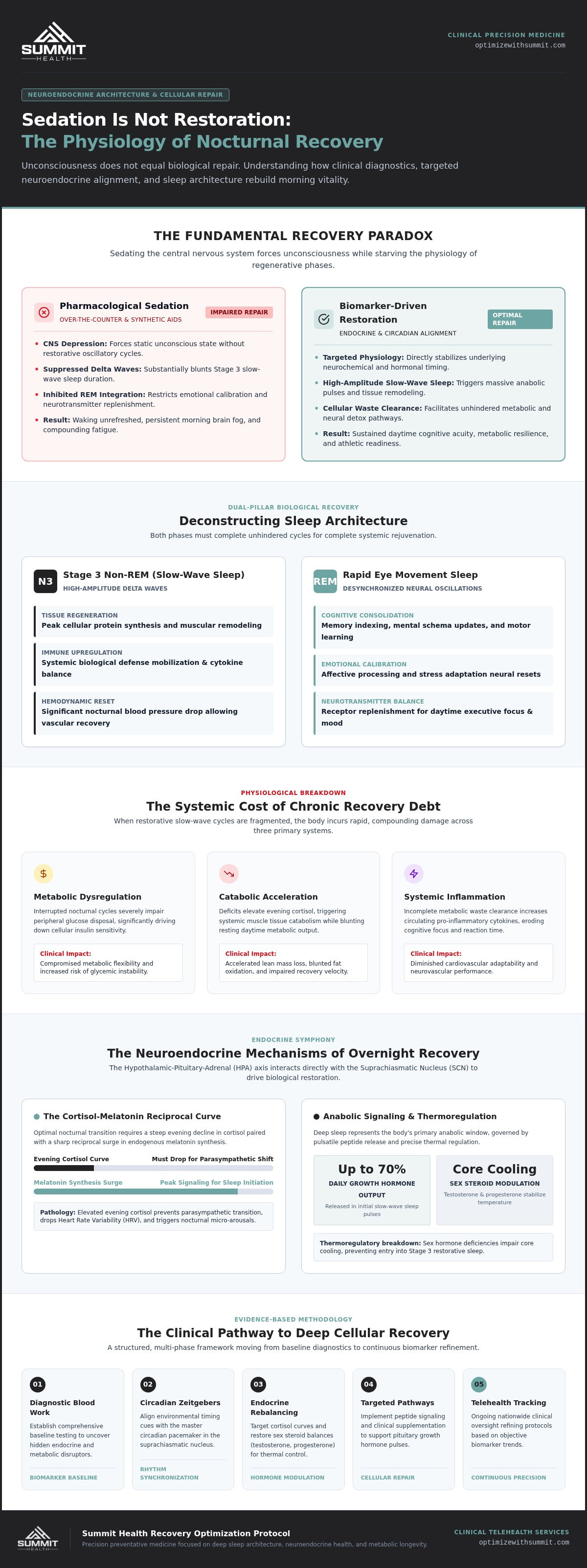
Sedation is not restoration. In modern preventative medicine, clinical sleep and recovery support represents a targeted framework of biological interventions designed to optimize cellular repair, clear metabolic waste, and stabilize neurochemical balance. Standard wellness advice often treats rest as an isolated behavioral habit. Yet, when underlying endocrine signaling is deregulated, blackout curtains and basic hygiene checklists cannot resolve the breakdown. Genuine nocturnal recovery requires precise biological timing and uninhibited cellular signaling.
A clinical look at the fundamentals of sleep reveals that an immobilized body does not guarantee an active biological recovery cascade. Pharmacological sedatives depress central nervous system activity, forcing unconsciousness while starving the brain of regenerative slow-wave oscillations. Without intact sleep architecture, your physiology misses critical repair windows entirely.
Deconstructing Sleep Architecture: Non-REM Repair and REM Integration
Sleep is an active, structured sequence. Stage 3 non-REM, commonly classified as slow-wave sleep, serves as the primary biological window for tissue regeneration, immune upregulation, and cellular protein synthesis. During these high-amplitude delta wave cycles, systemic blood pressure drops and physical repair mechanisms operate at peak capacity. Rapid eye movement (REM) sleep then governs cognitive consolidation, emotional calibration, and neurotransmitter replenishment. Synthetic sleep aids routinely suppress both slow-wave and REM duration, leaving your brain and body biochemically depleted by sunrise.
The Systemic Cost of Chronic Recovery Debt
Recovery debt carries compounding physiological interest. When slow-wave sleep is chronically fragmented, the body undergoes rapid metabolic and neurovascular decline:
- Metabolic dysregulation: Interrupted nocturnal cycles impair peripheral glucose disposal, significantly driving down cellular insulin sensitivity.
- Catabolic acceleration: Persistent recovery deficits elevate evening cortisol, accelerating muscle tissue catabolism and blunting daytime metabolic rate.
- Systemic inflammation: Incomplete cellular clearance drives up circulating pro-inflammatory cytokines, eroding cognitive focus, reaction time, and cardiovascular adaptability.
Implementing targeted sleep and recovery support shifts the clinical paradigm from passive exhaustion to deliberate, biomarker-driven biological restoration.
The Neuroendocrine Mechanism: How Hormones Govern Overnight Restoration
Hormones direct nocturnal recovery. Without balanced endocrine signaling, the body cannot shift out of sympathetic fight-or-flight mode into the parasympathetic repair state. The hypothalamic-pituitary-adrenal (HPA) axis operates in a delicate feedback loop with your master circadian pacemaker, the suprachiasmatic nucleus. When this internal timing system loses calibration, the chemical cues required for cellular regeneration fail to fire in sequence. Robust sleep and recovery support focuses directly on realigning these foundational neuroendocrine pathways.
Sex steroids also drive nocturnal biological stability. Deficiencies in testosterone or progesterone alter central thermoregulation, elevating core temperature when the body needs cooling to initiate slow-wave cycles. Adhering to an evidence-based nighttime protocol helps stabilize circadian rhythmicity, but behavioral cues alone cannot overcome an underlying endocrine deficit.
The Cortisol-Melatonin Dynamic and Adrenal Balance
Precision timing matters. Healthy recovery demands a steep evening drop in cortisol paired with a reciprocal surge in endogenous melatonin synthesis. Chronic psychosocial stress or metabolic strain disrupts this rhythm, triggering nighttime cortisol elevations that stimulate micro-arousals. Instead of resting peacefully, your heart rate variability plummets and your brain remains on high alert. Comprehensive blood panels evaluate daytime and nighttime endocrine dynamics, pinpointing the precise physiological markers sabotaging restorative continuity.
Anabolic Hormones: Growth Hormone and Testosterone Synchronization
Deep sleep acts as your primary anabolic window. Pituitary pulses during initial slow-wave cycles account for up to seventy percent of daily growth hormone secretion. This nocturnal pulse drives muscular protein synthesis, downregulates cellular inflammation, and accelerates structural tissue repair. Testosterone synthesis follows a similar biological cadence, surging during early slow-wave intervals and uninterrupted sleep stages. When sleep fragmentation blunts these surges, daytime fatigue and muscle loss accelerate rapidly.
Targeted medical interventions address these biological deficits at the source. Exploring clinical hormone therapy helps restore optimal neuroendocrine equilibrium, directly re-establishing the biological foundation required for deep rest. If chronic exhaustion persists despite consistent sleep hygiene, you can book a diagnostic review to evaluate your hormone profiles and begin building a personalized protocol for lasting vitality.
Evaluating Sleep Interventions: Traditional Sedatives vs. Targeted Biomarker Optimization
Most commercial sleep aids operate like a blunt instrument. They suppress nervous system activity, force drowsiness, and ignore the complex biological pathways required for true restoration. Synthetic hypnotics and over-the-counter formulas provide the illusion of rest by inducing unconsciousness, yet they consistently fail to produce high-amplitude delta waves. In contrast, clinical sleep and recovery support relies on diagnostic baseline testing to uncover and correct physiological deficiencies rather than drugging the brain into compliance.
The distinction between pharmacological sedation and biological restoration is stark. Peer-reviewed research on the Neuroendocrine Control of Sleep confirms that sleep architecture is governed by complex hormonal feedback loops, not chemical depression of the central nervous system. When interventions ignore these cellular signals, systemic repair remains compromised.
The Limitations of Over-the-Counter Melatonin and Sedating Antihistamines
Generic fixes carry distinct biochemical penalties:
- Receptor desensitization: Standard drugstore melatonin supplements provide supraphysiological doses, often ranging between 5 mg and 10 mg. These extreme levels overwhelm endogenous receptor pathways, blunting natural pineal synthesis and triggering heavy morning grogginess.
- Anticholinergic neurotoxicity: Sedating antihistamines like diphenhydramine block acetylcholine, a primary neurotransmitter governing REM architecture and synaptic plasticity. The result is shallow rest, fragmented recall, and daytime brain fog.
- Symptom masking: Relying on sedatives creates psychological dependence while allowing progressive thyroid, adrenal, or sex hormone imbalances to worsen undetected.
The Functional Biomarker Approach: Treating Causes, Not Symptoms
Precision medicine starts with objective diagnostic data. An evidence-based protocol measures key cellular markers, including red blood cell magnesium, 25-hydroxy vitamin D, serum ferritin, and full endocrine panels. Correcting micronutrient deficiencies improves intracellular energy transfer, while optimizing endocrine balance allows the suprachiasmatic nucleus to synchronize deep restorative cycles naturally.
Data drives sustainability. By analyzing objective blood markers, practitioners design targeted protocols incorporating clinical-grade supplements, bioidentical hormone replacement, and peptide pathways. This tailored strategy restores genuine deep sleep architecture without developing chemical tolerance. Start by reviewing our analysis on diagnostic precision and hormone blood work to understand how targeted lab panels reveal your personal recovery baseline.
Building an Evidence-Based Nighttime Protocol: Five Steps to Restorative Sleep
Precision execution builds lasting recovery. Optimizing sleep architecture is not a passive event; it demands deliberate, measurable inputs that align your biological environment with cellular repair mechanisms. Clinical sleep and recovery support integrates photobiology, micronutrient delivery, and biometric tracking into a unified, actionable routine. Here are the five foundational steps to restore deep sleep continuity:
- Anchor circadian entrainment: Expose your eyes to direct outdoor sunlight within thirty minutes of waking. This sets your peripheral clocks and programs the timing of your evening melatonin surge.
- Eliminate artificial blue-spectrum light: Switch off overhead fixtures and block short-wavelength emissions two hours before bed to prevent retinal stimulation and pineal suppression.
- Implement targeted micronutrient therapy: Administer bioavailable minerals that support gamma-aminobutyric acid (GABA) transmission and relax peripheral vascular tone.
- Facilitate thermoregulation: Lower ambient room temperatures to roughly 65–68 degrees Fahrenheit, encouraging the 1–2 degree drop in core body temperature necessary to enter slow-wave cycles.
- Track objective autonomic biometrics: Monitor nightly physiological metrics to evaluate genuine central nervous system readiness.
Circadian Synchronization and Photobiological Timing
Light dictates biology. Early morning photons activate melanopsin receptors in retinal ganglion cells, transmitting direct electrical signals to the suprachiasmatic nucleus. This input halts residual melatonin clearance and sets a biological countdown for evening sleep pressure. At night, high-intensity artificial light reverses this sequence, keeping your central nervous system falsely alert. Dimming your environment after dusk preserves natural hormonal signaling and stabilizes daytime cortisol patterns.
Targeted Micronutrition: Leveraging Bioavailable Magnesium Compounds
Cellular mineral balance dictates neuromuscular relaxation. Magnesium acts as an enzymatic cofactor in hundreds of biochemical reactions, including the synthesis of neurotransmitters that calm cortical excitability. Rather than using poorly absorbed oxides that irritate the digestive tract, clinical protocols deploy chelated forms. Review our clinical breakdown on magnesium glycinate for sleep to optimize compound selection and dosing schedules.
Tracking Objective Biometrics: HRV, Rest Heart Rate, and Recovery
Data eliminates guesswork. Consumer devices monitor vital recovery metrics, but clinical progress relies on interpreting long-term trends in heart rate variability (HRV) and deep sleep percentages. Rising nighttime HRV paired with a declining resting heart rate confirms autonomic nervous system recovery and parasympathetic dominance. When these numbers stall, protocols must adjust.
Ready to move beyond generic sleep advice? Schedule a clinical consultation to analyze your baseline biometrics and build a personalized sleep and recovery support protocol tailored to your physiology.
Personalized Telehealth Care: Clinical Pathways to Deep Cellular Recovery
Recovery requires clinical precision. Resolving chronic daytime exhaustion is not a matter of guesswork or trial and error with generic supplements. Telehealth has transformed how high performers approach restorative medicine, turning specialized sleep and recovery support into an accessible, data-driven discipline. By pairing comprehensive diagnostic labwork with virtual consultations, clinical specialists evaluate your metabolic and endocrine pathways nationwide, identifying the exact physiological bottlenecks sabotaging your night.
Objective data eliminates the frustration of unrefreshing rest. Rather than accepting fragmented sleep as normal aging or unavoidable stress, clinical telehealth creates an actionable roadmap to restore your cellular baseline.
Comprehensive Biomarker Diagnostics and Telehealth Consultations
True optimization begins with blood work. Standard physicals rarely analyze the nuanced neuroendocrine markers that govern sleep architecture. A comprehensive diagnostic panel evaluates full thyroid profiles, sex steroid concentrations, adrenal cortisol curves, and intracellular micronutrient levels. Virtual appointments remove geographical constraints, connecting you directly with specialized clinicians who interpret complex recovery patterns. If you suspect an endocrine imbalance is disrupting your rest, take our preliminary hormone quiz to evaluate your symptoms and determine whether diagnostic testing is your logical next step.
Integrating Advanced Peptide and Hormone Optimization Therapies
Targeted medicine produces restorative results. When diagnostics reveal specific biological deficiencies, clinicians design bespoke protocols integrating bioidentical hormone replacement, peptide therapy, and targeted nutraceuticals. Specialized peptide pathways help trigger cellular tissue regeneration and stimulate growth hormone release during slow-wave sleep. To explore modern clinical protocols in depth, review our guide to the best online hormone replacement therapy.
Longitudinal progress demands continuous calibration. Clinical sleep and recovery support integrates regular biomarker reviews with dedicated health coaching. This ongoing monitoring ensures your protocol evolves alongside your training demands, metabolic goals, and biological adaptations, translating deep nocturnal recovery into sustained daytime vitality.
Rebuilding Vitality Through Precision Recovery
Deep nocturnal restoration is the biological foundation of peak daytime performance. Masking chronic fatigue with sedatives or generic remedies only compromises sleep architecture while leaving underlying endocrine deficits unresolved. True biological resilience requires an objective, biomarker-driven strategy that synchronizes circadian rhythms, balances restorative hormones, and rebuilds tissue at the cellular level. When you invest in comprehensive sleep and recovery support, you transform static bed rest into an active restorative engine.
You don't have to accept unrefreshing sleep as your baseline. Through nationwide diagnostic lab testing tailored to your personal biology, specialized telehealth protocols address hormone balance, peptide signaling, and targeted supplementation directly. Paired with ongoing clinical guidance and proactive health coaching, your protocol continuously adapts to support lasting energy and metabolic health. Begin your clinical optimization journey today and discover what genuinely restorative sleep can do for your life.
Frequently Asked Questions
What is the difference between simple sleep aids and clinical sleep and recovery support?
Simple sleep aids rely on synthetic sedation to force nervous system depression, which masks symptoms while flattening restorative brainwaves. In contrast, clinical sleep and recovery support identifies biological root causes using diagnostic blood panels. It restores physiological sleep architecture, cellular tissue repair, and neurochemical balance through bioidentical hormones, peptides, and targeted micronutrients rather than relying on chemical knockout agents.
Can hormone imbalances cause chronic insomnia and poor physical recovery?
Yes. Endocrine signaling directly governs sleep architecture and nocturnal tissue recovery. Elevated nighttime cortisol prevents the brain from shifting into parasympathetic repair, while deficiencies in growth hormone, testosterone, or progesterone impair slow-wave sleep and disrupt core thermoregulation. When hormone cascades become dysregulated, the body remains in a catabolic, hyper-aroused state that prevents genuine physical restoration regardless of total time spent in bed.
Why do over-the-counter sleep medications cause morning brain fog?
Most over-the-counter sleep medications rely on first-generation antihistamines like diphenhydramine. These compounds cross the blood-brain barrier and block acetylcholine, a primary neurotransmitter responsible for cognitive processing, memory consolidation, and REM sleep. Because these drugs have long half-lives and disrupt normal sleep architecture rather than promoting natural slow-wave delta cycles, you wake up biochemically groggy with persistent neurocognitive fatigue.
How does magnesium glycinate support deep sleep architecture?
Magnesium glycinate pairs elemental magnesium with the inhibitory neurotransmitter glycine, crossing the blood-brain barrier with superior bioavailability. Magnesium binds to gamma-aminobutyric acid (GABA) receptors to quiet central nervous system excitation, while glycine lowers core body temperature to facilitate slow-wave sleep transitions. Together, they relax peripheral muscle tension and encourage prolonged non-REM stage 3 cycles without causing next-day digestive upset or grogginess.
What diagnostic lab tests are recommended for chronic sleep disruption?
A thorough clinical evaluation requires comprehensive diagnostic blood work rather than basic metabolic screening. Essential panels include four-point diurnal cortisol, full thyroid profiles, comprehensive sex steroids, and inflammatory markers like hs-CRP. Testing intracellular red blood cell magnesium, ferritin, and 25-hydroxy vitamin D also reveals micronutrient gaps that compromise cellular energy production and circadian pacemaker timing.
How do telehealth consultations for sleep and recovery support work?
Telehealth consultations for sleep and recovery support connect you virtually with specialized medical practitioners nationwide. After completing comprehensive diagnostic labwork at a convenient draw site, your clinician reviews your biomarker patterns during an in-depth video consultation. You receive a personalized protocol incorporating hormone optimization, peptide therapy, and evidence-based supplementation, supported by ongoing virtual check-ins and dedicated health coaching to ensure lasting results.
Can optimizing sleep accelerate medical weight loss and body composition goals?
Absolutely. Restorative slow-wave sleep regulates the appetite hormones ghrelin and leptin while optimizing cellular insulin sensitivity. Chronic sleep deprivation elevates nocturnal cortisol, promoting visceral fat storage and accelerating lean muscle loss. By restoring deep sleep architecture, your body enhances growth hormone production, improves metabolic clearance, and creates the ideal physiological foundation for medical weight loss therapies, GLP-1 protocols, and athletic recovery.
Article by
Dr. David Richardson
David Richardson, is the founder and CEO of Summit Health and the author of "Insights from the Summit", where he writes about hormone optimization, metabolic health, thyroid function, longevity, and preventive medicine.
After entering healthcare in 2009, David became increasingly interested in a question that traditional medicine often struggles to answer:
Why do so many people continue to feel terrible despite being told their labs are "normal"?
That question eventually led him into the field of health optimization in 2020, where he became passionate about understanding physiology at a deeper level and helping patients uncover the root causes of their symptoms rather than simply managing them.
Today, David's philosophy is simple: normal and optimal are not the same thing. Every patient is physiologically unique, and meaningful healthcare begins by listening to symptoms, understanding the science, and recognizing that laboratory values are only one piece of a much larger picture.
Through Summit Health and Insights from the Summit, David's mission is to help people better understand their bodies, ask better questions, and make informed decisions that improve both their health span and quality of life.


