

IMPORTANT DISCLAIMERS
Medical Disclaimer: The information in this article is provided for educational purposes only and is not intended as medical advice or a substitute for individualized medical care. Every person's health needs are unique. Always consult a qualified healthcare professional before starting, stopping, or changing any medication, supplement, or treatment plan. -------
Article Disclaimer: Articles are reviewed and published by Summit Health to provide evidence-based educational information. While Summit Health strives to provide reliable and current health information, medical knowledge is always evolving over time. Depending on when you are reading this content, it may not reflect the latest research or apply to your individual circumstances.
Caloric restriction fails when your biochemistry actively commands cellular fat storage. Precision always beats deprivation. If you are struggling with stubborn abdominal weight, mid-afternoon energy crashes, and persistent brain fog despite disciplined nutrition, you don't lack willpower. Your internal signaling is compromised. Learning how to balance hormones for weight loss transforms your journey from endless restriction to biological optimization, disarming the cellular blockers that lock energy away and stall fat metabolism.
Endocrine balance is the true prerequisite for metabolic velocity. When insulin, cortisol, thyroid hormones, and sex steroids fall out of alignment, your body prioritizes conservation over vitality. Restoring this balance demands more than generic lifestyle advice; it requires clinical precision. In this 2026 clinical protocol, you will discover the hidden hormonal drivers halting your progress, the essential diagnostic panels needed to assess your baseline, and the medical-grade strategies required to build sustainable, long-term vitality.
Key Takeaways
- Caloric restriction triggers metabolic adaptation when endocrine signaling is compromised, halting fat oxidation regardless of dietary discipline.
- Elevated fasting insulin acts as a biochemical gatekeeper, deactivating lipolysis and locking cellular energy into visceral storage depots.
- Learn how to balance hormones for weight loss by identifying the exact physiological thresholds where lifestyle adjustments require clinical reinforcement.
- Comprehensive diagnostic labwork provides the baseline data needed to bypass broad standard reference ranges and target true metabolic optimization.
- Modern telehealth protocols combine bioidentical hormone replacement, GLP-1 therapies, and continuous health coaching to restore sustained metabolic velocity.
The Endocrine-Metabolic Axis: Why Caloric Deficits Fail Without Hormonal Alignment
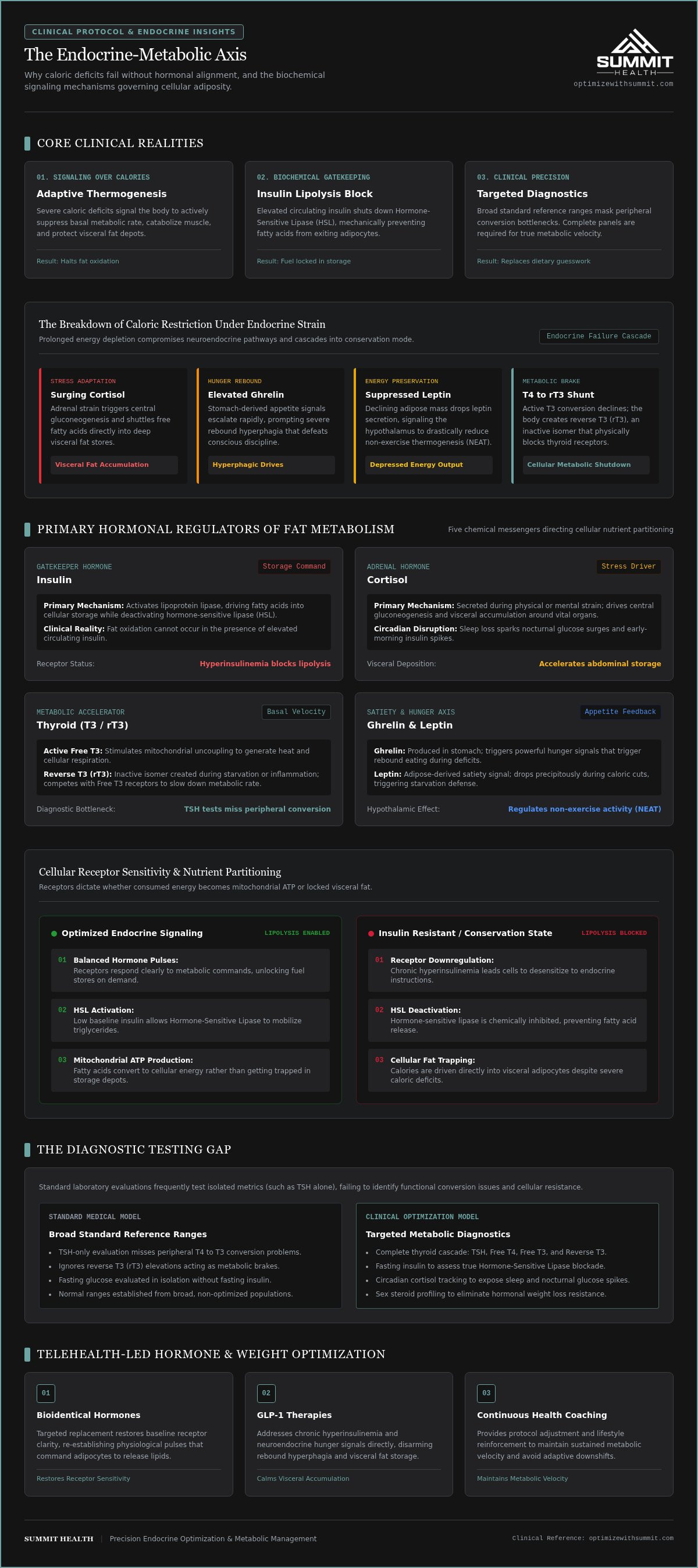
Energy balance is not simple math. Biology dictates thermodynamics. When systemic signaling breaks down, the body enters hormonal weight loss resistance, a physiological state where impaired endocrine pathways suppress lipolysis regardless of caloric intake. Under unbroken metabolic strain, standard deficit models collapse. Sustained body composition transformation requires addressing chemical messengers before adjusting nutritional intake. Mastering how to balance hormones for weight loss means shifting from chronic restriction to targeted endocrine alignment.
The Failure of Conventional Caloric Restriction
Severe energy deficits trigger an aggressive survival mechanism known as adaptive thermogenesis. The body protects existing fat stores by slowing basal metabolic rate and downregulating the conversion of thyroxine (T4) to metabolically active triiodothyronine (T3). Over time, sustained undereating drives systemic muscle catabolism while stubbornly preserving visceral fat stores.
Prolonged energy depletion compromises neuroendocrine communication:
- Elevated Cortisol: Chronic deficits spike adrenal output, triggering central gluconeogenesis and directing free fatty acids directly into deep visceral fat stores.
- Surging Ghrelin: Stomach-derived hunger signals multiply, sparking potent rebound hyperphagia that overwhelms conscious dietary discipline.
- Suppressed Leptin: Falling adipose volume drops circulating leptin, sending starvation signals to the hypothalamus and reducing non-exercise activity thermogenesis (NEAT).
The Biochemical Messengers Governing Cellular Adiposity
Hormones serve as the primary directors of nutrient partitioning. They dictate whether ingested calories are directed toward mitochondrial ATP production or trapped inside adipocytes. Cellular receptor sensitivity governs this balance entirely. In healthy endocrine systems, balanced hormone pulses signal cellular pathways to release and oxidize lipids on demand.
When systemic dysfunction takes hold, receptor sites downregulate. Understanding the cellular mechanisms of insulin resistance reveals how sustained hyperinsulinemia blocks hormone-sensitive lipase (HSL), functionally locking fuel inside adipose tissue. When tissue receptors stop listening to metabolic commands, chronic systemic neuroendocrine dysregulation locks you in conservation mode. Restoring baseline receptor clarity is the critical step to re-establishing true metabolic velocity.
The 5 Key Metabolic Hormones That Dictate Weight Loss
Adipose tissue is an active endocrine organ, not an inert storage depot. Five primary hormonal regulators dictate whether your body releases stored energy or locks it away. Understanding these chemical drivers reveals how to balance hormones for weight loss with clinical precision rather than dietary guesswork.
Insulin and Cortisol: The Fat-Storage Dynamic
Insulin operates as the primary gatekeeper of fat metabolism. Chronic hyperinsulinemia activates lipoprotein lipase, drawing circulating fatty acids directly into fat cells while shutting down lipolysis. Fat oxidation cannot occur in the presence of elevated circulating insulin.
Cortisol compounds this metabolic blockade. Produced by the adrenal cortex during sustained physical or psychological strain, chronic cortisol elevation stimulates visceral fat accumulation around vital organs. Sleep deprivation disrupts circadian cortisol rhythms, causing nocturnal glucose spikes that trigger early-morning insulin surges. This stress-storage loop halts metabolic progress.
Thyroid Hormones: Restoring Basal Metabolic Velocity
Your thyroid regulates baseline cellular energy consumption. The thyroid gland primarily releases thyroxine (T4), an inactive prohormone that must convert into triiodothyronine (T3) in peripheral tissues to drive cellular respiration. Active Free T3 stimulates mitochondrial uncoupling, generating heat and burning energy.
Standard blood tests often measure only Thyroid-Stimulating Hormone (TSH), missing functional conversion bottlenecks. Chronic dieting, systemic inflammation, and micronutrient deficiencies impede the conversion of T4 into Free T3. Under metabolic stress, the body diverts T4 into reverse T3 (rT3). This inactive isomer acts as a biochemical brake, competing for cellular receptor sites and shutting down metabolic output.
Sex Steroids: Estrogen, Progesterone, and Testosterone
Sex hormones govern muscle preservation, insulin sensitivity, and regional fat distribution. During midlife, declining progesterone relative to circulating estrogen promotes central adiposity and fluid retention. In both men and women, optimal testosterone levels are essential for preserving lean contractile muscle tissue, sustaining mitochondrial density, and maintaining insulin receptor sensitivity.
When sex steroids fall below physiological targets, metabolic rate drops and visceral fat increases. Aligning these pathways requires a structured medical framework. The Endocrine Society's clinical practice guidelines emphasize integrating diagnostic biomarker assessment alongside targeted therapies to manage underlying adiposity-based endocrine strain. If your progress has plateaued despite consistent effort, scheduling a clinical consultation can help identify the hidden hormonal blockades stalling your body composition goals.
Lifestyle Foundations vs. Clinical Therapies: Selecting the Right Intervention
Lifestyle discipline builds the baseline. Clinical precision delivers the breakthrough. When discerning how to balance hormones for weight loss, the goal is not choosing between lifestyle habits and medical interventions; it is sequencing them correctly. Foundational habits optimize an already functional endocrine system. Targeted clinical therapies restore a broken one.
Foundational Metabolic Interventions
Every protocol begins with daily behavioral mechanics. Early morning sunlight exposure anchors circadian cortisol rhythms, reinforcing melatonin synthesis and deep sleep architecture. Nutrition must emphasize adequate dietary protein to spare lean contractile tissue while stimulating satiety peptides. Meanwhile, progressive resistance training directly upregulates GLUT4 glucose transporter density in skeletal muscle, clearing systemic glucose independently of insulin far more effectively than repetitive endurance cardio.
When Lifestyle Changes Hit an Endocrine Ceiling
Consistent discipline does not always guarantee progress. If stubborn visceral fat persists alongside mid-afternoon energy crashes and persistent mental fog despite clean eating, you have likely hit an endocrine ceiling. Severe receptor insensitivity or primary glandular deficiencies cannot be solved by willpower alone.
As clinical research into the hormonal regulation of appetite and metabolism demonstrates, physiological blockades require targeted biological corrections. Taking an objective hormone quiz helps evaluate whether your daily symptoms stem from behavioral gaps or true neuroendocrine imbalances requiring clinical support.
Advanced Clinical Tools: BHRT, Peptides, and GLP-1s
Medical therapies actively remove internal biochemical resistance. Bioidentical hormone replacement therapy restores depleted sex steroids to optimal physiological targets, protecting lean muscle mass and optimizing energy expenditure. Concurrently, incretin therapies like dual GIP/GLP-1 receptor agonists (such as tirzepatide) quiet central appetite centers, delay gastric emptying, and resolve peripheral hyperinsulinemia.
Engaging in supervised online medical weight loss with GLP-1 protocols combines these pharmacological breakthroughs with expert clinical oversight. When clinical tools resolve internal roadblocks, foundational lifestyle habits finally generate predictable, rapid, and sustainable metabolic results.
The 4-Step Clinical Protocol to Balance Hormones for Weight Loss
Data precedes intervention. Guessing has no place in endocrine medicine. Generic commercial diets fail because they ignore biological individuality. A structured methodology provides the clinical roadmap for how to balance hormones for weight loss, shifting focus from symptomatic frustration to quantifiable physiological recovery.
Step 1: Comprehensive Diagnostic Labwork
Standard annual blood work is insufficient. Broad reference ranges identify acute disease, not peak physiological function. A complete metabolic assessment evaluates fasting insulin, HbA1c, a full thyroid panel (TSH, Free T3, Free T4, Reverse T3), comprehensive sex steroids, and high-sensitivity C-reactive protein (hs-CRP). Reviewing targeted hormone blood work establishes your precise biological baseline before prescribing any therapeutic agent.
Step 2: Expert Clinical Interpretation
Data requires clinical context. Specialized hormone medical providers analyze subtle biomarker ratios rather than isolated values. A fasting glucose reading of 90 mg/dL appears acceptable on paper, but paired with elevated fasting insulin, it signals early insulin resistance. Clinicians map objective blood findings directly against subjective symptoms, pinpointing hidden conversion bottlenecks, elevated reverse T3, or relative estrogen dominance that standard evaluations overlook.
Steps 3 & 4: Targeted Protocol Design and Continuous Optimization
True optimization demands bespoke execution. Your licensed medical provider designs an integrated protocol combining evidence-based nutrition, targeted supplements, and advanced medical therapies like bioidentical hormones or peptide protocols. Endocrine balance is dynamic, not static. Re-testing panels at 90-day intervals allows for precise titration as receptor sensitivity resets. Supported by continuous virtual health coaching, this phase ensures lean skeletal muscle preservation while accelerating metabolic velocity. Ready to establish your biological blueprint? Book your clinical consultation today.
Telehealth-Led Hormone and Weight Optimization: The Summit Health Difference
Geographic limitations should never dictate metabolic quality. Traditional healthcare models routinely fragment endocrine care, forcing individuals through dismissive clinical visits and outdated reference standards. Discovering how to balance hormones for weight loss requires a unified, high-performance strategy centered on individual biology. Summit Health delivers nationwide, telehealth-driven hormone optimization and medical weight loss, replacing clinical friction with data-driven precision.
Precision Diagnostics Without In-Person Friction
Objective data forms the foundation of every successful intervention. Patients access comprehensive diagnostic labwork through convenient nationwide collection facilities, avoiding bureaucratic hospital waitlists. Once biomarkers are processed, specialized licensed medical providers review your complete endocrine panel during an in-depth virtual consultation. You receive clear, actionable feedback on your fasting insulin, thyroid conversion, and sex steroid levels without the stress of an in-person medical office.
A Cohesive Medical Strategy: Blending Hormones, GLP-1s, and Coaching
Siloed treatments rarely resolve chronic metabolic resistance. Rapid weight reduction without endocrine protection often sacrifices lean tissue, causing basal metabolic rates to crater. Summit Health designs synergistic protocols that pair medical weight loss therapies, such as tirzepatide and GLP-1 medications, directly with bioidentical hormone optimization. Incretins quiet central appetite signaling and resolve peripheral hyperinsulinemia, while optimized sex steroids and thyroid levels actively protect contractile skeletal muscle. Continuous 1-on-1 health coaching reinforces this medical foundation, establishing sustainable nutritional habits, restorative sleep architectures, and performance-driven training routines.
Your Path to Endocrine Balance
Sustainable physical transformation requires disciplined, ongoing iteration. After completing your virtual physician evaluation, your customized protocol arrives directly at your door, backed by continuous virtual monitoring and diagnostic re-testing. You are never left to interpret symptoms on your own. Explore our comprehensive weight loss program to see how targeted medical therapies transform body composition. Take the definitive step toward metabolic velocity and schedule your clinical consultation with Summit Health.
Reclaim Your Metabolic Blueprint
Lasting transformation is never an accident of willpower. It's the direct outcome of biological precision. When you understand how to balance hormones for weight loss, you don't have to battle your biochemistry; you can direct it. True metabolic velocity requires looking beneath surface symptoms to resolve the hidden cellular friction holding your body back.
Sustainable vitality starts with diagnostic clarity. Summit Health delivers nationwide access to comprehensive diagnostic lab panels evaluating root-cause metabolic biomarkers. Licensed providers develop tailored clinical protocols integrating bioidentical hormone replacement, GLP-1 therapies, and targeted peptides to restore balance. Backed by dedicated 1-on-1 virtual health coaching and continuous physician-led monitoring, your protocol evolves as your body adapts. Take control of your physiological trajectory today. Optimize your metabolic hormones with Summit Health and unlock the peak physical energy you deserve.
Frequently Asked Questions
How do I know if my inability to lose weight is caused by hormones?
Disproportionate abdominal fat gain that resists consistent caloric restriction is a primary indicator. When endocrine signaling falters, standard caloric deficits trigger metabolic adaptation rather than fat oxidation. If disciplined nutrition and regular exercise fail to produce results while you experience severe mid-afternoon energy crashes, sleep fragmentation, or sudden loss of muscle tone, an underlying hormonal imbalance is likely directing cellular energy into storage.
Which specific blood tests are required to check hormones for weight loss?
A standard lipid panel is insufficient. A complete metabolic assessment requires fasting insulin, HbA1c, and a comprehensive thyroid panel including TSH, Free T3, Free T4, and Reverse T3. Providers also evaluate morning total and free testosterone, sensitive estradiol, progesterone, DHEA-S, and hs-CRP. These biomarkers uncover the cellular bottlenecks stalling lipolysis and illuminate how to balance hormones for weight loss with clinical precision.
Can balancing hormones alone cause significant weight loss without dieting?
Restoring hormonal balance establishes the biochemical prerequisite for fat loss, but it works best alongside nutritional alignment. Balancing insulin, thyroid output, and sex steroids clears cellular blockades, stops muscle breakdown, and quiets intense biological hunger. While many individuals shed initial visceral weight as fluid retention and hyperinsulinemia resolve, maximum fat reduction occurs when balanced hormones work synergistically with protein-focused nutrition and resistance training.
Is hormone replacement therapy safe for long-term weight management?
Bioidentical hormone replacement therapy is safe and effective when managed by specialized medical providers using comprehensive diagnostic testing. Unlike synthetic alternatives, bioidentical hormones match the molecular structure of those produced by your body. Restoring depleted sex steroids preserves skeletal muscle, supports bone density, and sustains insulin sensitivity. Continuous virtual clinical monitoring ensures your levels remain strictly within optimal physiological ranges, minimizing potential risks.
How do GLP-1 medications like Tirzepatide interact with hormone balance?
Incretin medications operate directly within neuroendocrine pathways to restore metabolic velocity. Tirzepatide functions as a dual GIP and GLP-1 receptor agonist, improving insulin sensitivity while slowing gastric emptying and quieting central appetite signaling. This mechanism clears peripheral hyperinsulinemia. When paired with bioidentical hormone therapy, GLP-1 medications accelerate adipose reduction while optimized testosterone and thyroid levels actively protect contractile skeletal muscle tissue.
What is the difference between normal lab ranges and optimal hormone ranges?
Standard reference ranges represent a statistical average of the general population, which includes individuals experiencing chronic metabolic strain. Optimal ranges define the precise physiological thresholds where human biology functions at peak performance. While your fasting insulin or Free T3 might register as technically normal, mastering how to balance hormones for weight loss requires targeting tighter, evidence-based optimization windows that actively support mitochondrial output.
How long does it take to balance hormones and see weight loss results?
Initial physiological improvements often emerge within two to four weeks as sleep quality deepens, cellular inflammation declines, and daytime energy stabilizes. Noticeable shifts in body composition and visceral fat reduction generally accelerate between weeks six and twelve. Because endocrine networks rely on interconnected feedback loops, quarterly diagnostic re-testing and 1-on-1 virtual health coaching ensure your protocol adapts to sustain long-term metabolic velocity.

Article by
Dr. David Richardson
David Richardson, is the founder and CEO of Summit Health and the author of "Insights from the Summit", where he writes about hormone optimization, metabolic health, thyroid function, longevity, and preventive medicine.
After entering healthcare in 2009, David became increasingly interested in a question that traditional medicine often struggles to answer:
Why do so many people continue to feel terrible despite being told their labs are "normal"?
That question eventually led him into the field of health optimization in 2020, where he became passionate about understanding physiology at a deeper level and helping patients uncover the root causes of their symptoms rather than simply managing them.
Today, David's philosophy is simple: normal and optimal are not the same thing. Every patient is physiologically unique, and meaningful healthcare begins by listening to symptoms, understanding the science, and recognizing that laboratory values are only one piece of a much larger picture.
Through Summit Health and Insights from the Summit, David's mission is to help people better understand their bodies, ask better questions, and make informed decisions that improve both their health span and quality of life.


