

IMPORTANT DISCLAIMERS
Medical Disclaimer: The information in this article is provided for educational purposes only and is not intended as medical advice or a substitute for individualized medical care. Every person's health needs are unique. Always consult a qualified healthcare professional before starting, stopping, or changing any medication, supplement, or treatment plan. -------
Article Disclaimer: Articles are reviewed and published by Summit Health to provide evidence-based educational information. While Summit Health strives to provide reliable and current health information, medical knowledge is always evolving over time. Depending on when you are reading this content, it may not reflect the latest research or apply to your individual circumstances.
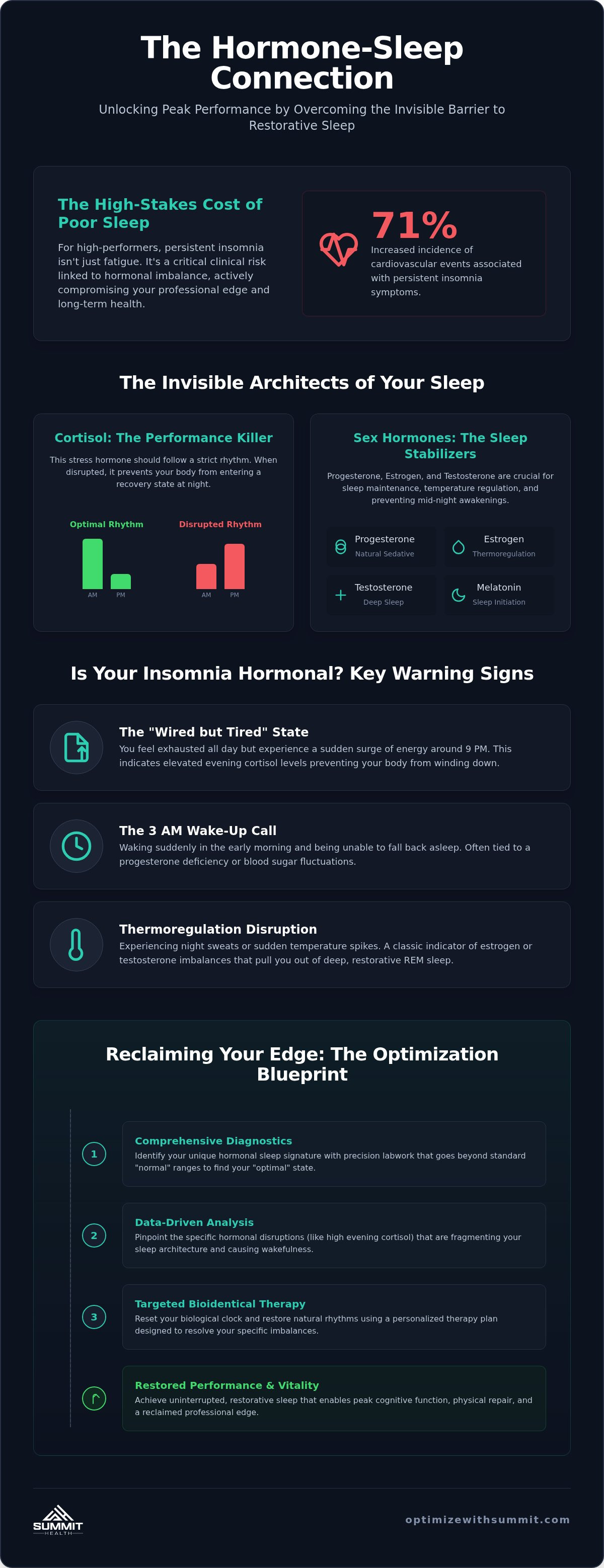
3 AM. The ceiling is a familiar sight. Your mind races through tomorrow's agenda while your body remains trapped in a cycle of exhaustion. For many high-performers, the link between hormone imbalance and insomnia is the invisible barrier to excellence. Recent data indicates that persistent insomnia symptoms are associated with a 71% increased incidence of cardiovascular events, making rest a critical clinical priority. You've likely reached for over-the-counter aids only to wake up with a lingering fog that compromises your professional edge.
Restorative sleep is not a luxury. It's a physiological requirement for peak performance. We understand that generic solutions fail because they ignore the precision of your endocrine system. Optimization requires a shift from reactive treatments to proactive biological refinement. This article explores how data-driven health plans and comprehensive diagnostics resolve the hormonal disruptions keeping you awake. Optimization starts with understanding your unique chemistry through precision labwork.
We'll examine the specific roles of cortisol and sex hormones in your sleep-wake cycle. You'll discover how virtual consultations and personalized health coaching provide the clarity needed for a refined, high-performance lifestyle. It's time to replace the racing mind with uninterrupted, restorative rest through targeted optimization.
Key Takeaways
- Understand how hormone imbalance and insomnia stem from a disrupted HPA axis rather than simple exhaustion.
- Identify why generic sleep aids often fail to resolve the underlying cortisol spikes that interrupt deep REM cycles.
- Learn to distinguish between "normal" and "optimal" lab ranges to unlock your specific hormonal sleep signature.
- Discover how targeted bioidentical hormone replacement resets your biological clock for uninterrupted, restorative sleep.
- Leverage comprehensive diagnostics to move beyond reactive treatments and toward total biological optimization.
The Invisible Architect: Why Hormones Dictate Your Sleep Architecture
Sleep is a precision event. It's not merely the absence of wakefulness but a complex sequence of biological transitions. When we analyze the link between hormone imbalance and insomnia, we see a fundamental misalignment of the body's internal clock. This isn't a simple lack of tiredness. It's a structural failure in your sleep architecture. Hormones like Growth Hormone (GH) and Melatonin act as the master builders of this architecture, repairing tissue and consolidating memory while you rest. By 2026, Optimization has become the gold standard for restorative health because it addresses these root biological causes rather than masking symptoms with generic sedatives. For those seeking a comprehensive overview of insomnia, understanding these chemical drivers is the essential first step toward recovery.
The Circadian Rhythm and Hormonal Timing
Your internal clock resides in the suprachiasmatic nucleus (SCN). This master pacemaker triggers a precise hormonal relay that dictates your energy levels. As daylight fades, the SCN signals the pineal gland to release melatonin, while cortisol levels should naturally decline. The switch is delicate. Modern environments, particularly blue light exposure from screens, disrupt this timing by tricking the SCN into maintaining high cortisol levels. This digital interference halts the production of sleep-inducing chemicals, leaving your brain stuck in a state of high-alert wakefulness. True hormone therapy begins by identifying where this feedback loop has broken down.
Signs Your Sleep Issues Are Hormonal
Identifying the source of disruption requires clinical precision. Hormonal sleep issues often manifest in specific, predictable patterns that go beyond general fatigue:
- The "Wired but Tired" State: You feel exhausted all day but experience a surge of energy at 9 PM. This usually indicates elevated evening cortisol levels that refuse to drop, preventing the body from entering a recovery state.
- The 3 AM Wake-up: Waking suddenly in the early morning is often tied to blood sugar fluctuations or a progesterone deficiency. Progesterone acts as a natural sedative; its absence leaves the mind racing and the body unable to return to sleep.
- Thermoregulation Disruptions: Night sweats or sudden temperature spikes are classic indicators of estrogen or testosterone imbalances. These fluctuations pull you out of deep REM cycles, preventing the physical and cognitive restoration required for peak performance.
Optimization moves you past these barriers. It focuses on the refinement of your biological state through data-driven insights. By stabilizing these hormonal pillars, you restore the integrity of your sleep architecture and reclaim your professional edge.
The Biological Cascade: Cortisol, Sex Hormones, and the Sleep Cycle
Hormonal insomnia is a chemical chain reaction. When one signal falters, the entire system destabilizes. Precision health requires looking past the surface of fatigue to the specific molecules governing your recovery. This biological cascade determines whether you wake up refreshed or remain trapped in a state of cognitive decline. Understanding the link between hormone imbalance and insomnia is the first step toward reclaiming your biological edge.
Cortisol: The Performance Killer
Cortisol demands a strict rhythm. The "Cortisol Awakening Response" (CAR) provides the sharp morning surge needed for alertness. However, chronic stress often shifts this peak to the evening. This nocturnal spike is a primary driver of sleep disruption. High evening cortisol levels directly inhibit the release of Growth Hormone, which is essential for physical repair during deep sleep. To modulate this stress response, many professionals utilize magnesium glycinate sleep protocols. This specific form of magnesium crosses the blood-brain barrier effectively, helping to calm the nervous system and lower the cortisol baseline before bed.
Sex Hormones and Sleep Maintenance
Gender-specific hormonal shifts play a massive role in sleep architecture. For women, the drop in progesterone during the luteal phase or menopause can be devastating. Progesterone functions as a natural GABAergic sedative, promoting a sense of calm. Without it, the brain remains in a state of hyper-arousal. Estrogen also plays a vital role by facilitating magnesium transport and regulating core body temperature. When estrogen levels fluctuate, thermoregulation fails, leading to the night sweats described by Yale Medicine in their analysis of Hormones Keeping You Up at Night?
Men face distinct challenges that are frequently overlooked in traditional healthcare. Low testosterone is closely linked to increased instances of sleep apnea and reduced total sleep duration. While many focus solely on female biology, testosterone replacement therapy can significantly improve sleep efficiency and metabolic health in men. These hormones don't act in isolation. They work in synergy. An imbalance in testosterone often cascades into elevated cortisol, creating a self-perpetuating cycle of exhaustion. True optimization requires a personalized hormone therapy plan to restore this delicate equilibrium and ensure long-term vitality.
Beyond Melatonin: Why Generic Sleep Solutions Often Fail
Reliance on over-the-counter aids is a common trap for high-performers. These sedatives offer a temporary bypass rather than a solution. When addressing the intersection of hormone imbalance and insomnia, generic interventions fail because they ignore your unique endocrine signature. Restorative sleep requires more than just silence and darkness. It requires internal biochemical alignment. Optimization moves you past the "Band-Aid" approach and toward a state of genuine biological recovery.
The Melatonin Misconception
Melatonin is frequently misunderstood as a natural sedative. It's actually a timing signal. It informs the brain that the environment is conducive to rest. Chronic, high-dose supplementation often leads to a "melatonin hangover" or suppresses your body's endogenous production. The brain operates on a Negative Feedback Loop where exogenous hormones signal the body to reduce or stop its own natural output. This dependency further destabilizes an already fragile system, leaving the root cortisol or progesterone issues untouched. Without diagnostic oversight, you're simply guessing at a complex biological puzzle.
Optimization vs. Sedation
There is a profound difference between being unconscious and being in a state of recovery. Pharmaceutical sedatives often "knock you out" by depressing the central nervous system. This approach bypasses the natural sleep cycles, preventing the deep REM and GH release necessary for cognitive performance. Biological optimization focuses on restoration rather than sedation. By utilizing bioidentical hormone replacement, we work to mirror the body's natural levels. This allows the circadian rhythm to reset itself organically, ensuring you wake up with the energy required for a high-performance lifestyle.
Precision beats guesswork every time. Standard sleep hygiene, like keeping your room cold or using blackout curtains, is helpful but insufficient if your hormones are in conflict. You can't optimize what you don't measure. Moving past the supplement aisle requires comprehensive hormone blood work to identify the exact biomarkers causing disruption. This data-driven approach ensures your protocol is bespoke, intentional, and focused on long-term vitality. It's the difference between a temporary fix and a permanent refinement of your health.
The Diagnostic Edge: Identifying Your Unique Hormonal Sleep Signature
Traditional medicine often overlooks the nuance of sleep architecture. Standard laboratory ranges are designed to identify disease, not to foster excellence. For the high-performer, "normal" is a baseline for survival, while "optimal" is the requirement for peak performance. Resolving the link between hormone imbalance and insomnia requires a shift toward precision diagnostics. We move past the ambiguity of symptoms to the clarity of data. Optimization starts with a clear understanding of your current biological state.
The Essential Hormone Panel for Sleep
Accuracy in testing depends on timing. Hormones fluctuate throughout the day, making the window of collection critical for a true biological snapshot. A morning blood draw ensures we capture your peak cortisol and testosterone levels before they're influenced by the day's stressors. Our comprehensive panel targets specific biomarkers that govern your sleep-wake cycle:
- Total and Free Testosterone: Essential for deep sleep duration and metabolic repair in both men and women.
- Estradiol and Progesterone: The primary regulators of thermoregulation and nervous system calm.
- DHEA-S: A vital precursor that supports resilience and helps modulate the body's stress response.
- AM Cortisol: Measured to ensure your stress response peaks in the morning rather than at midnight.
This data reveals the "Precision Gap." This is the space between where your levels currently sit and where they need to be for truly restorative rest. For those navigating specific life stages, our female hormone test list provides a roadmap for the menopause transition. We don't just look for deficiencies; we look for the levels that support your highest state of being.
Virtual Consultations and Personalized Plans
Telehealth has redefined the modern standard of care. By removing the friction of traditional clinic visits, we allow busy professionals to manage their health with maximum efficiency. Our virtual model facilitates ongoing monitoring, ensuring dosages are adjusted based on real-time sleep data and diagnostic feedback. It's a dynamic process of refinement. Health coaching plays a pivotal role here. It's not enough to have the data; you need an expert to interpret those markers into actionable lifestyle shifts and long-term wellness strategies.
Optimization is a continuous journey of upward movement. If you're ready to stop guessing and start measuring, take the Hormone Quiz to identify your starting point. Precision diagnostics provide the foundation for a life lived at the peak. To begin your data-driven recovery, book your diagnostic consultation today.
Precision Optimization: Restoring Vitality Through Targeted Hormone Therapy
Biological alignment is the ultimate goal. We've moved past the initial diagnosis of hormone imbalance and insomnia into the phase of active refinement. This is where clinical data transforms into a functional strategy for recovery. As detailed in The Sophisticated Guide to Hormone Replacement Therapy, targeted intervention restores the structural integrity of your sleep. It's not about sedation. It's about systemic balance. Optimization ensures that every night becomes an opportunity for deep, cellular repair.
Bioidentical Solutions for Sleep Recovery
Precision matters. We utilize bioidentical molecules because they mirror your body's natural chemistry exactly. Micronized progesterone is a cornerstone of our sleep recovery protocols. Unlike synthetic progestins, which often cause irritability, the micronized form crosses the blood-brain barrier to activate GABA receptors. This process "resets" the sleep cycle by promoting a state of calm and uninterrupted rest. For men, testosterone optimization improves REM density and metabolic health. We also integrate Peptide Therapy to accelerate deep tissue recovery during sleep. These advanced tools work in synergy to ensure your rest is as productive as your waking hours.
Systemic inflammation is a silent sleep disruptor. For many, metabolic dysfunction compounds existing hormonal issues. Our evidence based health solutions often include medical weight loss protocols featuring GLP-1s or Tirzepatide. These medications do more than manage weight; they reduce systemic inflammation and improve insulin sensitivity. This metabolic refinement stabilizes your sleep architecture by preventing the blood sugar fluctuations that often trigger early morning wakefulness. True vitality requires addressing these interconnected systems simultaneously.
Your Path to Peak Performance
Restored sleep is a catalyst for long-term health. It's the foundation for cardiovascular resilience and cognitive longevity. Data from the 2024 Study of Women's Health Across the Nation (SWAN) indicates that persistent insomnia symptoms are associated with a 71% increased incidence of cardiovascular events. Optimization mitigates these risks by stabilizing the body's stress response. You're not just sleeping better; you're protecting your future self.
The transition from exhaustion to excellence begins with a structured, data-driven plan. Our Hormone Optimization & Wellness Program provides the virtual monitoring and health coaching necessary for sustained progress. You don't have to accept a "wired but tired" existence as your baseline. Sleep is the ultimate competitive advantage. It's time to refine your biology and claim the restorative rest you deserve. Start your journey toward peak performance today.
Reclaiming the Peak: Your Path to Restorative Excellence
Precision rest. Biological alignment. We've explored how the intricate link between hormone imbalance and insomnia requires a shift from generic over-the-counter aids toward intentional biological optimization. Your sleep architecture isn't a passive state; it's a hormonal symphony that requires clinical precision to master. By addressing the root cortisol spikes and sex hormone deficiencies through comprehensive labwork, you move beyond mere survival into a state of peak performance.
Success starts with data. Through telehealth-led expert consultations and bespoke treatment plans, we provide the clarity needed to refine your biology. Our approach combines advanced diagnostics with ongoing health coaching to ensure long-term results that evolve with your lifestyle. You don't have to settle for cognitive fog or midnight wakefulness when a science-based path to recovery is available. Rest is the ultimate competitive advantage, and it's within your reach.
It's time to stop guessing and start optimizing. You deserve a health plan as sophisticated as your professional goals. Begin Your Optimization Journey with a Precision Hormone Quiz. Reclaim your vitality and step into the most optimized version of your life today.
Frequently Asked Questions
Can hormone imbalance cause permanent insomnia?
Hormone imbalance and insomnia are rarely permanent but can become chronic without targeted intervention. Most cases represent a reversible state of biological misalignment rather than structural damage. When endocrine signals remain disrupted, the brain's sleep-wake cycle becomes fixed in a state of hyper-arousal. Optimization focuses on restoring these signals to their peak state. Addressing the root cause through comprehensive labwork often resolves even long-standing sleep disruptions.
How do I know if my insomnia is caused by cortisol or estrogen?
Cortisol and estrogen disruptions present with distinct clinical signatures. Cortisol issues often manifest as the "wired but tired" phenomenon or sudden 3 AM wakefulness with a racing mind. Estrogen deficiency typically involves thermoregulation failures, such as night sweats and hot flashes, which pull you out of deep REM cycles. Identifying the exact driver requires precision diagnostics. We use targeted blood work to distinguish between these biomarkers and create a data-driven recovery plan.
Will hormone replacement therapy help me stay asleep through the night?
Hormone replacement therapy is highly effective for maintaining sleep continuity. By stabilizing progesterone levels, which act as a natural GABAergic sedative, we help the brain stay in a restful state throughout the night. Estrogen optimization further supports this by regulating core body temperature and preventing nocturnal surges. This systemic balance allows for the uninterrupted, restorative sleep required for high-level cognitive performance and physical recovery.
Is it safe to use progesterone pills specifically for sleep?
Micronized bioidentical progesterone is considered a safe and effective tool for sleep optimization when managed by a specialist. Unlike synthetic progestins, bioidentical versions are molecularly identical to what your body produces. They specifically target GABA receptors in the brain to promote relaxation without the "hangover" effect of traditional sedatives. Safety depends on precision dosing and ongoing virtual monitoring to ensure your levels remain within the optimal range for your unique biology.
How long does it take for hormone therapy to improve sleep quality?
Most patients experience noticeable improvements in sleep quality within the first two to four weeks of therapy. Progesterone often provides immediate relief by calming the nervous system, while estrogen and testosterone may take longer to stabilize thermoregulation and REM density. Full biological optimization usually occurs over three to six months of consistent treatment. This timeline allows your endocrine system to reach a new, stable equilibrium for long-term health and vitality.
Can low testosterone in men cause insomnia and night sweats?
Low testosterone is a frequent but overlooked cause of insomnia and night sweats in men. Testosterone deficiency disrupts the hypothalamus, leading to thermoregulation issues similar to female menopause. It's also closely linked to increased instances of sleep apnea and reduced total sleep duration. Restoring testosterone to optimal levels improves sleep efficiency and supports the deep tissue recovery essential for maintaining a high-performance lifestyle and metabolic health.
What is the best time of day to test for a hormonal sleep imbalance?
The most accurate window for testing a hormonal sleep imbalance is between 7 AM and 9 AM. This timing captures your peak morning cortisol and testosterone levels before they're influenced by daily stress or activity. Precision diagnostics require this specific snapshot to identify the "Precision Gap" between your current state and your optimal range. We utilize this data to build a bespoke treatment plan that addresses your unique endocrine signature.
Are there natural ways to balance hormones for better sleep without HRT?
Lifestyle refinements can support endocrine health, though they may not fully resolve a clinical hormone imbalance and insomnia. High-performers often utilize magnesium glycinate to modulate the stress response and strict light hygiene to protect melatonin production. Medical weight loss through GLP-1s also indirectly improves sleep by reducing systemic inflammation. While these methods are beneficial, they're most effective when combined with a data-driven health plan and professional coaching for total biological refinement.

Article by
Dr. David Richardson
David Richardson, is the founder and CEO of Summit Health and the author of "Insights from the Summit", where he writes about hormone optimization, metabolic health, thyroid function, longevity, and preventive medicine.
After entering healthcare in 2009, David became increasingly interested in a question that traditional medicine often struggles to answer:
Why do so many people continue to feel terrible despite being told their labs are "normal"?
That question eventually led him into the field of health optimization in 2020, where he became passionate about understanding physiology at a deeper level and helping patients uncover the root causes of their symptoms rather than simply managing them.
Today, David's philosophy is simple: normal and optimal are not the same thing. Every patient is physiologically unique, and meaningful healthcare begins by listening to symptoms, understanding the science, and recognizing that laboratory values are only one piece of a much larger picture.
Through Summit Health and Insights from the Summit, David's mission is to help people better understand their bodies, ask better questions, and make informed decisions that improve both their health span and quality of life.


