
IMPORTANT DISCLAIMERS
Medical Disclaimer: The information in this article is provided for educational purposes only and is not intended as medical advice or a substitute for individualized medical care. Every person's health needs are unique. Always consult a qualified healthcare professional before starting, stopping, or changing any medication, supplement, or treatment plan. -------
Article Disclaimer: Articles are reviewed and published by Summit Health to provide evidence-based educational information. While Summit Health strives to provide reliable and current health information, medical knowledge is always evolving over time. Depending on when you are reading this content, it may not reflect the latest research or apply to your individual circumstances.
Peak performance isn't a guessing game. It's a calculation. Many high-achievers facing a softening midsection and fading drive assume they must choose between a direct hormone fix or a peptide boost. This debate of sermorelin vs testosterone therapy often misses the most critical factor; your unique biological markers. You've likely felt the frustration of conflicting medical advice while your energy levels seem to plateau. It's a common struggle to navigate synthetic options when you're seeking a premium, optimized version of your life.
Precision is the new standard. With the peptide market reaching $164 billion in 2026, the shift toward sophisticated, data-driven wellness is undeniable. This guide clarifies the clinical distinctions between stimulating your own growth hormone and replacing testosterone directly. You'll discover how to use comprehensive lab work to restore a leaner physique and improve sleep quality without the fear of long-term side effects. We'll examine the latest FDA regulatory updates and metabolic trends to help you build a personalized plan. The path to your peak state starts with clarity, not compromises.
Key Takeaways
- Distinguish between direct hormone replacement and pituitary stimulation to align your therapy with your body’s natural rhythm and long-term health.
- Compare the metabolic and anabolic benefits of sermorelin vs testosterone therapy to determine which path leads to your peak physique and performance.
- Discover the biological synergy of combining peptides and hormones to maximize cellular repair while mitigating common side effects.
- Identify the critical biomarkers, including IGF-1 and Free Testosterone, required to transition from standard health ranges to high-performance optimization.
- Map out a clear, diagnostic-led journey toward a personalized protocol managed through comprehensive lab work and specialized virtual consultations.
Sermorelin vs Testosterone Therapy: Understanding the Mechanisms
Hormone optimization requires a shift in perspective. It's not just about adding what is missing. It's about how your body processes those signals. The core distinction in the sermorelin vs testosterone therapy debate lies in the method of delivery: replacement versus stimulation. One provides the end product. The other encourages the factory to start producing again. This choice dictates how your endocrine system adapts over time. Understanding these mechanisms is the first step toward a personalized health protocol.
Choosing between these paths depends on your specific biological baseline. When evaluating sermorelin vs testosterone therapy, consider if you need a corrective measure for a system that has failed or a refinement for a system that needs a catalyst. Both approaches offer unique advantages for peak performance, yet they serve different biological masters. Replacement is a powerful tool for rapid change. Stimulation is a strategic investment in long-term hormonal health.
How Testosterone Replacement Works
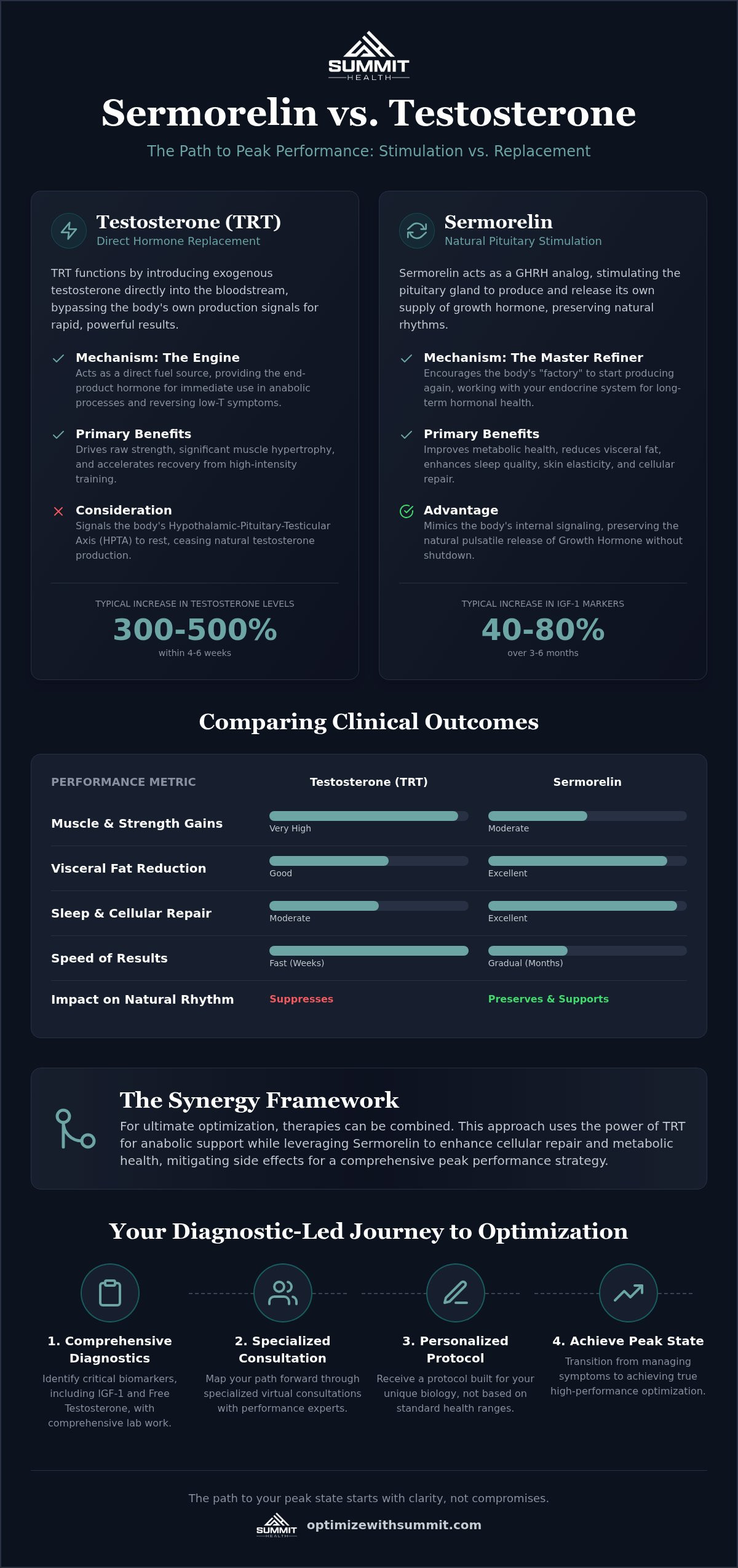
Clinical replacement. Direct impact. Testosterone Replacement Therapy functions by introducing exogenous testosterone into the bloodstream. It bypasses the body's internal production signals to reach a physiological peak. For men with clinically diagnosed hypogonadism, this intervention is often necessary for immediate symptom reversal. Research indicates that TRT can increase testosterone levels by 300% to 500% within four to six weeks. This rapid elevation supports muscle protein synthesis and metabolic speed almost immediately. However, this direct path signals the Hypothalamic-Pituitary-Testicular Axis (HPTA) to rest. When the body detects sufficient levels from an outside source, it ceases its own natural production. This trade-off is a primary consideration for long-term hormone management.
The Science of Sermorelin and Growth Hormone
Natural rhythm. Cellular signaling. Sermorelin acts as a growth hormone-releasing hormone (GHRH) analog. Instead of replacing growth hormone directly, it stimulates the pituitary gland to release its own stored supply. This preservation of the body's natural pulsatile rhythm is a significant advantage for long-term biological refinement. By mimicking the body's internal signaling, it avoids the "shut down" effect often seen with direct replacement therapies. Success is measured through IGF-1 levels rather than direct growth hormone spikes. Clinical data shows that growth hormone-releasing peptides can boost IGF-1 markers by 40% to 80% over a period of three to six months. This elevation supports leaner physiques, improved sleep quality, and faster recovery times. It is a more subtle, restorative approach focused on metabolic health and systemic vitality.
Comparing Clinical Outcomes: Muscle, Fat, and Vitality
Results are the ultimate metric of any optimization protocol. When weighing sermorelin vs testosterone therapy, the primary question is which biological lever will move the needle for your specific goals. Testosterone is the engine of anabolic growth. It drives raw strength and significant muscle hypertrophy. Sermorelin acts as a master refiner. It focuses on metabolic efficiency, visceral fat reduction, and the structural integrity of your skin and connective tissues. While both paths lead to a more capable physique, the quality of that transformation depends on which hormone system you prioritize.
Clinical data supports these distinct profiles. Testosterone replacement therapy is highly effective for reversing the catabolic effects of low T, often resulting in a rapid increase in lean mass. Conversely, sermorelin’s impact is more gradual and systemic. It targets the "stubborn" midsection weight gain that often resists traditional diet and exercise. Choosing between them requires an honest assessment of whether you need a foundation of strength or a refinement of your metabolic health.
Body Composition and Physical Performance
TRT is the gold standard for those seeking significant strength gains and muscle volume. It directly accelerates muscle protein synthesis, allowing for faster recovery from high-intensity training. Sermorelin offers a different advantage; it excels at lean tissue preservation and improving skin elasticity through enhanced collagen production. Growth hormone secretagogues act as a metabolic switch that shifts the body from glucose burning to lipid oxidation while enhancing cellular repair. This makes it a superior choice for those focused on a "ripped" aesthetic and long-term joint health rather than sheer bulk.
Energy Levels and Mental Clarity
The cognitive "lift" from testosterone optimization is often described as a return of "alpha" confidence and assertive drive. It clears the mental fog associated with declining levels. Sermorelin provides a different kind of vitality rooted in restorative sleep. By improving the quality of deep-wave sleep cycles, it allows the body to perform essential cellular maintenance. This results in a steady, calm energy that lasts throughout the day. Take our Hormone Quiz to identify your primary symptoms and see which pathway aligns with your needs.
The timeline for these results follows a predictable arc over twelve weeks:
- Weeks 1-4: TRT users often report increased libido and mental drive. Sermorelin users begin to notice deeper, more restorative sleep and improved vividness in dreams.
- Weeks 4-8: Strength gains become measurable for those on TRT. Sermorelin patients often see improved recovery times and the beginning of fat loss in the midsection.
- Week 12: Both therapies reach a state of physiological balance. This is where the most significant shifts in body composition and systemic energy become visible.
To determine the most effective timeline for your goals, you can schedule a diagnostic evaluation to review your current markers.
The Synergy Framework: Combining Sermorelin and TRT
Biological compounding creates a superior result. When you combine the anabolic power of testosterone with the regenerative signaling of peptides, you move beyond simple replacement. This dual-pathway approach addresses the limitations of monotherapy. While TRT focuses on serum levels and muscle protein synthesis, adding a secretagogue ensures that metabolic repair and cellular health keep pace. It's a strategy for those who refuse to settle for "normal" and instead pursue a peak state. The debate of sermorelin vs testosterone therapy shouldn't always be about choosing one; it's often about how they work together.
Enhanced Recovery and Joint Health
Connective tissue often lags behind muscle growth. TRT can drive rapid strength gains, but without sufficient growth hormone signaling, tendons and ligaments may struggle to support the increased load. This is where IGF-1 plays a critical role. By stimulating connective tissue repair, sermorelin acts as a safeguard against injury. Growth hormone and androgen receptors share a synergistic relationship; GH signaling can actually enhance the sensitivity and density of androgen receptors, allowing your body to utilize testosterone more efficiently.
Preserving Biological Balance
Longevity requires a balanced endocrine profile. Relying solely on TRT can sometimes lead to a "flat" feeling once the initial honeymoon phase ends. Integrating Sermorelin's mechanism of action helps maintain a more youthful hormonal rhythm. This combination supports multiple pathways simultaneously, preventing the systemic "crash" that can occur when one system is pushed while others are ignored. Ideal candidates for this approach are active individuals over 40 who require both metabolic refinement and significant strength support. You can explore our Hormone Therapy options to see how a combined protocol might fit your lifestyle.
Customization is the final layer. No two biological profiles are identical. Some require a higher ratio of peptides to manage visceral fat, while others need a robust testosterone base to combat clinical hypogonadism. The goal of the sermorelin vs testosterone therapy discussion should eventually evolve into a conversation about precision ratios. By monitoring markers like Total T and IGF-1, providers can fine-tune these dosages to match the specific demands of your career and training. This ensures your protocol remains as dynamic as your lifestyle.
Diagnostic Precision: Why Lab Work Dictates the Path
Data is the only objective measure of your biological state. When evaluating sermorelin vs testosterone therapy, your blood work provides the definitive roadmap. Standard medicine often settles for "normal" ranges that are too broad to be useful for high-performers. We focus on "optimal" markers that reflect peak vitality. Relying on symptoms alone is guesswork; relying on data is precision optimization.
The Summit Health Protocol uses a specialized array of biomarkers to build your profile. Total Testosterone and Free Testosterone determine your androgenic baseline. SHBG (Sex Hormone Binding Globulin) reveals how much of that hormone is actually bioavailable to your tissues. IGF-1 serves as the primary surrogate marker for growth hormone activity, which is essential for determining the efficacy of a peptide protocol. Finally, monitoring Estrogen balance ensures your journey remains sustainable and free from unwanted side effects. For a deep dive into these markers, read our Diagnostic Precision: The 2026 Guide to Hormone Blood Work.
The Role of Comprehensive Blood Panels
A standard physical isn't enough for hormone optimization. Most routine tests ignore the subtle interplay between the pituitary gland and the testes. Comprehensive panels allow us to identify the root cause of your decline. We determine if your symptoms stem from a testicular issue requiring direct replacement or a pituitary signaling issue better suited for peptide stimulation. Iterative testing is the cornerstone of progress. We don't just set a dose and walk away. We test, analyze, and refine based on your body’s actual response.
Personalized Health Coaching and Monitoring
Optimization is a continuous process. It requires more than just a prescription. Our health coaching integrates real-time physiological feedback with clinical data to refine your protocol. This is especially critical for our national telehealth patients who rely on seamless virtual monitoring to maintain their peak state. Many high-achievers find that integrating medical weight loss strategies with their hormone protocols creates a compounding effect on body composition. This data-driven approach ensures that every adjustment is intentional and results-oriented. You can order your comprehensive lab panel today to begin your data-driven transformation.
The Path to Optimization: Starting Your Journey
Precision requires a process. Moving from a state of decline to one of peak performance isn't an overnight shift; it's a structured ascent. Whether the diagnostic data points toward sermorelin vs testosterone therapy, the transition must be seamless, professional, and rooted in clinical excellence. We've refined the path to optimization into four clear phases designed for the high-achiever who values both time and results. This isn't just about a prescription. It's about a total biological refinement.
- Phase 1: High-Resolution Diagnostics. You'll visit a local facility for comprehensive blood work. This isn't a standard physical. We analyze the specific markers discussed in previous sections to build your unique hormonal fingerprint.
- Phase 2: Specialist Consultation. You'll meet virtually with an expert provider to review your results. This is where we bridge the gap between "normal" lab ranges and your personal performance goals.
- Phase 3: Bespoke Fulfillment. Your personalized protocol is compounded specifically for your needs and delivered directly to your door. No pharmacy lines. No generic solutions.
- Phase 4: Continuous Refinement. Optimization is dynamic. We use iterative testing and health coaching to adjust your dosages as your body composition and energy levels evolve.
The Telehealth Advantage
Elite medical care. Zero friction. The modern professional doesn't have time for sterile waiting rooms or outdated clinic models. Our telehealth-led approach provides national access to top-tier hormone specialists from the privacy of your home or office. This model ensures that your sermorelin vs testosterone therapy protocol is managed with the same sleekness and efficiency as a high-end tech platform. You receive premium, specialized care without the logistical burden of traditional medicine.
Commitment to Long-Term Excellence
Optimization is a marathon. It's a commitment to a better version of yourself that persists year after year. We don't view hormone therapy as a quick fix for a temporary ailment. We view it as a strategic partnership in your long-term excellence. A partner who understands human biology at a granular level is essential for navigating the complexities of aging and performance. We focus on the "peak" experience, ensuring your endocrine system supports your career, your training, and your life. The path to your refined self is ready. Schedule your consultation with Summit Health to begin your data-driven transformation.
Elevate Your Biological Baseline
Peak performance is a deliberate choice. You now understand that the debate of sermorelin vs testosterone therapy isn't about finding a single miracle compound. It's about aligning your clinical markers with your long-term lifestyle goals. Whether you require the anabolic support of direct replacement or the metabolic refinement of peptide stimulation, the path must be guided by diagnostic data. Precision ensures that your protocol remains as unique as your physiology. This clarity allows you to move beyond the treatment of symptoms toward the refinement of your peak state.
True optimization requires a specialized partner. We provide the framework for your biological ascent through comprehensive diagnostic lab work and seamless, telehealth-led virtual monitoring. Our personalized health coaching transforms raw data into elite results, ensuring your protocol evolves alongside your progress. You don't have to navigate the complexities of modern hormone health alone. The tools for your optimized life are accessible and intentional. Your journey toward a refined, high-performance future begins with a single, data-driven step.
Optimize your performance-book your consultation today.
Frequently Asked Questions
Is Sermorelin a better alternative to TRT?
Neither therapy is universally superior; the choice depends on your specific deficiency. If your primary issue is clinical hypogonadism, TRT is the standard of care. If you seek metabolic refinement and improved sleep, Sermorelin is often the preferred route. Most high-performers view the sermorelin vs testosterone therapy decision as a matter of matching the compound to the biological goal rather than finding a better alternative.
Can you take Sermorelin and Testosterone at the same time?
Simultaneous use is highly effective for achieving a comprehensive biological lift. Combining these therapies allows you to address muscle protein synthesis through testosterone while enhancing recovery and joint health via growth hormone stimulation. This dual-pathway approach creates a compounding effect that monotherapy often lacks. It's a strategy frequently utilized by those pursuing a peak version of their physical and mental state.
Will Sermorelin increase my natural testosterone levels?
Sermorelin does not directly elevate testosterone levels. It's a growth hormone-releasing hormone analog designed to act on the pituitary gland. While improved metabolic health and deeper sleep might indirectly support hormonal balance, it isn't a substitute for testosterone replacement. If your diagnostic lab work confirms low T, a direct androgen protocol is typically necessary to achieve physiological optimization.
How long does it take to see results from Sermorelin vs. TRT?
Timelines for physiological change differ between these protocols. TRT users typically report increased libido and energy within four to six weeks. The effects of sermorelin vs testosterone therapy on body composition take longer to manifest. You'll likely notice better sleep immediately, but significant fat loss and skin elasticity improvements usually require three to six months of consistent peptide stimulation to reach their peak.
Does insurance cover peptide therapy or TRT in 2026?
Insurance coverage remains selective in 2026. TRT is frequently covered when lab work confirms a diagnosis of clinical hypogonadism and associated symptoms. Peptide therapies like Sermorelin are usually considered off-label for anti-aging or performance and are rarely covered by standard plans. Most patients choose to invest in these premium protocols as a direct out-of-pocket expense for their long-term health and vitality.
What are the side effects of combining peptides and hormones?
Combining these therapies is generally well-tolerated under medical supervision. The most common side effects include mild water retention or temporary numbness in the extremities. Because both hormones influence metabolism, your provider will monitor your insulin sensitivity and blood pressure during your virtual consultations. Precision dosing based on iterative lab work is the most effective way to mitigate risks and maintain a steady, upward trajectory.
Do I need to stay on these therapies forever?
Permanence depends on the underlying cause of your hormonal decline. TRT is often a lifelong commitment because it replaces a function your body can no longer perform. Sermorelin is more flexible; it can be used in cycles or as a long-term maintenance tool to support pituitary health. Your provider will help you decide if a permanent protocol or a strategic cycling approach fits your performance goals.
How do I know which therapy is right for my specific symptoms?
Diagnostic data is the only objective way to choose your path. Symptoms like fatigue or weight gain can stem from various endocrine imbalances. Comprehensive blood work reveals whether your pituitary gland or your testes require support. By analyzing biomarkers like Free Testosterone and IGF-1, we move past the guesswork. A personalized plan ensures you're applying the right biological lever for your specific needs.

Article by
Dr. David Richardson
David Richardson, is the founder and CEO of Summit Health and the author of "Insights from the Summit", where he writes about hormone optimization, metabolic health, thyroid function, longevity, and preventive medicine.
After entering healthcare in 2009, David became increasingly interested in a question that traditional medicine often struggles to answer:
Why do so many people continue to feel terrible despite being told their labs are "normal"?
That question eventually led him into the field of health optimization in 2020, where he became passionate about understanding physiology at a deeper level and helping patients uncover the root causes of their symptoms rather than simply managing them.
Today, David's philosophy is simple: normal and optimal are not the same thing. Every patient is physiologically unique, and meaningful healthcare begins by listening to symptoms, understanding the science, and recognizing that laboratory values are only one piece of a much larger picture.
Through Summit Health and Insights from the Summit, David's mission is to help people better understand their bodies, ask better questions, and make informed decisions that improve both their health span and quality of life.


