

IMPORTANT DISCLAIMERS
Medical Disclaimer: The information in this article is provided for educational purposes only and is not intended as medical advice or a substitute for individualized medical care. Every person's health needs are unique. Always consult a qualified healthcare professional before starting, stopping, or changing any medication, supplement, or treatment plan. -------
Article Disclaimer: Articles are reviewed and published by Summit Health to provide evidence-based educational information. While Summit Health strives to provide reliable and current health information, medical knowledge is always evolving over time. Depending on when you are reading this content, it may not reflect the latest research or apply to your individual circumstances.
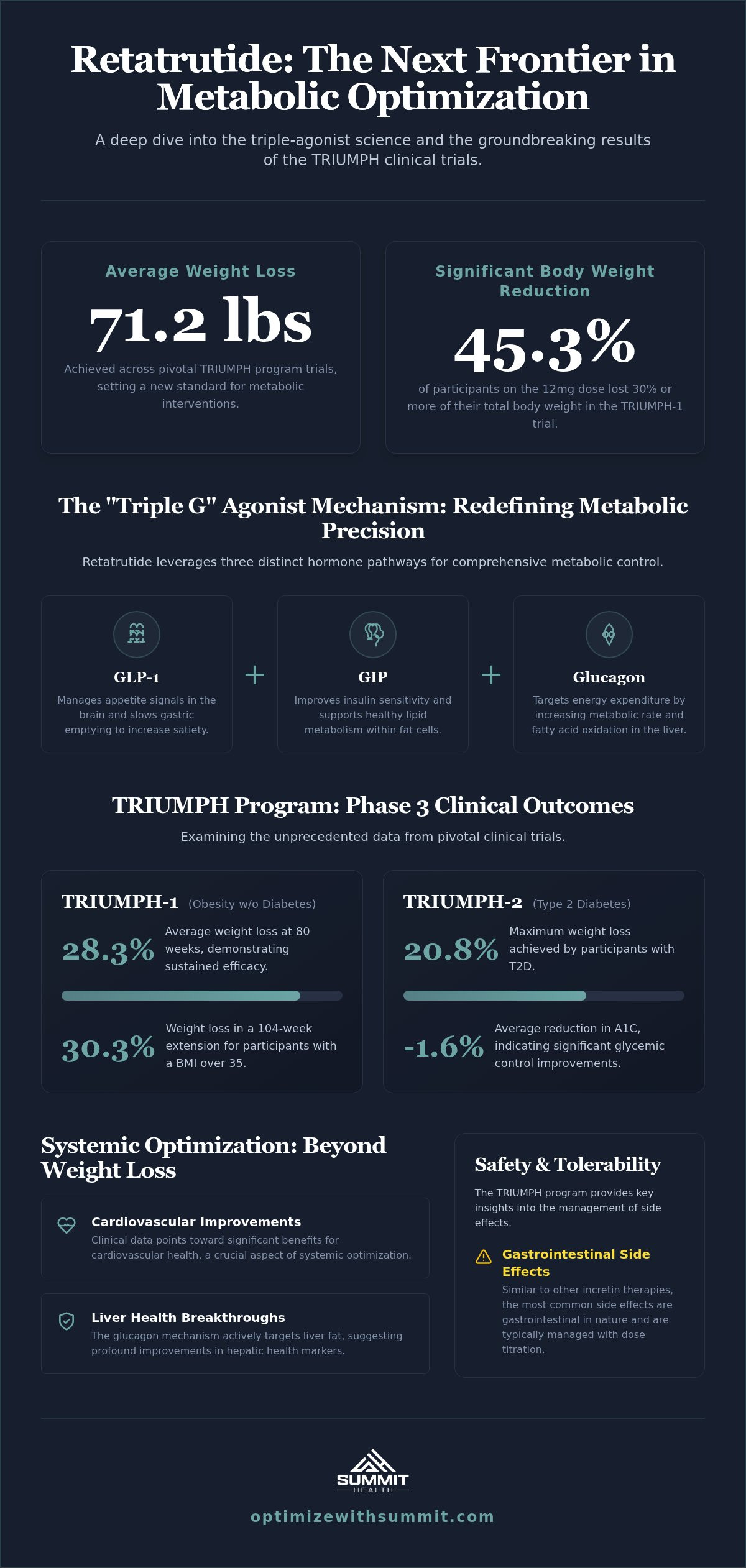
Imagine a metabolic intervention so potent that nearly half of its participants lost 30% or more of their total body weight in under two years. In the TRIUMPH-1 trial, 45.3% of those on the 12 mg dose achieved exactly that. This isn't just another incremental step in weight management; it's a fundamental shift in how we approach biological optimization. You've likely experienced the success of GLP-1 or dual-agonist therapies, but you may now find yourself facing a stubborn plateau. It's frustrating when progress stalls despite a disciplined lifestyle. You're looking for the next frontier in metabolic health.
To understand the potential of this new era, we must look closer at Retatrutide: What do the scientific studies show about the clinical trials? This article provides a sophisticated analysis of the TRIUMPH program and the triple-agonist science driving the next phase of human performance. We will examine the latest data on weight loss, cardiovascular markers, and comorbidity resolution. You'll gain the clarity needed to evaluate if this advanced peptide therapy is the right evolution for your personal journey. We're moving beyond simple treatment toward a state of peak metabolic refinement and long-term vitality.
Key Takeaways
- Triple-receptor precision. Explore how the synergy of GLP-1, GIP, and glucagon receptors drives energy expenditure beyond the capabilities of dual-agonists.
- Unprecedented clinical data. Examine Retatrutide: What do the scientific studies show about the clinical trials that yielded an average weight loss of over 70 pounds in pivotal studies?
- Systemic optimization. Gain insight into the cardiovascular improvements and liver health breakthroughs that redefine what is possible in metabolic medicine.
- Informed vigilance. Review the safety and tolerability data from the TRIUMPH program to understand the management of common gastrointestinal side effects.
- Strategic priming. Learn how to utilize existing GLP-1 and Tirzepatide protocols to optimize your current health status as advanced therapies approach the horizon.
The Triple Agonist Mechanism: Redefining Metabolic Precision
Advanced science. Targeted action. The shift from single-hormone therapies to multi-receptor activation marks the most significant advancement in metabolic science this decade. While dual-agonists set a new standard for weight management, Retatrutide introduces a third dimension of metabolic control. A triple agonist is the next-generation approach to metabolic signaling that leverages three distinct pathways to maximize biological efficiency. This isn't a mere iteration of existing science; it's a fundamental recalibration of human energy systems.
When analyzing Retatrutide: What do the scientific studies show about the clinical trials regarding its molecular design? The data confirms a transition from dual-agonism to a more comprehensive triple-receptor activation. This "Triple G" agonist approach doesn't just reduce intake. It actively influences how the body stores and utilizes every calorie through the precise synchronization of GLP-1, GIP, and glucagon signaling. It's a sophisticated strategy for those seeking a premium, optimized version of their biology.
GLP-1 and GIP: The Established Foundation
Modern peptide therapy began with GLP-1. This hormone manages appetite signals in the brain and slows gastric emptying, which helps you feel satisfied with smaller portions. GIP adds another layer by improving insulin sensitivity and supporting lipid metabolism within fat cells. Together, they formed the dual-agonist foundation that revolutionized the weight loss sector. However, dual-agonism was only the beginning of the optimization journey. For many high-performers, these two pathways eventually reach a physiological limit where weight loss stalls despite continued effort.
The Glucagon Advantage: Targeting Energy Expenditure
Glucagon is the critical differentiator that separates this therapy from its predecessors. While GLP-1 and GIP focus largely on the "input" side of the metabolic equation, glucagon targets the "output." It stimulates the liver to oxidize fatty acids and increases thermogenesis, effectively raising the body's resting metabolic rate. This means you aren't just eating less; you're burning more. The synergy between appetite suppression and increased energy expenditure creates a powerful metabolic momentum. This triple-action approach is specifically designed to target stubborn metabolic plateaus that dual-agonists often cannot overcome. It represents a shift from simple weight reduction to total metabolic refinement and peak performance.
The TRIUMPH Program: Analyzing Phase 3 Clinical Outcomes
Unprecedented data. Definitive results. The TRIUMPH clinical development program has established a new ceiling for metabolic interventions. When asking Retatrutide: What do the scientific studies show about the clinical trials, the answer lies in the sheer scale of the Phase 3 results reported in July 2026. Participants achieved an average weight loss of 71.2 lbs across pivotal trials. This surpasses the outcomes of current gold standards like Tirzepatide; the triple-agonist mechanism simply offers a more aggressive metabolic recalibration.
Progression is non-linear. While early results at 24 weeks are impressive, the 48-week and 80-week milestones reveal the true efficacy of this molecule. The extended duration allows the glucagon component to fully optimize energy expenditure, ensuring that weight loss doesn't prematurely plateau. It's a steady, upward trajectory toward a refined physical state.
TRIUMPH-1 and TRIUMPH-2: Obesity and Type 2 Diabetes
TRIUMPH-1 analyzed adults with obesity without diabetes. At 80 weeks, average weight loss reached 28.3%. In a 104-week extension for those with a BMI over 35, that figure climbed to 30.3%. TRIUMPH-2 focused on Type 2 Diabetes populations; these participants saw up to 20.8% weight loss and a 1.6 percentage point reduction in A1C. Higher dosages consistently correlated with more robust metabolic response markers, proving that precision titration is essential for peak results. If you're ready to move beyond current plateaus, you can schedule a consultation to discuss high-performance protocols available today.
TRIUMPH-3 and TRIUMPH-4: Severe Obesity and Comorbidities
TRIUMPH-3 targeted severe obesity and established cardiovascular disease. Results showed a 22.6% weight reduction alongside a 9.3 mmHg drop in systolic blood pressure. This trial also recorded significant improvements in triglycerides and C-reactive protein, highlighting a systemic reduction in inflammation. TRIUMPH-4 focused on functional mobility, reporting 28.7% weight loss at 68 weeks for those with knee osteoarthritis. Across the entire Phase 3 TRIUMPH program, participants achieved an average weight loss of approximately 25% of their total body mass. These findings suggest that Retatrutide isn't just about the scale; it's about restoring the body's structural and cardiovascular integrity.
Beyond Weight Loss: Cardiovascular and Comorbidity Efficacy
Total health. Systemic refinement. While the weight loss numbers are historic, the metabolic impact of this triple-agonist molecule reaches far deeper into human physiology. When evaluating Retatrutide: What do the scientific studies show about the clinical trials regarding systemic wellness? The data from the TRIUMPH-3 cohort suggests a profound reduction in cardiovascular strain. Participants on the 12 mg dose experienced a 37% reduction in triglycerides and a 17% reduction in non-HDL cholesterol. This isn't just a side effect of weight loss; it's a targeted improvement in lipid profiles and vascular health.
Inflammation levels also saw a significant shift. The 51% reduction in high-sensitivity C-reactive protein (hs-CRP) indicates a massive decrease in systemic inflammation. Lowering these markers is essential for long-term longevity and peak performance. By addressing the root causes of metabolic dysfunction, the triple-agonist approach facilitates a state of biological balance that dual-agonists often struggle to reach. It is a comprehensive strategy for the individual who demands more than just a lower number on the scale.
Liver Optimization and MASLD Resolution
The addition of glucagon receptor agonism provides a unique advantage for liver health. Unlike therapies that rely solely on GLP-1, Retatrutide targets liver fat content with aggressive precision. In clinical settings, this has led to the normalization of liver enzymes and a significant reduction in fat accumulation associated with Metabolic Dysfunction-Associated Steatotic Liver Disease (MASLD). This level of organ-specific optimization requires careful monitoring to ensure safety and efficacy. To ensure your protocols are built on accurate data, consult our Diagnostic Precision: The 2026 Guide to Hormone Blood Work for insights into comprehensive metabolic testing.
Sleep Apnea and Respiratory Performance
Restorative rest is the foundation of recovery. The TRIUMPH-1 nested substudy on obstructive sleep apnea (OSA) revealed a 60.6% reduction in the Apnea-Hypopnea Index (AHI). Participants moved from severe respiratory distress toward functional normalcy. This improvement stems from a combination of reduced mechanical strain on the airway and enhanced metabolic signaling. Better sleep quality directly translates to higher cognitive function and improved physical output during the day. While advanced peptides manage the respiratory mechanics, you can further refine your evening routine by exploring Magnesium Glycinate for Sleep: The Precision Guide to restorative recovery. The goal is a comprehensive approach to performance that leaves no biological system unoptimized.
Safety Profile and Tolerability: Lessons from the Clinical Data
Clinical vigilance. Precise monitoring. The transition to triple-agonist therapy requires a commitment to safety that matches the potency of the molecule. When asking Retatrutide: What do the scientific studies show about the clinical trials regarding patient safety, the evidence points toward a profile that's consistent with existing incretin-based therapies. Most adverse events are manageable and transient, provided the protocol follows a structured escalation path. Achieving peak performance shouldn't come at the expense of biological stability.
Gastrointestinal Tolerability and Mitigation
Gastrointestinal events remain the most frequently reported side effects in the TRIUMPH program. Trials show nausea rates up to 28%, diarrhea up to 34%, and constipation around 17%. These figures are largely comparable to those seen with high-dose Semaglutide and Tirzepatide, particularly during the initial titration phase. The TRIUMPH study protocols prioritized a deliberate, slow dose-escalation strategy to allow the body to adapt to the triple-agonist metabolic shift.
Professional health coaching is vital for navigating these side effects effectively. Managing hydration, micronutrient balance, and meal timing can significantly reduce the severity of GI symptoms. This personalized support ensures that you're on track toward your optimization goals without unnecessary physical discomfort. Expert guidance helps distinguish between expected adjustment periods and the need for protocol modification. To begin your journey with this level of expert oversight, you can book a comprehensive assessment to review your metabolic profile.
Long-term Monitoring and Cardiac Safety
Cardiac safety is a primary focus for any advanced metabolic intervention. In Phase 2 trials, researchers observed transient increases in heart rate, which typically resolved as the body reached a physiological steady state. This observation is common among medications that influence sympathetic nervous system activity and metabolic rate. When reviewing Retatrutide: What do the scientific studies show about the clinical trials for long-term safety, the TRIUMPH-3 data is particularly reassuring.
The results from TRIUMPH-3 revealed significant improvements in systemic markers, including a 9.3 mmHg reduction in systolic blood pressure and a 51% reduction in high-sensitivity C-reactive protein. These findings suggest that while heart rate may fluctuate during the adjustment period, the overall impact on cardiovascular strain and inflammation is overwhelmingly positive. Comprehensive labwork is the first step in any safe peptide journey because it establishes the baseline necessary for precise, data-driven optimization. Regular monitoring ensures that every adjustment to your protocol is backed by clinical evidence and tailored to your unique biology.
The Future of Optimization: Preparing for Advanced Therapies
Strategic health. Immediate action. While the medical community anticipates the first quarter of 2027 for the official FDA submission of the Biologics License Application, your optimization journey shouldn't be on hold. Understanding Retatrutide: What do the scientific studies show about the clinical trials allows you to see the future of metabolic medicine, but the foundation for that future is built today. Transitioning into advanced "Triple G" therapies is most effective when the body is already metabolically primed. This involves stabilizing your current markers to ensure you can leverage next-generation molecules for peak results the moment they are available.
Wait-and-see is a losing strategy. By utilizing existing dual-agonist protocols, you can begin the work of recalibrating your insulin sensitivity and lipid profiles now. This proactive approach ensures that your biology is ready for the aggressive energy expenditure that triple-agonism demands. Metabolic priming is about more than just the scale; it's about reducing systemic inflammation and optimizing your cellular environment today so you can excel tomorrow.
Current Gold Standards: Tirzepatide and Semaglutide
Proven results. Reliable protocols. Current medical weight loss programs using Tirzepatide and Semaglutide already offer transformative outcomes for those facing metabolic dysfunction. These aren't just placeholders; they're precise tools for systemic improvement that have been validated by years of clinical use. A virtual weight loss clinic provides the necessary oversight to manage these protocols with clinical precision, ensuring your dosage is titrated for maximum efficacy and minimal disruption. For a deeper look at how to utilize current technology, review our Online Medical Weight Loss with GLP-1: The 2026 Guide to understand your immediate options.
Taking the First Step: Diagnostics and Consultation
Data-driven clarity. Personalized blueprints. Every successful health journey begins with comprehensive labwork. This isn't just a routine checkup; it's the biological map that reveals exactly where your metabolic and hormonal systems require refinement. Hormone optimization is the necessary foundation for any advanced peptide therapy. Without balanced levels of testosterone, thyroid, and adrenal hormones, even the most advanced triple-agonist will underperform. We view your biology as a complex, interconnected system where every marker matters for your long-term vitality.
Health coaching serves as the bridge between clinical data and sustainable lifestyle integration. It's the difference between temporary weight loss and a permanent metabolic upgrade. At Summit Health, we act as your expert guide through the complexities of human biology. As you evaluate Retatrutide: What do the scientific studies show about the clinical trials, remember that the most successful patients are those who are already under the care of a provider who stays on the cutting edge. You don't have to wait for the next breakthrough to start feeling your best. You can schedule your precision health consultation with Summit Health today to begin building your high-performance future.
The Next Era of Metabolic Mastery
The data is definitive. Triple-agonist science represents the most significant leap in metabolic optimization since the inception of GLP-1s. By activating three distinct receptors, this molecule achieves a level of physiological refinement that was previously unreachable. When analyzing Retatrutide: What do the scientific studies show about the clinical trials, we see more than just weight loss; we see the systemic restoration of cardiovascular health and liver function. These trials confirm that we are moving beyond simple weight management into a period of total biological recalibration.
Preparation is essential. Achieving these results requires a foundation of biological balance. Summit Health provides the expertise needed to navigate this transition through telehealth-led hormone optimization and comprehensive diagnostic labwork protocols. Our expert medical weight loss coaching ensures your protocol is as precise as the science behind it. Don't wait for the future to arrive. You can start refining your biology today. Begin your journey to peak performance. Book your Summit Health consultation. Your path to an optimized life is a deliberate choice, and the tools for excellence are already within reach.
Frequently Asked Questions
What is the main difference between Retatrutide and Tirzepatide?
Retatrutide is a triple-agonist molecule, while Tirzepatide is a dual-agonist. Tirzepatide targets the GLP-1 and GIP receptors to manage appetite and insulin. Retatrutide adds a third pillar by activating the glucagon receptor. This additional signaling pathway increases energy expenditure and targets liver fat more aggressively. It represents a sophisticated evolution from dual-receptor management to a more comprehensive metabolic recalibration. This approach ensures more efficient energy utilization throughout the body.
How much weight did participants lose in the Retatrutide TRIUMPH trials?
When researching Retatrutide: What do the scientific studies show about the clinical trials, the data reveals that participants achieved an average weight loss of 25% across the Phase 3 TRIUMPH program. In the TRIUMPH-1 trial, the 12 mg dose resulted in a 28.3% reduction at 80 weeks. A 104-week extension reached 30.3% for those with a BMI over 35. These figures establish a new ceiling for metabolic management.
When will Retatrutide be FDA approved for public use?
Eli Lilly plans to submit the Biologics License Application for Retatrutide to the FDA in the first quarter of 2027. This timeline follows the successful completion of the Phase 3 TRIUMPH trials in mid-2026. While an early access program was confirmed in August 2026 for specific patient groups, general public availability will depend on the standard regulatory review process. You should expect a formal launch following the 2027 submission.
Does Retatrutide help with conditions other than obesity?
Clinical trials demonstrate that Retatrutide provides systemic benefits beyond simple weight reduction. When asking Retatrutide: What do the scientific studies show about the clinical trials regarding comorbidities, the data reveals a 60.6% reduction in sleep apnea events and significant improvements in liver fat content. The TRIUMPH-3 trial also showed a 9.3 mmHg reduction in systolic blood pressure. This molecule addresses the root causes of metabolic dysfunction, including cardiovascular strain and chronic inflammation.
What are the most common side effects found in Retatrutide clinical trials?
The most frequent adverse events are gastrointestinal, including nausea, diarrhea, and constipation. Nausea was reported in up to 28% of participants, while diarrhea occurred in up to 34%. These symptoms are generally transient and occur most often during the dose-escalation phase. Studies also noted temporary increases in heart rate during early treatment. Medical supervision and a structured titration schedule are essential for managing these effects and ensuring a stable optimization journey.
Can I get Retatrutide now through a telehealth provider?
Retatrutide is not currently available for general prescription through telehealth or traditional providers. It remains an investigational drug awaiting FDA approval in 2027. However, high-performance providers like Summit Health offer established protocols using Tirzepatide and Semaglutide. These therapies allow you to begin metabolic priming today. Establishing a foundation of hormonal balance and insulin sensitivity now ensures you're ready for advanced triple-agonist therapies once they officially reach the market.
How is Retatrutide administered according to the studies?
Retatrutide is administered as a weekly subcutaneous injection, similar to current GLP-1 and dual-agonist protocols. Participants in the TRIUMPH trials followed a structured titration schedule, starting at a low dose and gradually increasing to the maintenance level. This method allows the body to adapt to the triple-receptor signaling over time. Consistent weekly administration is necessary to maintain steady-state levels of the molecule and achieve the historic weight loss results seen in clinical settings.
Why is Glucagon included in the Retatrutide molecule?
Glucagon is included to stimulate energy expenditure and increase the resting metabolic rate. While GLP-1 and GIP primarily focus on reducing caloric intake and improving insulin sensitivity, glucagon targets the output side of the metabolic equation. It encourages the liver to burn stored fat and promotes thermogenesis. This triple-action approach is what allows Retatrutide to overcome the weight loss plateaus often encountered with dual-agonist medications. It provides a more aggressive path to metabolic efficiency.

Article by
Dr. David Richardson
David Richardson, is the founder and CEO of Summit Health and the author of "Insights from the Summit", where he writes about hormone optimization, metabolic health, thyroid function, longevity, and preventive medicine.
After entering healthcare in 2009, David became increasingly interested in a question that traditional medicine often struggles to answer:
Why do so many people continue to feel terrible despite being told their labs are "normal"?
That question eventually led him into the field of health optimization in 2020, where he became passionate about understanding physiology at a deeper level and helping patients uncover the root causes of their symptoms rather than simply managing them.
Today, David's philosophy is simple: normal and optimal are not the same thing. Every patient is physiologically unique, and meaningful healthcare begins by listening to symptoms, understanding the science, and recognizing that laboratory values are only one piece of a much larger picture.
Through Summit Health and Insights from the Summit, David's mission is to help people better understand their bodies, ask better questions, and make informed decisions that improve both their health span and quality of life.


