

IMPORTANT DISCLAIMERS
Medical Disclaimer: The information in this article is provided for educational purposes only and is not intended as medical advice or a substitute for individualized medical care. Every person's health needs are unique. Always consult a qualified healthcare professional before starting, stopping, or changing any medication, supplement, or treatment plan. -------
Article Disclaimer: Articles are reviewed and published by Summit Health to provide evidence-based educational information. While Summit Health strives to provide reliable and current health information, medical knowledge is always evolving over time. Depending on when you are reading this content, it may not reflect the latest research or apply to your individual circumstances.
The best online personal trainer for men over 40 may not be the one with the most demanding plan. A program that ignores your current ability, recovery, and schedule can be difficult to sustain, even when the workouts look impressive. After 40, training is more useful when it fits the person doing it.
If you’re unsure whether an online plan is genuinely personalized or simply a pre-built routine, look at how it responds to your needs. Useful coaching should take your goals, experience, available equipment, and schedule into account, then make room to adapt as circumstances change. Consistency doesn’t require complexity. It requires a structure you can realistically follow.
This guide explains how to assess online training options and distinguish a workout library from individualized support. You’ll learn what to look for in programming, feedback, accountability, and recovery, and how broader wellness services may fit alongside fitness. Summit Health offers online personal training within a telehealth-led approach that also includes personalized health services. Use the criteria below to identify the kind of structure and support that fits your priorities.
Key Takeaways
- Choose training based on your goals, experience, schedule, and current capacity, not age alone.
- An online personal trainer for men over 40 should provide meaningful personalization, feedback, and accountability, not only a pre-built routine.
- Consider readiness, recovery, and personal circumstances when deciding what kind of training structure is realistic for you.
- Separate the result you want from the support and process that can help you work toward it.
- Summit Health offers online personal training alongside virtual consultations, comprehensive labwork, health coaching, and ongoing virtual monitoring.
Why an Online Personal Trainer Can Make Sense for Men Over 40
A useful training plan starts with your life as it is now: your goals, experience, schedule, and capacity. Age alone doesn’t determine what you can do or where you should begin. A man returning to exercise after a long break may need a different starting point from someone who has trained consistently, even if they’re the same age. A suitable approach responds to the individual rather than relying on assumptions about training after 40.
Online coaching can provide structure and support without requiring every workout to follow a fixed, in-person schedule. The value depends on whether the guidance reflects your circumstances and whether feedback can inform the approach. Online delivery alone doesn’t make a plan personalized. Look for a clear connection between what you tell the trainer, the guidance you receive, and how the plan can adapt.
What should training after 40 prioritize?
Strength, mobility, conditioning, and consistency can all be worthwhile goals, but they don’t need to be everyone’s priorities in the same order. Your starting point should reflect what you want to improve, what you’re doing now, and your previous training experience. Someone focused on building strength may need different guidance from someone aiming to become more active or improve general fitness. The Personal trainer overview describes the role as guiding people in exercise. Useful guidance also takes account of the person receiving it.
Consider your actual week, too. Work demands, family responsibilities, available equipment, and your readiness to train can all affect what feels sustainable. Before committing to a plan, check whether its schedule and equipment needs fit your routine. A plan that works within those conditions is more practical than one based on assumptions about what every man over 40 should do.
Online coaching versus a pre-built workout plan
A downloadable or follow-along program gives you a set structure to use independently. That may work if the exercises, equipment, and schedule already suit your needs. Individual coaching is different when it connects your goals and capacity to a plan, invites feedback on how training is going, and adjusts guidance as circumstances change. Those are signs of personalization, not simply access to workouts.
Remote training can fit around work, family, or a changing calendar because participation doesn’t depend on traveling to a gym for every session. But the level of support varies. Look beyond the word “coaching”: find out how goals shape the training guidance, how you can share feedback, and what kind of ongoing support is provided. Summit Health offers online personal training as part of a broader personalized wellness approach that includes health coaching, sleep and recovery support, comprehensive labwork, and virtual monitoring.
How to Compare Online Personal Training for Men Over 40
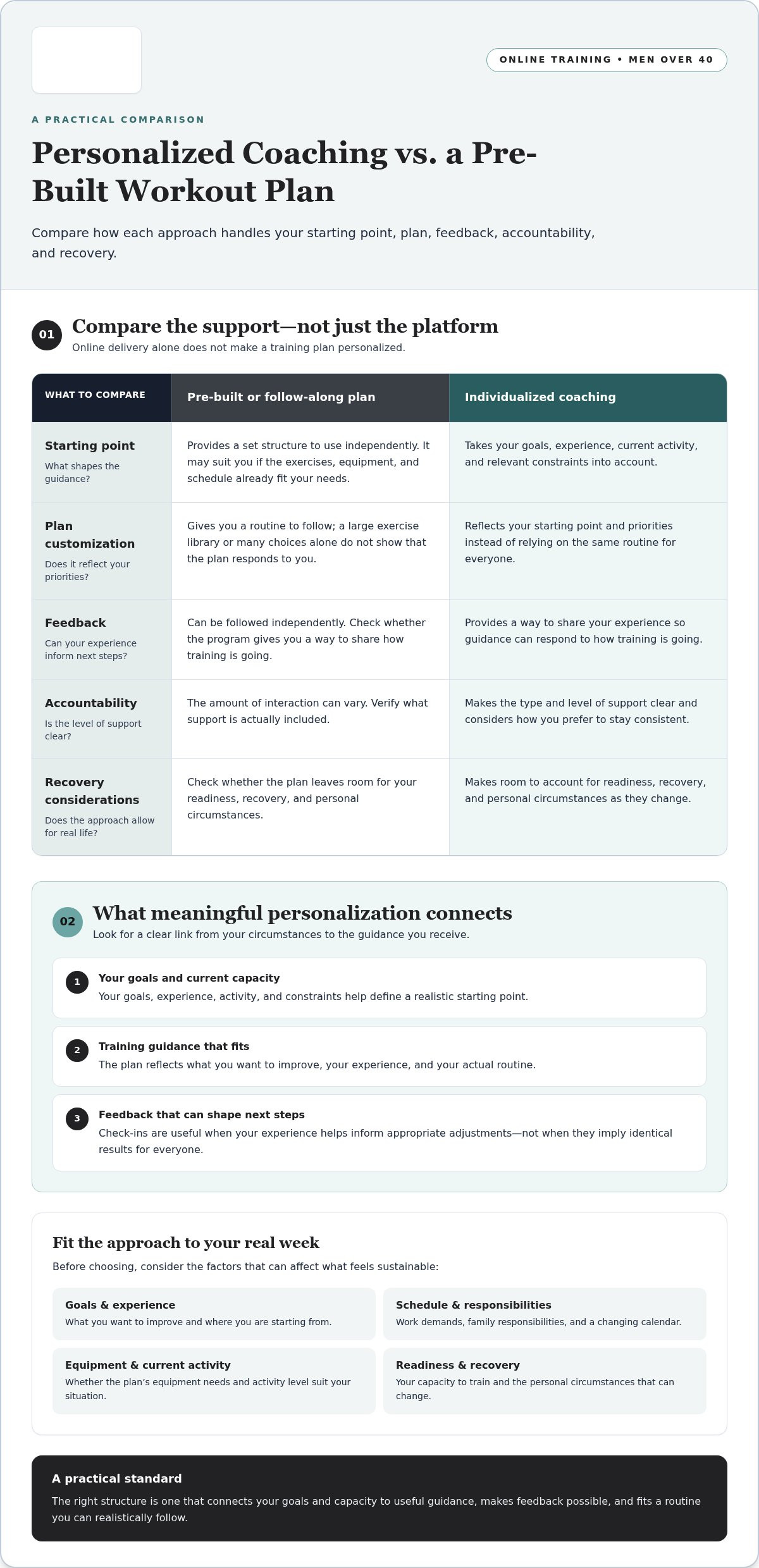
Compare the process, not just the platform. An app can deliver workouts, reminders, and progress records, but technology alone doesn’t make a plan individualized. Look for a clear connection between your goals, your starting capacity, the training guidance, and how feedback can shape next steps. When comparing options, check what happens after you sign up, not just what appears in the feature list.
| What to compare | What useful support looks like |
|---|---|
| Assessment | The approach takes your goals, experience, current activity, and relevant constraints into account. |
| Plan customization | The plan reflects your starting point and priorities instead of offering the same routine to everyone. |
| Feedback | You have a way to share how training is going, so guidance can respond to your experience. |
| Accountability | The type and level of support are clear and fit the way you prefer to stay consistent. |
| Recovery considerations | The plan leaves room to account for readiness, recovery, and personal circumstances. Strength training for older adults offers additional context on strength training later in life. |
What signals a genuinely personalized training experience?
Personalization should be evident from start to follow-up. Your stated goal and current capacity should shape the guidance, and your experience with that guidance should inform appropriate adjustments. A check-in is most useful when it helps determine next steps, rather than implying everyone will achieve identical results. An extensive exercise library may offer plenty of choice, but choice alone doesn’t show that a program responds to you.
Ask how your goal translates into training guidance and how you can communicate when something isn’t working with your schedule or current capacity. Summit Health places online personal training within a broader, personalized wellness model, alongside services such as health coaching and virtual consultations.
How to weigh accountability, flexibility, and support
Remote access can suit changing work or family schedules, but flexibility works best alongside a routine you can realistically repeat. Consider what kind of guidance helps you stay consistent: independent access to workouts, regular feedback, or a combination. Then compare that preference with the support the service actually provides. Don’t assume that every online service includes the same level of interaction.
Summit Health provides ongoing virtual monitoring and health coaching as part of its services. These can complement a personalized approach to fitness and wellness. For an online personal trainer for men over 40, meaningful support means guidance that takes your goals, capacity, and day-to-day life into account.
Training, Recovery, and Health Context: What to Consider After 40
A training plan is more useful when it accounts for the person following it. Readiness, current activity, sleep, work demands, health history, and how you respond to exercise can all influence what feels manageable. Being over 40 doesn’t automatically determine your performance or recovery needs. Pay attention to your own experience and use it to guide conversations about your training.
The Physical Activity Guidelines for Americans provide a general framework for aerobic and muscle-strengthening activity. They’re a useful reference, not an individualized prescription. A qualified coach can help shape fitness guidance around your goals and routine, but general exercise coaching isn’t the same as medical assessment or treatment. Training shouldn’t replace appropriate healthcare.
How should recovery shape a training plan?
Recovery is one factor to weigh alongside training demands, your schedule, and your response to activity. Notice whether the plan fits your energy and daily routine, and whether it’s realistic to follow consistently. If the structure repeatedly clashes with sleep, work, or other responsibilities, treat that as useful feedback to discuss and adjust the approach. It isn’t a reason to assume you need to push through unchanged.
Sleep is also part of the broader recovery picture. For more context, see Magnesium Glycinate for Sleep: The Precision Guide to Restorative Recovery. Rather than following a universal rest schedule, consider whether your overall routine supports your ability to keep training.
When is broader health context relevant?
Persistent concerns, a known health condition, or uncertainty about whether a particular activity is appropriate may call for a discussion with a qualified healthcare professional. That conversation can help clarify health considerations; a coach can then focus on fitness guidance within the appropriate scope. Not every person pursuing training needs medical treatment or clinical evaluation.
For some people, broader wellness support is relevant alongside exercise. Summit Health offers virtual consultations, comprehensive labwork, health coaching, sleep and recovery support, and ongoing virtual monitoring. Clinical evaluation, including hormone-related questions, is a separate consideration when it fits an individual’s concerns. The article Diagnostic Precision: The 2026 Guide to Hormone Blood Work and Optimization provides further context on that topic.
A thoughtful online personal trainer for men over 40 should account for individual readiness and real-life demands without treating age as a diagnosis. Use your own response to training to inform the conversation, and involve healthcare expertise when a health concern calls for it.
A Practical Checklist for Choosing Your Online Training Approach
Make the decision in sequence. Start with the outcome you want, then identify the process and level of support that could help you work toward it. “Get stronger” is a desired result. A realistic routine, personalized guidance, and feedback are parts of the process. Separating the two helps you choose a plan you can sustain, rather than expect a guaranteed transformation.
Define your goal and preferred level of guidance
Choose the priority that matters most right now. It might be strength, general fitness, consistency, or another specific goal. Then consider how you prefer to pursue it: with structured direction, ongoing coaching, or greater independence. Be practical about the time and attention you can give training, too. A good fit supports progress while respecting your actual schedule and experience.
Use a short comparison checklist before deciding
Review each option against these points. Look for clear answers, not just appealing features:
- Personalization: Does the approach connect your goals and current capacity to the plan?
- Feedback: Is there a way for your experience to inform appropriate adjustments?
- Flexibility: Can the structure work with your schedule while still supporting a repeatable routine?
- Recovery: Does the approach leave room to consider readiness, sleep, and other personal circumstances?
A large workout library or app can offer convenient access, but it doesn’t automatically provide individual coaching. Assess the actual support and whether it matches what you’re looking for. Summit Health offers online personal training within a broader wellness approach that also includes virtual consultations, comprehensive labwork, health coaching, and ongoing virtual monitoring. If you have a separate question about hormone health, the hormone therapy overview provides relevant information.
For practical service information, visit the pricing and FAQs page. Use what you’ve learned to choose a clear next step, whether that means refining your goals or exploring individualized support. Explore a personalized appointment to discuss how online personal training may fit your broader wellness priorities.
Explore Summit Health's Online Personal Training and Next Steps
Choosing online training is about more than finding workouts you can access remotely. It’s about finding an approach that reflects your goals, fits your routine, and offers useful support. Summit Health offers online personal training within a broader personalized wellness approach, giving you a way to consider fitness alongside relevant recovery and health priorities.
What a personalized, virtual wellness approach can bring together
Training goals don’t exist in isolation. Your schedule, sleep, recovery, and broader wellness priorities may all shape what feels sustainable. Summit Health offers virtual consultations, health coaching, comprehensive labwork, and ongoing virtual monitoring as part of its broader services. These services can provide context for health and wellness goals alongside fitness guidance.
Each service has its own role. Personal training focuses on fitness guidance. Health coaching supports broader wellness goals. Labwork and virtual monitoring are part of Summit Health’s wider health services. Understanding the different roles can help you decide whether you’re looking for exercise structure alone or a broader conversation about fitness and wellness.
Take the next step with clarity
Before choosing, return to the essentials: Does the approach fit your individual goals and current capacity? Is the support meaningful to you? Can the structure work with your schedule and recovery needs? Are your expectations focused on a realistic process rather than a guaranteed result? Clear answers make it easier to select a next step with confidence.
If you’re looking for an online personal trainer for men over 40, Summit Health offers online personal training within its personalized wellness services. Bring your goals and questions to a conversation about the support that aligns with your priorities.
Schedule an appointment with Summit Health to discuss a personalized approach. A thoughtful plan starts with clear goals and support that fits your life.
Build a Training Approach That Fits Your Life
The right plan isn’t defined by age alone. It should reflect your goals, experience, schedule, and individual capacity, with enough flexibility to remain realistic as life changes. When comparing an online personal trainer for men over 40, look beyond workout access: meaningful personalization, useful support, and attention to recovery help distinguish coaching from a fixed program.
Summit Health offers online personal training and health coaching within a broader telehealth-led wellness approach that also includes comprehensive labwork and ongoing virtual monitoring. These services support a wider view of personal health, while training guidance remains distinct from medical evaluation or treatment.
You don’t need every detail figured out before taking a next step. A personalized conversation can help clarify what kind of structure and support aligns with your priorities. Schedule an appointment with Summit Health to explore a personalized approach to training and wellness.
Frequently Asked Questions
Is an online personal trainer worth it for men over 40?
An online trainer may be worthwhile if the coaching fits your goals, experience, schedule, and preferred level of support. Compare what’s personalized, how feedback works, and what accountability is included. A pre-built workout can suit someone who prefers to train independently. If you want tailored guidance, look for a service that connects your circumstances to its plan rather than simply offering app access or a library of routines.
Can men over 40 build strength with online personal training?
Yes, men over 40 can pursue strength training, and online delivery doesn’t prevent a plan from being tailored. The quality of the approach depends on how well it reflects your goals, experience, health context, and current capacity. If a health concern or symptom affects exercise, discuss it with a qualified healthcare professional before changing your activity. Training guidance can support fitness goals, but it isn’t a substitute for medical evaluation or treatment.
What should an online personal trainer for men over 40 include?
Look for a clear process that connects your goals and current capacity to training guidance, with a way to review how the plan is working. Consider whether feedback, flexibility, and the level of support suit your preferences. Don’t judge personalization by the number of workouts or app features alone. For an online personal trainer for men over 40, the key is whether individual needs inform the plan and its adjustments.
How many days a week should a man over 40 work out?
There isn’t one weekly schedule that fits every man over 40. The right routine depends on factors such as your experience, goals, current activity, recovery, health context, and available time. A training professional can help you consider these factors when shaping a realistic approach. Choose a routine that fits your circumstances rather than copying a demanding schedule that worked for someone else.
Can online personal training account for injuries or health conditions?
Online personal training can take relevant limitations into account, but a trainer doesn’t replace medical evaluation or treatment. Share concerns through the appropriate care process, and follow guidance from a qualified healthcare professional. Training should reflect relevant information and remain within the coach’s role. If a condition or symptom makes exercise uncertain, seek medical advice before starting or changing your activity.
How is online personal training different from a workout app?
A workout app may offer exercises, routines, or a way to follow a program independently. Personal training is distinguished by the level of individual guidance involved. Depending on the service, that may include feedback or adjustments based on your goals and experience. App access by itself doesn’t prove a plan is personalized. Focus on the actual coaching support and whether it matches the way you prefer to train.
Can online personal training support goals beyond strength?
Yes. Depending on your priorities and circumstances, training may support goals such as general fitness, consistency, or mobility. A broader wellness approach may also consider recovery and other relevant health factors, but one workout plan shouldn’t be expected to address every concern. Clarify what matters most to you, then choose guidance that aligns with those priorities. Summit Health offers online personal training alongside health coaching and broader wellness services.

Article by
Dr. David Richardson
David Richardson, is the founder and CEO of Summit Health and the author of "Insights from the Summit", where he writes about hormone optimization, metabolic health, thyroid function, longevity, and preventive medicine.
After entering healthcare in 2009, David became increasingly interested in a question that traditional medicine often struggles to answer:
Why do so many people continue to feel terrible despite being told their labs are "normal"?
That question eventually led him into the field of health optimization in 2020, where he became passionate about understanding physiology at a deeper level and helping patients uncover the root causes of their symptoms rather than simply managing them.
Today, David's philosophy is simple: normal and optimal are not the same thing. Every patient is physiologically unique, and meaningful healthcare begins by listening to symptoms, understanding the science, and recognizing that laboratory values are only one piece of a much larger picture.
Through Summit Health and Insights from the Summit, David's mission is to help people better understand their bodies, ask better questions, and make informed decisions that improve both their health span and quality of life.


