

IMPORTANT DISCLAIMERS
Medical Disclaimer: The information in this article is provided for educational purposes only and is not intended as medical advice or a substitute for individualized medical care. Every person's health needs are unique. Always consult a qualified healthcare professional before starting, stopping, or changing any medication, supplement, or treatment plan. -------
Article Disclaimer: Articles are reviewed and published by Summit Health to provide evidence-based educational information. While Summit Health strives to provide reliable and current health information, medical knowledge is always evolving over time. Depending on when you are reading this content, it may not reflect the latest research or apply to your individual circumstances.
More rest isn’t always the first step toward feeling more energized. If work, exercise, and everyday tasks feel harder than they used to, you may be searching for how to get energy back during menopause while waking up tired despite spending enough time in bed.
That exhaustion is real, but it doesn’t always have a single cause. Hormonal changes can contribute, especially when night sweats disrupt sleep, yet stress, health conditions, medications, and other factors may also affect energy. Looking for patterns in your symptoms can help you choose practical next steps instead of guessing at the cause.
This guide covers common contributors to menopause-related fatigue and practical ways to support sleep, movement, nutrition, and recovery. It also explains when persistent or disruptive fatigue may warrant a clinician-led assessment. A personalized review of your symptoms and broader health picture, informed by comprehensive labwork when appropriate, can help clarify next steps. The aim is a plan that supports steadier energy and helps you feel more capable in daily life.
Key Takeaways
- Distinguish low energy from sleepiness, weakness, or reduced motivation to describe your symptoms clearly.
- Use a simple daily log to spot patterns in sleep, hot flashes, activity, mood, and energy before changing your routine.
- Explore how to get energy back during menopause by matching supportive habits and symptom-focused care to your needs.
- If fatigue keeps disrupting daily life, a clinician-led assessment can help evaluate possible contributors and shape individualized next steps.
How to Get Energy Back During Menopause Starts with Understanding the Fatigue
Before choosing a strategy, define what “low energy” means in your day. Menopause-related fatigue is a symptom, not a diagnosis, and it isn’t an inevitable part of the transition. You might feel drained, run out of stamina sooner, or find it harder to concentrate. These experiences can overlap, but describing what has changed can make it easier to identify a useful next step.
Menopause fatigue can have several overlapping contributors, not one universal cause. Start by noticing your own pattern rather than assuming hormones explain everything. The stages of Menopause can coincide with shifts in symptoms and daily experience, but each person’s transition is different.
What menopause fatigue can feel like
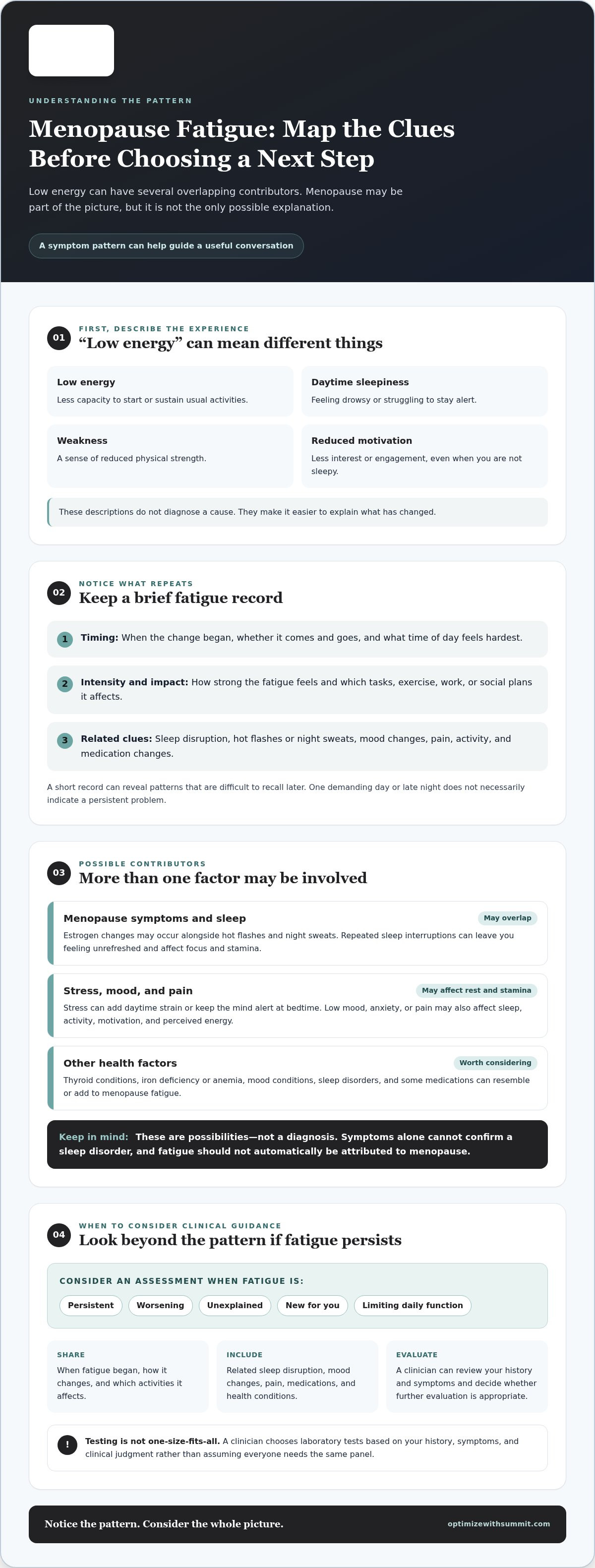
Low energy is a sense of having less capacity to start or sustain your usual activities. Daytime sleepiness is different: you feel drowsy and might struggle to stay alert. Weakness describes reduced physical strength, while reduced motivation means it’s harder to feel interested or engaged, even if you aren’t sleepy. These descriptions don’t diagnose the cause, but they help make the experience more specific.
Some variation is normal. One demanding day, a late night, or a busy stretch doesn’t necessarily point to a persistent problem. Pay closer attention when tiredness recurs, lasts, or starts affecting work, movement, concentration, or everyday responsibilities. Note:
- When the change began and whether it comes and goes
- What time of day feels hardest and how intense the fatigue is
- Whether it affects particular tasks, exercise, or social plans
- What else is happening, such as restless sleep or changes in mood
A brief record can reveal patterns that are difficult to recall later. It also gives you clearer language for discussing the concern if you seek clinical guidance.
Why energy changes during the menopause transition
During perimenopause and menopause, estrogen levels fluctuate and eventually decline. These changes may occur alongside hot flashes and night sweats that interrupt sleep. Even if you spend enough hours in bed, repeated waking or difficulty getting back to sleep may leave you feeling unrefreshed and less able to focus the next day. Several disrupted nights can make routine tasks feel more demanding.
Sleep is one pathway, not the whole explanation. Mood changes, pain, stress, and shifting responsibilities can also affect how rested or capable you feel. Hormonal changes may contribute, but they don’t account for everyone’s fatigue. If low energy recurs, note what comes with it and how it affects your daily activities. That context helps you consider which possible contributors to address first.
What May Be Draining Your Energy: Menopause, Sleep, or Another Health Factor?
Fatigue can feel like a menopause symptom, but the transition may not be the only factor affecting your energy. Hot flashes and night sweats can interrupt sleep; mood changes, pain, and ongoing life stress can also make it harder to feel rested or sustain your usual pace. Menopause may be part of the picture, but persistent fatigue can have other causes. Sorting through these possibilities is a practical step toward understanding how to get energy back during menopause.
How hot flashes and disrupted sleep affect daytime energy
A hot flash or night sweat may wake you fully or disturb sleep without you clearly remembering waking. Repeated interruptions can leave you feeling less refreshed, with concentration and stamina affected the next day. Track nighttime symptoms alongside morning energy and daytime focus. A pattern can guide a useful conversation, but symptoms alone can’t confirm insomnia, sleep apnea, or another sleep disorder.
Look at the wider pattern, too. Pain may make it harder to get comfortable or stay active, while stress can keep your mind alert at bedtime or add to daytime strain. Low mood or anxiety may affect sleep, motivation, and perceived energy. These factors can interact: a difficult night may make pain or stress feel harder to manage the next day. That cycle deserves attention, not blame.
When fatigue deserves a broader health assessment
Consider a clinician-led assessment if fatigue is persistent, worsening, unexplained, new for you, or limiting daily function. A clinician can review your symptoms, health history, medications, and sleep, then decide whether further evaluation is appropriate. The Menopause Society offers evidence-based information about menopause; a broader clinical assessment can also help distinguish menopause-related symptoms from other possible contributors.
Several health factors can resemble or add to menopause fatigue. These include thyroid conditions, iron deficiency or anemia, mood conditions, and sleep disorders. Some medications can also affect alertness or sleep. This doesn’t mean one of these is necessarily the cause. It means recurring fatigue shouldn’t automatically be attributed to menopause, particularly if it’s a marked change or comes with other symptoms that concern you.
- Note the pattern: when fatigue began, how it changes, and what activities it affects.
- Record related symptoms: sleep disruption, mood changes, pain, or medication changes.
- Discuss the full picture: mention relevant health conditions and how fatigue affects work, exercise, or daily tasks.
Testing is not one-size-fits-all. A clinician selects laboratory tests based on your history, symptoms, and judgment, rather than assuming everyone needs the same panel. Comprehensive labwork may help inform an individualized care plan when clinically appropriate. A concise symptom record can make the discussion more focused and help clarify sensible next steps.
Lifestyle Changes and Hormone Therapy: Which Menopause Energy Strategies Fit?
There isn’t one energy strategy that suits every menopause experience. Match the approach to the pattern you notice: build supportive habits for general well-being, consider symptom-focused care when a specific problem disrupts sleep or daily life, and discuss hormone treatment with a clinician when your symptoms and health history make it a relevant option. The goal is a tailored plan, not an all-or-nothing choice.
Supportive habits
Regular movement, balanced meals, hydration, and a consistent sleep routine can support overall well-being. These are useful foundations, but they may not resolve every cause of fatigue.
Symptom-focused care
If a particular symptom is affecting rest or daily function, discuss options that address that concern. The right approach depends on what you’re experiencing and your broader health picture.
Clinician-guided hormone treatment
Hormone therapy may be considered for appropriate menopause symptoms after an individualized discussion of potential benefits, risks, and treatment approach. It isn’t a guaranteed energy treatment or the right choice for everyone.
Foundational habits that support steadier energy
Start with changes you can repeat. If activity has been limited, build gradually with movement suited to your ability, such as walks and manageable strength exercises. Keep sleep and wake times consistent where possible, and use a calming wind-down routine. Choose balanced meals that work for your preferences and schedule, and drink fluids regularly. Avoid responding to fatigue with restrictive food rules or supplements without guidance.
Small adjustments are easier to assess than a complete routine overhaul. For example, add a short walk on selected days, then notice how it affects stamina and sleep before increasing activity. If a habit leaves you feeling worse, adapt it. The Office on Women’s Health also provides information on menopause symptoms, including sleep changes and fatigue, that can help you frame questions about supportive care.
What to understand before considering hormone therapy
Hormone therapy is a clinician-guided option for some menopause symptoms, not a universal remedy for low energy. Whether it may fit depends on the symptoms being treated, personal and family health history, individual risks, and the treatment approach. A clinician can review those factors and discuss potential benefits and limitations before a decision is made.
For a closer look at how individualized care can inform treatment decisions, explore Summit Health’s hormone therapy overview. Use it as context for a clinical discussion, not as a substitute for one. Your plan may combine sustainable habits with symptom-focused support, or it may call for a broader assessment before choosing an intervention. Match the next step to the concern that is most affecting your everyday energy.
A Practical Plan to Rebuild Energy During Menopause, One Step at a Time
A clear sequence makes it easier to decide what to try first without turning fatigue into a long list of self-directed fixes. Notice patterns, make one manageable adjustment, and review whether it helps. This approach won’t promise a quick reset, but it can give you more useful information about what supports your energy and when to seek clinical input.
- 1. Track patterns. For several days or longer, note sleep, hot flashes, activity, mood, and energy. Record energy at consistent times, such as morning and afternoon, so you can compare like with like.
- 2. Address one routine. Choose a practical change that fits the pattern you notice. If evenings feel unsettled, try a calmer wind-down routine; if activity has dropped, consider a gentle increase suited to your ability.
- 3. Assess symptoms. Consider whether fatigue is improving, staying the same, or worsening, and whether it still affects daily function. Include other symptoms and relevant changes in your health or medications.
- 4. Review progress. Look for recurring patterns rather than judging the plan by one good or difficult day. Keep what feels sustainable, adjust what doesn’t, and discuss persistent fatigue with a clinician instead of continually adding interventions.
Track symptoms to find patterns worth addressing
Keep the log brief enough to maintain. A simple entry could look like this:
- Sleep: bedtime, wake time, and interruptions
- Hot flashes: whether they occurred and whether they woke you
- Activity: movement or exercise during the day
- Mood: a short note on how you felt
- Energy: a simple rating at the same times each day
A pattern, such as lower morning energy after nights with repeated waking, is a clue to discuss, not a diagnosis. Bring a concise summary and a few questions to a clinical appointment. The menopause timeline guide can provide context on how the transition may unfold, while recognizing that each person’s experience differs.
Choose one change, then reassess
Changing several routines or starting multiple supplements at once makes it harder to tell what, if anything, is helping. Focus on one sustainable adjustment, then observe its effect. There’s no universal schedule for improvement. If fatigue remains unexplained, disrupts daily life, or worsens, a clinician can help assess symptoms and consider appropriate next steps.
If ongoing fatigue is affecting your routine, connect with Summit Health to discuss a personalized assessment.
When to Seek Personalized Care for Menopause Fatigue
Consider clinical evaluation if fatigue keeps returning, worsens, feels unexplained, or interferes with work, exercise, or everyday responsibilities. It’s also worth discussing fatigue that appears alongside other symptoms or a noticeable change in your health. Menopause may contribute, but a personalized assessment can help clarify what else deserves attention and which next steps fit your circumstances.
What a personalized fatigue assessment can clarify
A focused review can bring together your symptom history, sleep patterns, medications, health background, and relevant laboratory findings. No single result should be interpreted in isolation; clinicians consider findings alongside your experience and overall health. Summit Health’s telehealth-led approach uses comprehensive labwork to inform individualized plans, with virtual follow-up and health coaching to monitor progress and refine care as symptoms or priorities change.
The purpose is a better-informed plan, not a guaranteed energy outcome. Depending on your history and symptoms, a clinician may discuss options such as hormone therapy or sleep and recovery support. Treatment decisions are individualized and made with attention to your broader health picture. Follow-up is an opportunity to share what has changed, identify remaining concerns, and revisit whether the plan still fits.
Prepare for a focused telehealth conversation
A little preparation can help you use the conversation well. Bring a concise timeline of when fatigue began, how it affects daily life, and what seems to influence it. Include notes about sleep and daytime energy, along with relevant health or medication changes. A short list is enough. You don’t need to arrive with a diagnosis or a complete explanation.
- Symptom notes: Summarize fatigue, sleep patterns, and any related symptoms you’ve noticed.
- Health information: List current medications, supplements, and known health conditions.
- Questions: Write down what you want to understand about possible causes, assessment, and treatment options.
The hormone quiz can help you organize your concerns before a conversation. It isn’t a diagnosis or a replacement for a clinician’s assessment. Share any relevant takeaways during your appointment so they can be considered alongside your history and other findings.
Personalized care is a process of assessment, shared decisions, and review. If fatigue persists or is limiting your life, schedule a personalized appointment to discuss your symptoms and potential next steps with Summit Health.
Take the Next Step Toward Steadier Energy
Energy can improve through informed, individual adjustments rather than a single universal fix. Refine your approach as your symptoms, priorities, and daily demands change. The most useful next step may be a small routine shift, a closer look at a persistent symptom, or a clinician-guided conversation about options that fit your health history.
Understanding how to get energy back during menopause starts with treating your experience as meaningful information, not something you simply have to push through. A personalized care plan can use diagnostic findings to guide decisions, then adapt through continued monitoring and health coaching. Progress is not always immediate, but thoughtful assessment and follow-up can help you move forward with greater clarity.
If fatigue is affecting your quality of life, schedule a personalized appointment with Summit Health to discuss your symptoms and possible next steps. A considered plan can help you build toward feeling more rested, capable, and confident in everyday life.
Frequently Asked Questions
Can menopause cause extreme fatigue even after a full night of sleep?
Yes, menopause can contribute to substantial fatigue even if you’ve spent a full night in bed. Night sweats or hot flashes may interrupt sleep without you fully noticing, and sleep quality matters as much as time in bed. Other factors, including sleep disorders, medication effects, or health conditions, can also leave you exhausted. If the fatigue is intense, persistent, or unusual for you, discuss it with a clinician.
How can I get my energy back during menopause naturally?
To explore how to get energy back during menopause naturally, start with one realistic change rather than a full lifestyle overhaul. For example, take a short walk when you tend to feel sluggish, or prepare a balanced meal before a busy stretch. Keep a regular sleep schedule where possible, and drink water throughout the day. If these steps don’t help or fatigue is interfering with daily life, seek clinical guidance.
Is hormone therapy an effective treatment for menopause fatigue?
Hormone therapy may help some people feel better if menopause symptoms such as hot flashes and night sweats are disrupting sleep, but it isn’t a guaranteed or stand-alone treatment for fatigue. A clinician can weigh the symptoms you want to address against your health history, preferences, and potential risks. If fatigue has another cause, hormone therapy may not resolve it, so treatment decisions should follow an individualized assessment.
What vitamin deficiency causes fatigue during menopause?
No single vitamin deficiency explains fatigue for everyone during menopause. Low vitamin B12 or vitamin D may contribute to tiredness in some people, while iron deficiency can also cause fatigue, though iron is a mineral, not a vitamin. Symptoms alone can’t identify a deficiency. Avoid starting high-dose supplements based only on fatigue; a clinician can decide whether testing is appropriate and recommend treatment based on the findings.
When should I see a doctor about menopause fatigue?
Arrange a clinical discussion if fatigue is persistent, getting worse, unexplained, or making usual responsibilities difficult. Seek advice sooner if it begins suddenly or comes with other new symptoms, such as breathlessness, unusual bleeding, or a marked change in mood. Before your visit, note when the fatigue started and how it affects your day. That context can help focus the discussion on suitable assessment and next steps.
Can menopause fatigue be caused by something other than hormones?
Yes. Menopause may coincide with fatigue from causes that aren’t hormonal, including thyroid problems, anemia, sleep disorders, mood conditions, or medication effects. For example, feeling tired alongside persistent cold sensitivity or a recent medication change is useful context to share, but it doesn’t identify the cause by itself. A clinician can review your history and symptoms to determine whether further evaluation or testing makes sense.
How long does menopause fatigue usually last?
There isn’t a reliable timeline that applies to everyone. Fatigue may fluctuate as symptoms, sleep, and life circumstances change, and it can continue if an underlying contributor remains unaddressed. Rather than waiting for a particular stage to pass, note whether your energy is improving, staying similar, or declining over time. If it remains disruptive or unexplained, a clinician can help assess possible causes and discuss an appropriate plan.

Article by
Dr. David Richardson
David Richardson, is the founder and CEO of Summit Health and the author of "Insights from the Summit", where he writes about hormone optimization, metabolic health, thyroid function, longevity, and preventive medicine.
After entering healthcare in 2009, David became increasingly interested in a question that traditional medicine often struggles to answer:
Why do so many people continue to feel terrible despite being told their labs are "normal"?
That question eventually led him into the field of health optimization in 2020, where he became passionate about understanding physiology at a deeper level and helping patients uncover the root causes of their symptoms rather than simply managing them.
Today, David's philosophy is simple: normal and optimal are not the same thing. Every patient is physiologically unique, and meaningful healthcare begins by listening to symptoms, understanding the science, and recognizing that laboratory values are only one piece of a much larger picture.
Through Summit Health and Insights from the Summit, David's mission is to help people better understand their bodies, ask better questions, and make informed decisions that improve both their health span and quality of life.


