

IMPORTANT DISCLAIMERS
Medical Disclaimer: The information in this article is provided for educational purposes only and is not intended as medical advice or a substitute for individualized medical care. Every person's health needs are unique. Always consult a qualified healthcare professional before starting, stopping, or changing any medication, supplement, or treatment plan. -------
Article Disclaimer: Articles are reviewed and published by Summit Health to provide evidence-based educational information. While Summit Health strives to provide reliable and current health information, medical knowledge is always evolving over time. Depending on when you are reading this content, it may not reflect the latest research or apply to your individual circumstances.
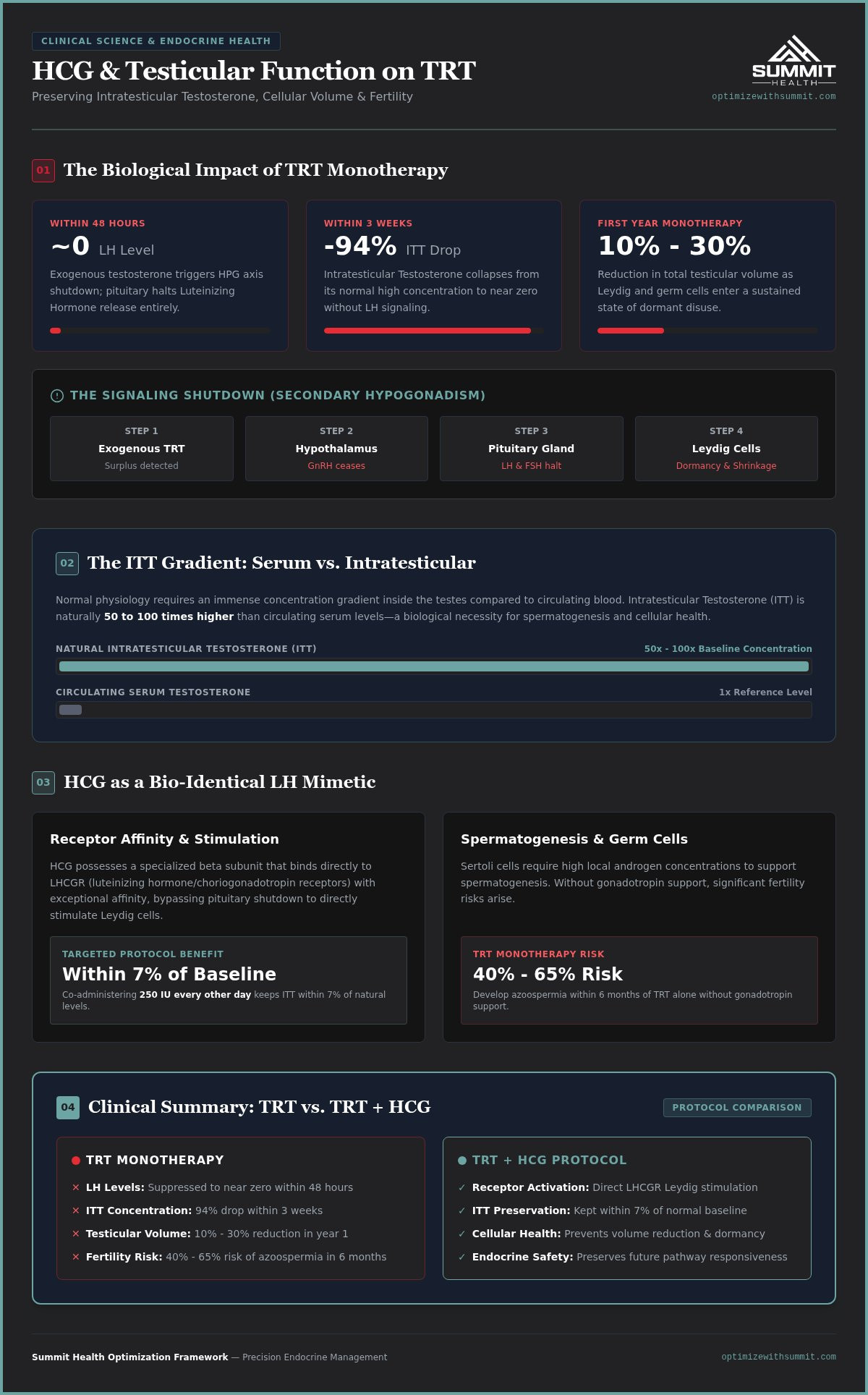
Exogenous testosterone monotherapy suppresses your natural luteinizing hormone to near zero. This causes a 94% drop in intratesticular testosterone within just three weeks. This clinical reality often leads to a 30% reduction in testicular volume, a physical change that many men find unsettling. You shouldn't have to trade your aesthetic integrity or future fertility for the benefits of optimization. Understanding the role of HCG and preventing testicular atrophy while on TRT is essential for any man pursuing a high-performance lifestyle. It's not just about the numbers on a lab report; it's about maintaining your biological baseline.
You can maintain your original testicular size and preserve your fertility by mastering the clinical science of HCG. This guide explores how this LH-mimetic functions as a vital safeguard for your hormonal integrity. We will detail the specific subcutaneous protocols used to sustain intratesticular testosterone levels and explain why relying on TRT alone is an incomplete strategy for long-term vitality. You'll gain the data-driven framework needed to ensure your endocrine system remains fully functional while you reach your peak.
Key Takeaways
- Understand the HPG axis feedback loop and why exogenous testosterone necessitates proactive intervention to prevent Leydig cell dormancy.
- Master the clinical science of HCG and preventing testicular atrophy while on TRT by utilizing it as a precise, bio-identical LH mimetic.
- Identify the specific dosing protocols required to maintain original testicular volume or reverse existing atrophy through targeted gonadotropin therapy.
- Learn why maintaining high intratesticular testosterone is critical for preserving fertility and ensuring a complete hormonal profile beyond simple serum levels.
- Discover how data-driven telehealth management allows for real-time adjustments to your optimization plan for peak long-term vitality.
The Biological Cost of Optimization: Why TRT Causes Testicular Atrophy
The human body prioritizes efficiency. When you introduce exogenous hormones through hormone therapy, your Hypothalamic-Pituitary-Gonadal (HPG) axis recognizes the surplus. It initiates a total shutdown of natural production to maintain homeostasis. The signal stops. The system goes dark. The hypothalamus ceases the release of Gonadotropin-Releasing Hormone (GnRH), which tells the pituitary gland to stop producing Luteinizing Hormone (LH) and Follicle-Stimulating Hormone (FSH). This is the biological cost of optimization. Without these gonadotropins, the testes lose their primary stimulus and enter a state of dormancy.
The resulting testicular atrophy is a predictable cellular response to this lack of signaling. Leydig cells, which produce endogenous testosterone, and germ cells, responsible for sperm production, begin to shrink from disuse. Clinical research indicates that men on TRT monotherapy experience an average 10% to 30% reduction in testicular volume within the first year. This isn't just an aesthetic concern; it represents a 94% drop in intratesticular testosterone (ITT) and a significant risk of azoospermia. Understanding the clinical application of HCG and preventing testicular atrophy while on TRT is the only way to maintain your biological integrity while pursuing peak performance.
The Role of Luteinizing Hormone (LH)
LH serves as the master messenger for your endocrine health. It binds directly to receptors on Leydig cells to trigger the synthesis of testosterone. Within 48 hours of your first TRT dose, LH levels plummet to near zero. The engines of the testes effectively turn off. This rapid suppression leads to a noticeable loss of firmness and volume as the cellular structures within the scrotum become inactive. Without an LH analog to bridge the gap, this state of dormancy remains permanent throughout the duration of your therapy.
Secondary Hypogonadism Explained
TRT-induced suppression is a form of secondary hypogonadism. Unlike primary testicular failure, where the organs are physically incapable of function, secondary hypogonadism is a signaling failure. The hardware is functional, but the software has been disabled by the brain's feedback loop. This distinction is vital for high-level health optimization. Many traditional providers suggest a reactive approach, yet waiting for visible shrinkage often leads to Leydig cell desensitization. Proactive management ensures that your natural pathways remain "online" and responsive, facilitating a much smoother transition if you ever choose to cease therapy in the future. Maintaining the signal from day one is the hallmark of a sophisticated protocol.
HCG as a Bio-Identical LH Mimetic: Preserving Intratesticular Function
The signal returns. Human Chorionic Gonadotropin (HCG) functions as a molecular surrogate for luteinizing hormone (LH). While exogenous testosterone satisfies the body's peripheral demand, it leaves the local testicular environment depleted. Normal intratesticular testosterone (ITT) levels are naturally 50 to 100 times higher than circulating blood levels. This massive gradient is essential for testicular health and sperm maturation. Implementing a protocol involving HCG and preventing testicular atrophy while on TRT ensures this environment remains optimized. Clinical data confirms that co-administering 250 IU of HCG every other day keeps ITT within 7% of its baseline, effectively preventing the dormancy described in previous sections.
The Science of LH Receptors
HCG possesses a unique beta subunit that allows it to bind to the LHCGR (luteinizing hormone/choriogonadotropin receptor) with exceptional affinity. It effectively restarts the biological engines by stimulating Leydig cells directly. This bypasses the suppressed HPG axis. By maintaining this active stimulation, you prevent the cellular shrinkage that characterizes testicular volume loss. It is a proactive step toward biological preservation that keeps the hardware functional and responsive.
Protection of the germ cells is equally vital for long-term vitality. Sertoli cells require high local androgen concentrations to facilitate spermatogenesis. Without gonadotropin support, 40% to 65% of men on TRT develop azoospermia within six months. HCG acts as the essential bridge that preserves your future options. It maintains the internal machinery required for sperm production, ensuring that performance optimization today doesn't compromise your fertility for tomorrow.
Beyond Testosterone: The Neurosteroid Connection
True hormonal integrity extends beyond serum testosterone numbers. HCG stimulates the conversion of cholesterol into pregnenolone, the precursor for the entire neurosteroid cascade. Many men report enhanced cognitive clarity and a greater sense of well-being when HCG is included in their hormone therapy plan. This is because HCG supports the upstream pathways that TRT monotherapy typically bypasses. You aren't just replacing a single hormone. You are maintaining a comprehensive, high-performance biological profile. Mastering the use of HCG and preventing testicular atrophy while on TRT is the cornerstone of a sophisticated optimization strategy. Achieving this level of balance requires a bespoke diagnostic approach tailored to your specific physiology.
Strategic Protocols: Preventing and Reversing Testicular Shrinkage
Prevention is the elite standard. Starting HCG alongside your TRT protocol ensures that the "shut down" effect never takes hold. This proactive approach maintains scrotal aesthetics and keeps the underlying machinery operational from day one. For those who began TRT monotherapy and are now witnessing volume loss, a reversal protocol is required. While more intensive, restoring your biological baseline is entirely possible through structured gonadotropin therapy. It's about reclaiming what was lost while continuing to optimize your performance.
Micro-dosing is the key to stability. Administering smaller amounts of HCG multiple times per week prevents the hormonal volatility associated with large, infrequent boluses. This strategy ensures a steady stimulus to the Leydig cells, keeping your natural pathways active without overwhelming the system. It creates a synergistic environment where exogenous testosterone provides the performance edge, while HCG maintains your biological "completeness."
The 12-Week Reversal Timeline
Restoration follows a predictable biological sequence. In weeks 1-2, the primary focus is on sensation. Many men notice the return of "fullness" and the disappearance of the dull ache often linked to atrophy. Weeks 3-6 mark the phase of visible progress. Testicular volume begins to measurably increase as the cellular structures re-engage. Finally, in weeks 6-12, size stabilizes. During this window, spermatogenesis often recovers, marking the restoration of your fertility potential and long-term hormonal integrity.
Precision Dosing Strategies
Dosage must be bespoke. Most patients find success with 250 IU to 500 IU administered subcutaneously two to three times weekly. This range is highly effective for HCG and preventing testicular atrophy while on TRT. However, higher doses ranging from 1,500 IU to 3,000 IU per week are sometimes utilized for a short duration to jumpstart a system that has been dormant for years. Precision is the difference between average results and peak performance.
Monitoring is non-negotiable. HCG stimulates intratesticular aromatase, which can increase estradiol levels. Without oversight, this can lead to unwanted side effects like water retention or mood swings. Utilizing comprehensive labwork allows your provider to adjust your HCG and testosterone ratios in real-time. This data-driven approach ensures your protocol remains optimized for your unique physiology, protecting your health while you pursue your goals.
The Performance Paradigm: Why Intratesticular Testosterone Matters
Serum levels are only half the story. You can achieve optimal testosterone numbers on a lab report while your testes remain biologically dormant. This discrepancy creates a "hollow" optimization where peripheral tissues are fueled, but the local gonadal environment is neglected. High circulating testosterone does not guarantee testicular health. True performance requires an integrated system where every organ remains active and responsive. By utilizing HCG and preventing testicular atrophy while on TRT, you ensure your body functions as a complete biological unit rather than a collection of suppressed pathways.
Physical completeness drives psychological confidence. The noticeable shrinkage associated with TRT monotherapy often creates an underlying sense of anxiety or loss of vigor. Maintaining your original size and sensation isn't just about aesthetics. It's about the self-perception of being "whole." Men who include HCG in their protocols frequently report a significant psychological edge. They feel more connected to their physiology, which translates directly into increased confidence in both professional and personal arenas. It is the refinement of your current state into a premium version of yourself.
Sexual function often sees a marked improvement with HCG administration. While TRT addresses systemic libido, HCG enhances local sensation and the physical "fullness" of the experience. Many men report heightened sensitivity and a more robust drive when the local hormonal environment is restored. Furthermore, HCG acts as a safeguard against the hormonal "crash" that can occur if you ever choose to pause therapy. By keeping the Leydig cells responsive, you ensure that your natural production can be restored with far greater efficiency. You aren't just optimized for today. You are protected for the future.
Maintaining the 'Full' Hormonal Cascade
HCG serves as a foundation therapy for men focused on long-term longevity. It ensures that the testes don't just exist, but actively participate in your endocrine health. Intratesticular Testosterone (ITT) is the local fuel for spermatogenesis. By maintaining this high local concentration, you protect the sensitivity and responsiveness of the entire gonadal system. This upstream support prevents the "biological hibernation" that occurs when you rely solely on exogenous injections. It's a more sophisticated way to manage your vitality.
Fertility as a Vital Sign
Biological vigor is often mirrored by your fertility status. Even if fatherhood isn't an immediate priority, preserving the option is a hallmark of a forward-thinking health plan. HCG allows you to maintain sperm production and testicular integrity without sacrificing the performance benefits of TRT. This dual-action approach is central to Summit Health's approach to optimization. You deserve a protocol that respects your future as much as your present performance. To secure your biological integrity and maintain your peak, schedule your consultation today.
The Summit Health Protocol: Precision Management of Your Hormonal Health
Precision is paramount. Optimization is not a static destination; it is a dynamic process that requires constant refinement. At Summit Health, we move beyond the standard "one size fits all" approach to hormone therapy. We understand that HCG and preventing testicular atrophy while on TRT is a critical component of a man's long-term vitality. Our protocol is designed for the individual who demands peak performance without compromising biological integrity. It is a sophisticated, data-driven journey led by experts who treat you as an equal partner in your health.
Telehealth-led consultations provide seamless access to elite care. Our nationwide network allows you to manage your protocol from the comfort of your home while receiving the same level of scrutiny as a professional athlete. This remote monitoring ensures that your HCG dosages are optimized in real-time based on your body's specific responses. We don't just prescribe; we calibrate. This level of intentionality is what separates a traditional medical provider from a high-performance health partner.
Data-Driven Optimization
Data defines our decisions. We utilize comprehensive labwork to guide every adjustment in your HCG and testosterone ratios. In 2026, clinical standards demand more than just checking total testosterone levels. We monitor a broad spectrum of biomarkers, including sensitive estradiol, hematocrit, and SHBG, to ensure your system remains in perfect balance. This rigorous oversight prevents the side effects often associated with unmonitored therapy, ensuring your journey is both safe and effective for the long term.
The Peak Performance Experience
You are an athlete of life. We believe that hormonal health is the foundation of every other pillar of wellness. This is why our protocol integrates HCG use with broader lifestyle refinements, including restorative sleep and recovery strategies. When your endocrine system is optimized, your body's ability to recover from physical and mental stress is significantly enhanced. We provide the tools and the coaching necessary to refine your current state into its most advanced version.
The path forward starts with a single step toward clarity. Understanding your current baseline is essential for mapping your trajectory to peak performance. We invite you to experience the Summit Health difference through our streamlined diagnostic process. Ready to optimize? Take our Hormone Quiz to begin your journey toward a more complete and empowered life.
Secure Your Biological Integrity
Achieving peak performance shouldn't require a compromise on your fundamental biology. By integrating HCG into your regimen, you bridge the gap between exogenous optimization and natural function. You maintain the essential signal to your Leydig cells, preserving both the physical volume of your testes and your long-term fertility. This proactive approach ensures a complete hormonal profile that supports cognitive clarity and sexual sensation beyond just serum testosterone levels. Mastering the use of HCG and preventing testicular atrophy while on TRT is the hallmark of a sophisticated, longevity-focused strategy.
Success requires more than just a prescription. It demands expert telehealth monitoring and precision lab-driven protocols tailored to your unique physiology. Our national high-performance network is dedicated to guiding you from your current baseline to your absolute peak. You deserve a protocol that evolves with your needs and respects your future biological options. Your journey toward a refined, optimized life starts with data-driven precision and intentional management.
Take control of your hormonal health today.
Optimize Your Protocol with Summit Health
Frequently Asked Questions
Can HCG completely prevent testicular shrinkage on TRT?
Yes. HCG acts as a bio-identical LH mimetic that maintains the vital signal to your Leydig cells. By providing this direct stimulation, it prevents the cellular dormancy that leads to volume loss. When administered correctly, it keeps testicular size and firmness at your original baseline levels. This is why HCG and preventing testicular atrophy while on TRT is considered a gold standard for men who value their biological integrity.
How long does it take for HCG to reverse testicular atrophy?
Reversal typically follows a 12-week clinical timeline. You may notice an initial return of testicular fullness and sensation within the first two weeks of therapy. Measurable increases in volume generally occur between weeks three and six as the cellular structures re-engage. By the end of the third month, most men see a stabilization of size and a significant restoration of the internal environment required for peak function.
Is it better to start HCG at the beginning of TRT or wait?
Proactive administration is the most efficient strategy for long-term vitality. Starting HCG at the onset of your optimization journey prevents the shutdown of the HPG axis before it occurs. This eliminates the need for high-dose reversal protocols later in your treatment. Maintaining your natural pathways from day one ensures a more seamless experience and protects your Leydig cells from the desensitization often caused by long-term inactivity.
What is the standard HCG dosage for preventing atrophy?
Precision dosing is essential for optimal results. A common maintenance protocol involves 250 IU to 500 IU administered subcutaneously two to three times per week. This micro-dosing approach provides a steady stimulus to the testes without overwhelming your system. Every individual requires a bespoke plan. We use comprehensive labwork to calibrate your specific dosage based on your unique physiological response and markers of biological balance.
Does HCG increase estrogen levels while on TRT?
HCG stimulates intratesticular aromatase, which can lead to higher estradiol levels in some men. This conversion is a natural byproduct of increased Leydig cell activity. To manage this effectively, we employ virtual monitoring and frequent diagnostic testing. Adjusting your testosterone-to-HCG ratio ensures you maintain the benefits of HCG and preventing testicular atrophy while on TRT without experiencing unwanted estrogenic side effects like water retention or mood fluctuations.
Can I maintain fertility on TRT by using HCG?
Yes. HCG is the primary clinical tool used to preserve spermatogenesis during hormone therapy. It maintains the high concentration of intratesticular testosterone necessary for sperm maturation. While TRT monotherapy often leads to azoospermia, adding HCG keeps the engines of the testes running. This allows you to pursue your performance goals today while keeping the option of fatherhood open for the future through evidence-based protocols.
What happens if I stop taking HCG while remaining on TRT?
If you cease HCG while continuing TRT, the signal to your testes will disappear. This results in a rapid decline of intratesticular testosterone and the eventual onset of atrophy. You may notice a loss of testicular firmness and volume within a few weeks of stopping. The neurosteroid precursors supported by HCG will also diminish, which can impact your overall sense of well-being and cognitive clarity during your optimization journey.
Are there any side effects to adding HCG to a TRT protocol?
Most men tolerate HCG exceptionally well when it is part of a managed, precision-monitored protocol. Potential side effects are usually related to hormonal fluctuations, such as mild skin oiliness or sensitive nipples. These are typically managed through real-time adjustments by our telehealth experts. By utilizing a professional practice like Summit Health, you ensure that your protocol is consistently monitored for safety, efficacy, and the pursuit of your peak physical state.
Article by
Dr. David Richardson
David Richardson, is the founder and CEO of Summit Health and the author of "Insights from the Summit", where he writes about hormone optimization, metabolic health, thyroid function, longevity, and preventive medicine.
After entering healthcare in 2009, David became increasingly interested in a question that traditional medicine often struggles to answer:
Why do so many people continue to feel terrible despite being told their labs are "normal"?
That question eventually led him into the field of health optimization in 2020, where he became passionate about understanding physiology at a deeper level and helping patients uncover the root causes of their symptoms rather than simply managing them.
Today, David's philosophy is simple: normal and optimal are not the same thing. Every patient is physiologically unique, and meaningful healthcare begins by listening to symptoms, understanding the science, and recognizing that laboratory values are only one piece of a much larger picture.
Through Summit Health and Insights from the Summit, David's mission is to help people better understand their bodies, ask better questions, and make informed decisions that improve both their health span and quality of life.


